Introduction
Fifth grade represents a pivotal developmental window where children transition toward greater independence while navigating increasingly complex digital landscapes. Young learners frequently encounter online risks not through malicious strangers lurking in shadows, but rather through shared family tablets, in-game chat features during multiplayer sessions, and short-form video platforms where peer validation runs high. Building resilient digital habits early ensures these learners thrive without fear. It sounds simple, and that’s the point. The free printable facts about why cyber safety and privacy online is important 5th grade bridges the gap between abstract internet rules and daily habits. Grounded in proactive digital citizenship, this educational material turns abstract concepts into concrete, actionable understandings. Related guide: 5 Cyber Safety Tips Symbols That Can Be Read By The Grede 7 Students.
💡 Educational Key Takeaways:
- Core Skill: Structured Facts About Why Cyber Safety And Privacy Online Is Important 5Th Grade focused on developing pencil grip, stroke control, and early literacy/math confidence.
- Target Scope: Suited for homeschoolers, preschool, kindergarten, and elementary learners.
- Best Recommendation: Practice 10–15 minutes daily with ergonomic writing tools to reinforce muscle memory without hand fatigue.
What This Printable Covers
This targeted educational sheet breaks down fundamental digital literacy topics tailored specifically for ten- and eleven-year-old students. Content areas include defining personally identifiable information, recognizing the permanence of digital footprints, and establishing healthy boundaries around screen time and communication. Children learn why strong passwords matter, how to identify secure connections, and the exact steps required when something online feels confusing or uncomfortable. Crucially, the material reinforces a message of unconditional support: children are never in trouble for reporting an unsettling digital encounter to a trusted adult. Comprehensive resources like this reinforce core concepts found throughout the Internet and Digital Safety archives.
Key Learning Outcomes
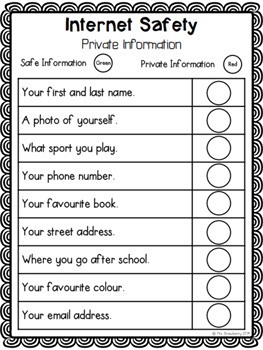
Working through these educational activities helps students internalize specific digital safety mechanics. Learners practice distinguishing between public data that can be shared safely and private identifiers like home addresses or full names that must remain confidential. Another major focus centers on critical thinking regarding online sources and peer interactions. According to Common Sense Media, the majority of tweens own smartphones or tablets and consume media daily, making structured guidance around digital privacy an urgent educational necessity. Educators and families utilize these printed exercises to spark meaningful dialogue well before tricky digital scenarios materialize in the real world.
How to Use This Printable
Classrooms and living rooms transform into collaborative safety hubs when adults introduce these printables through guided discussion rather than quiet, independent seatwork. Here’s what makes this resource different: it relies on scenario-based prompts that encourage students to talk through realistic online dilemmas rather than merely memorizing rules. Educators distribute the pages during morning meetings or computer lab orientation days, prompting students to debate acceptable online behavior in small groups. For additional skill-building exercises, pairing this material with dedicated Worksheets expands the curriculum seamlessly.
Practical Tips for Parents and Teachers
Consistency between school rules and home expectations builds the strongest foundation for growing digital citizens. Adults should review completed print pages together, validating children’s insights while gently correcting misconceptions about online anonymity. Establishing an open-door policy regarding digital mistakes prevents children from hiding uncomfortable online experiences out of fear of losing device privileges. Framing safety as an empowering life skill rather than a restrictive punishment keeps communication channels wide open when children face digital ambiguity.
Age-Appropriate Recommendations
Fifth graders possess the cognitive development required to understand broader concepts like data privacy and digital footprints, yet they still require concrete examples and empathetic adult guidance. Aligned with the International Society for Technology in Education (ISTE) Standards for Students, this resource encourages learners to act as digital citizens who recognize the rights, responsibilities, and opportunities of living, learning, and working in an interconnected digital world. Introducing these topics at age ten prepares students for the nuanced social media dynamics they will encounter in middle school.
According to Pew Research Center, a substantial majority of teens and pre-teens report spending hours daily connected to digital platforms, underscoring the vital need for early, consistent privacy education. — Pew Research Center
Frequently Asked Questions
Navigating digital citizenship questions can feel overwhelming for educators and families alike. Clear answers simplify the process of implementing safety frameworks.
Explore More Free Kids Online Safety Printables
Continuing digital citizenship education requires a steady supply of fresh, engaging materials that resonate with elementary learners. Exploring curated collections such as Online and Digital Safety provides continuous support for classrooms and households alike. Educators seeking creative avenues to reinforce these lessons often utilize Coloring Pages to engage visual learners and spark rich discussions about online kindness and data privacy.
Developmental Milestone & Activity Table
| Development Stage | Recommended Daily Duration | Primary Learning Objective |
|---|---|---|
| Preschool & Pre-K | 10 – 15 Minutes | Pencil grip development & basic pre-stroke lines |
| Kindergarten | 15 – 20 Minutes | Letter/number formation & spatial line awareness |
| Early Elementary (Grade 1–2) | 20 – 30 Minutes | Fluency, sentence construction & neatness |
Images References