Introduction
Navigating the digital world requires more than technical filters and parental control software. Young adolescents encounter digital environments daily, often moving between shared household devices, in-game chat features on multiplayer platforms, and video-sharing applications. Middle school students face sophisticated social dynamics online, making critical thinking an essential daily life skill. Adults guiding these students need practical, accessible tools that bridge literacy instruction with crucial offline behaviors. The free printable 7th grade level paragraph on internet safety offers a targeted literacy resource designed to integrate digital citizenship directly into language arts or advisory blocks. Rather than relying on fear-based warnings, this worksheet builds protective habits through reading comprehension, critical analysis, and guided discussion, supporting educators and caregivers as they prepare youth for independent online exploration.
💡 Educational Key Takeaways:
- Core Skill: Structured 7Th Grade Level Paragraph On Internet Safety focused on developing pencil grip, stroke control, and early literacy/math confidence.
- Target Scope: Suited for homeschoolers, preschool, kindergarten, and elementary learners.
- Best Recommendation: Practice 10–15 minutes daily with ergonomic writing tools to reinforce muscle memory without hand fatigue.
What This Printable Covers
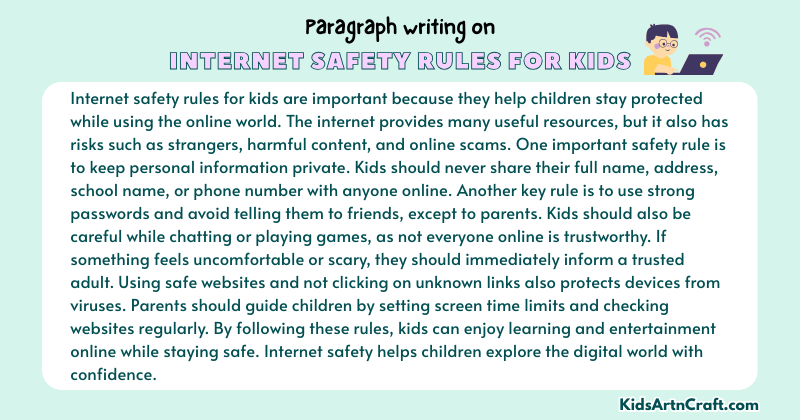
Reading passages tailored for early adolescents must bridge the gap between elementary rules and adult-level responsibilities. This specific text addresses foundational digital habits, including password security, the permanence of digital footprints, and the importance of keeping personal identifiers private. According to Common Sense Media research, middle school students frequently navigate complex social situations within digital spaces before fully grasping the long-term consequences of shared content. The paragraph challenges readers to analyze scenario-based text rather than simply memorizing arbitrary restrictions. It emphasizes constructive protocols, such as recognizing red flags in communication and establishing trusted adult partnerships. Crucially, the text reinforces a zero-blame reporting policy: children are never in trouble for coming forward about something that feels uncomfortable online. It sounds simple, and that’s the point—clarity prevents panic when challenges arise.
Key Learning Outcomes
Students engaging with this text exercise multiple cognitive and social-emotional competencies simultaneously. Literacy skills improve through targeted vocabulary acquisition, sentence structure analysis, and comprehension questioning built around a real-world theme. Beyond reading development, learners identify concrete behaviors that safeguard their digital well-being. They learn to pause before posting, evaluate the authenticity of digital interactions, and articulate boundaries when communicating with peers. Furthermore, the activity prompts reflection on empathy and digital ethics, ensuring that learners consider how their own actions impact the wider online community. For broader lessons on these habits, adults can explore additional resources within Internet and Digital Safety materials to reinforce concepts across different subjects.
How to Use This Printable
Flexibility defines effective instructional design in busy classrooms and active home environments. This worksheet functions seamlessly as a warm-up reading activity, a homework assignment paired with family discussion, or a small group counseling prompt. Educators can distribute the text ahead of a media literacy lesson to gauge baseline understanding among students. Following independent reading, guided questions prompt learners to dissect the paragraph and connect its core themes to their everyday device usage. Caregivers can use the printout during relaxed family moments to initiate low-pressure conversations about favorite apps and online experiences. It acts as a conversation starter rather than a test, encouraging honest dialogue without triggering defensiveness. Additional structured activities matching this format are available through Worksheets designed for various skill levels.
Practical Tips for Parents and Teachers
Maximizing the impact of any educational printout requires intentional facilitation and a calm demeanor. Adults should read alongside the student, pausing to discuss specific phrases rather than rushing to complete the questions. Here’s what makes this resource different: it treats children as capable decision-makers rather than passive rule-followers. Frame the conversation around personal empowerment, highlighting that digital safety tools exist to protect fun, creativity, and connection. When discussing scenarios where a child encounters uncomfortable content, validate their feelings immediately and reiterate that reporting the incident keeps the entire community safe. Consistent reinforcement transforms abstract digital citizenship concepts into second-nature habits.
Age-Appropriate Recommendations
Seventh-grade learners operate at a pivotal developmental stage marked by a strong desire for peer connection and increasing digital autonomy. Grounding instruction in established frameworks, such as the Common Sense Education Digital Citizenship Curriculum, ensures that lessons align with cognitive milestones for ages twelve to thirteen. At this age, youth benefit from scaffolded discussions that respect their growing maturity while providing clear, unambiguous boundaries. According to the Pew Research Center, a substantial majority of teenagers use multiple online platforms daily, making age-targeted literacy tools vital for building practical self-regulation. Introducing concepts of data privacy and respectful communication at this juncture prepares learners to manage complex social interactions independently as they transition into high school.
Middle school students frequently navigate complex social situations within digital spaces before fully grasping the long-term consequences of shared content. — Common Sense Media
Frequently Asked Questions
Addressing common inquiries helps adults implement this printable with confidence and clarity. The following answers cover download procedures, educational objectives, and institutional benchmarks regarding youth digital literacy.
Explore More Free Kids Online Safety Printables
Expanding a digital citizenship curriculum requires a diverse array of complementary tools and instructional formats. Educators and caregivers can build comprehensive lesson plans by pairing reading passages with visual resources, such as those found in Coloring Pages collections designed for younger siblings or mixed-age groups. To explore further strategies for fostering healthy digital habits across all age groups, visit the main Online and Digital Safety hub for expert-backed articles, guides, and printable assets.
Developmental Milestone & Activity Table
| Development Stage | Recommended Daily Duration | Primary Learning Objective |
|---|---|---|
| Preschool & Pre-K | 10 – 15 Minutes | Pencil grip development & basic pre-stroke lines |
| Kindergarten | 15 – 20 Minutes | Letter/number formation & spatial line awareness |
| Early Elementary (Grade 1–2) | 20 – 30 Minutes | Fluency, sentence construction & neatness |
Images References