Introduction
The journey through digital literacy begins at an early age, making the establishment of sound internet safety practices crucial for every child. For elementary school students, particularly those in grade 4, a structured approach to learning digital citizenship is essential. A free printable internet safety resource, specifically the “digital citizenship worksheet for grade 4,” provides a tangible and effective tool for reinforcing these vital concepts. Educators and parents consistently rely on printable worksheets as trusted instruments for building foundational digital awareness and promoting responsible online behavior. These resources offer a screen-free learning environment, allowing for focused engagement with complex topics such as privacy, cyber etiquette, and critical thinking in digital spaces. The hands-on nature of a worksheet complements digital instruction, solidifying understanding through active participation and reflection. This approach ensures that young learners develop the necessary skills to navigate the internet safely and confidently, fostering a generation of responsible digital citizens.
💡 Educational Key Takeaways:
- Core Skill: Structured Digital Citizenship Worksheet For Grade 4 focused on developing pencil grip, stroke control, and early literacy/math confidence.
- Target Scope: Suited for homeschoolers, preschool, kindergarten, and elementary learners.
- Best Recommendation: Practice 10–15 minutes daily with ergonomic writing tools to reinforce muscle memory without hand fatigue.
What This Worksheet Covers
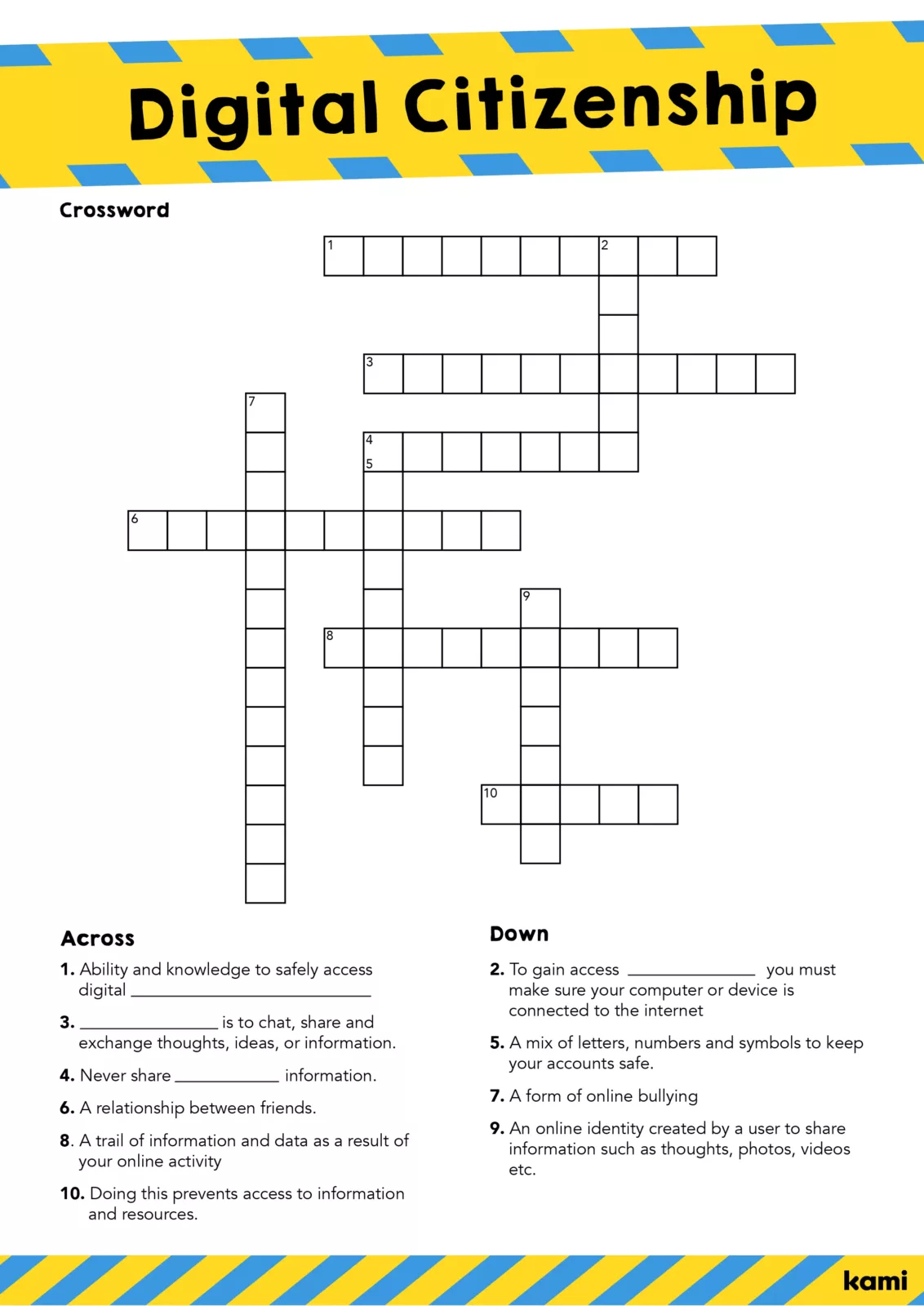
The “digital citizenship worksheet for grade 4″ is meticulously designed to address specific internet safety topics pertinent to elementary school-aged children. It covers fundamental concepts crucial for navigating the online world safely and responsibly. The worksheet introduces the identification of personal information that should never be shared online, such as full names, addresses, phone numbers, and school names. It also emphasizes the importance of understanding who a trusted adult is and why seeking their help for any online concerns is paramount. Basic cyber etiquette, focusing on kindness and respectful communication in digital interactions, forms another key component. Scenarios are presented to help students differentiate between safe and potentially unsafe online content or interactions, encouraging critical thinking before clicking or sharing. The content aligns with recognized digital citizenship and child safety education standards, including elements from the ISTE Standards for Students (Digital Citizen) and Common Sense Medias elementary curriculum on internet safety, ensuring a comprehensive and age-appropriate learning experience.
Key Learning Outcomes
Completion of the “digital citizenship worksheet for grade 4” equips students with several vital skills and knowledge areas. Learners develop the ability to recognize personal information that must be kept private online, enhancing their understanding of digital boundaries. Students learn to identify and approach trusted adults for guidance when encountering uncomfortable or confusing online situations, fostering a sense of security and support. The resource helps cultivate an understanding of the importance of polite and respectful online communication, promoting positive digital interactions. Furthermore, children begin to differentiate between safe and potentially risky online content or requests, developing an early sense of critical evaluation. Ultimately, the worksheet supports the development of foundational critical thinking skills necessary for making informed and responsible choices in various online scenarios. Browse more guides on Safe Wired Schools.
How to Use This Worksheet
The “digital citizenship worksheet for grade 4” offers versatile application in both classroom and home settings. The worksheet incorporates a variety of activity types designed to engage young learners, including fill-in-the-blank questions, matching exercises, true or false statements, and simple scenario-based prompts requiring thoughtful responses. Visual elements and opportunities for drawing or coloring are also integrated, catering to diverse learning styles. Instructions are clear and straightforward, scaffolding learning progressively from basic identification of concepts to applying them in practical scenarios. The difficulty level is precisely tailored for a grade 4 understanding, ensuring accessibility without oversimplification. This resource can be effectively used as a standalone activity to introduce or reinforce specific internet safety topics, integrated as a component of a broader digital literacy lesson plan, or assigned as a valuable homework activity to extend learning beyond formal instruction. Its printable format allows for individual completion, encouraging independent thought and reflection.
Practical Tips for Parents and Teachers
Maximizing the educational impact of the “digital citizenship worksheet for grade 4” involves thoughtful preparation and facilitation. Before presenting the worksheet, it is beneficial to review its content thoroughly, anticipating potential questions and preparing discussion prompts. During completion, encourage students to work independently but remain available to offer clarification or support as needed, fostering a sense of accomplishment. Following the activity, initiate a conversation about the concepts covered, asking open-ended questions like, “Why is it important to never share your address online?” or “What would you do in this situation?” To extend the learning, consider incorporating role-playing activities based on the worksheet’s scenarios, encouraging children to practice their responses aloud. Establishing family or classroom rules for internet use, informed by the worksheet’s principles, further reinforces responsible digital habits.
Age-Appropriate Recommendations
While the “digital citizenship worksheet for grade 4” is specifically tailored for learners aged approximately 9-10, its foundational concepts allow for flexible application across a slightly broader elementary age range with appropriate adjustments. For younger elementary students, such as those in grades 1-3 (ages 6-8), the worksheet can be introduced with increased direct guidance. Reading support might be necessary, and activities can be completed together as a group, focusing primarily on basic identification of safe behaviors and the concept of “ask a grown-up.” For the target age group of grade 4 (ages 9-10), students can generally complete the worksheet with greater independence, engaging in more nuanced discussions about the “why” behind internet safety rules. This age band benefits from applying concepts to simple, relatable online scenarios, promoting active problem-solving. For older elementary learners in grades 5-6 (ages 10-12), the worksheet serves as an excellent review of core principles, allowing for deeper discussions about the permanence of digital footprints, more advanced privacy considerations, or the initial stages of understanding cyberbullying. Even as students mature, foundational digital citizenship remains critical, making this worksheet a valuable reference point for reiterating essential safe online practices.
Frequently Asked Questions
Q: What specific topics does the “digital citizenship worksheet for grade 4” cover? A: The worksheet addresses key internet safety concepts including identifying personal information to keep private, recognizing trusted adults for online help, understanding basic cyber etiquette, and differentiating between safe and unsafe online content or interactions. It provides foundational knowledge for responsible digital behavior. Q: Is the “digital citizenship worksheet for grade 4” truly free to download? A: Yes, this educational resource is entirely free and available for download from SafeWiredSchools.org. Accessing the printable worksheet requires no payment or subscription, ensuring it is readily available to all educators and parents seeking to enhance digital safety education. Q: How can this worksheet be integrated into existing lesson plans or home routines? A: The worksheet serves as a versatile tool. It can be incorporated as an introductory activity to a digital safety lesson, used as a reinforcement tool after instruction, assigned for homework to encourage family discussion, or utilized as a standalone activity during screen-free learning time at home.
Explore More Free Printable Worksheets
A single resource, however valuable, works best when integrated into a consistent digital safety learning routine. The “digital citizenship worksheet for grade 4” represents just one component of a comprehensive approach to fostering safe online habits. Educators and parents are encouraged to explore a full collection of free printable internet safety worksheets, activity sheets, checklists, quizzes, and more at SafeWiredSchools.org Worksheets. These extensive resources cover every essential internet safety topic, meticulously designed for every grade level and diverse learning environments. Building a robust understanding of digital citizenship requires ongoing engagement with varied, high-quality educational materials, and SafeWiredSchools.org is dedicated to providing these vital tools.
Developmental Milestone & Activity Table
| Development Stage | Recommended Daily Duration | Primary Learning Objective |
|---|---|---|
| Preschool & Pre-K | 10 – 15 Minutes | Pencil grip development & basic pre-stroke lines |
| Kindergarten | 15 – 20 Minutes | Letter/number formation & spatial line awareness |
| Early Elementary (Grade 1–2) | 20 – 30 Minutes | Fluency, sentence construction & neatness |
Images References