Introduction
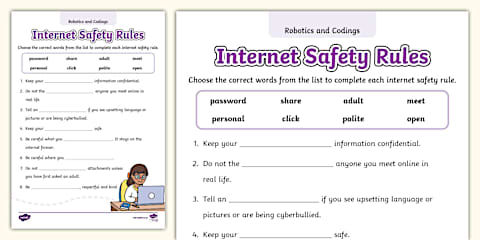
The “internet safety worksheet for grade 1″ stands as a vital resource for establishing foundational digital literacy. This educational tool targets elementary learners, specifically those in Grade 1, typically aged six to seven years. Its purpose involves reinforcing crucial internet safety concepts through engaging, hands-on activities, ensuring young students develop responsible online behaviors from an early age. Printable learning materials, like this worksheet, remain trusted instruments for educators and parents alike. They provide a tangible, screen-free method for building digital awareness, fostering critical thinking, and guiding children toward safer online practices. The structured format and direct engagement offered by such resources are invaluable for mastering new concepts and integrating them into daily routines, laying a strong groundwork for future digital citizenship.
💡 Educational Key Takeaways:
- Core Skill: Structured Internet Safety Worksheet For Grade 1 focused on developing pencil grip, stroke control, and early literacy/math confidence.
- Target Scope: Suited for homeschoolers, preschool, kindergarten, and elementary learners.
- Best Recommendation: Practice 10–15 minutes daily with ergonomic writing tools to reinforce muscle memory without hand fatigue.
What This Worksheet Covers
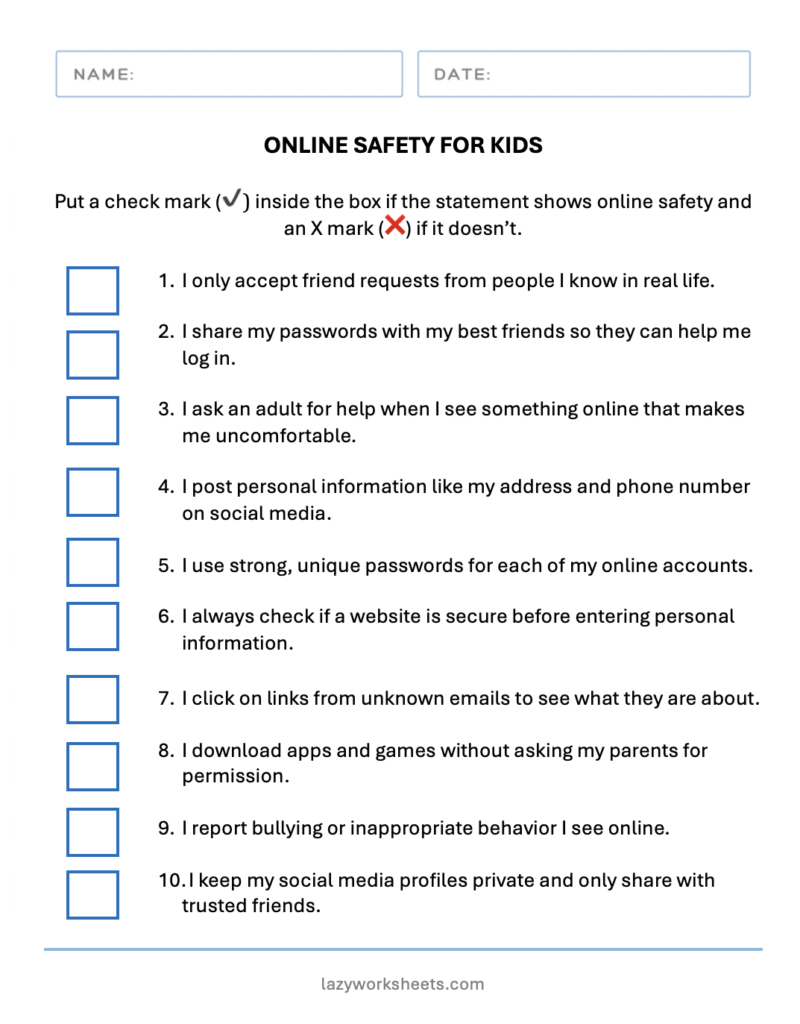
The “internet safety worksheet for grade 1″ addresses several specific and age-appropriate internet safety topics. It introduces children to the importance of recognizing trusted adults who can offer help with online concerns. The worksheet clarifies basic concepts of “private information,” teaching young learners what personal details should never be shared online. It also emphasizes the essential rule of always asking a parent or guardian for permission before accessing websites or applications. Furthermore, the resource helps students begin to differentiate between safe and potentially unsafe online content or interactions through simple, relatable scenarios. These concepts are presented in a manner that aligns with foundational digital citizenship and early childhood online safety education standards, preparing children for a secure digital future.
Key Learning Outcomes
Completing the “internet safety worksheet for grade 1” equips young learners with several important skills and knowledge areas, reflecting real developmental milestones in digital safety:. Browse more guides on Safe Wired Schools.
- Identifies trusted adults (e.g., parents, teachers) as primary sources of help for online issues.
- Recognizes basic private information (e.g., full name, address, phone number) that should not be shared with strangers online.
- Understands the necessity of seeking permission from a parent or guardian before engaging in online activities.
- Distinguishes between appropriate and potentially risky online scenarios through simple visual cues and questions.
- Begins to practice critical thinking regarding online interactions and content at an early developmental stage.
How to Use This Worksheet
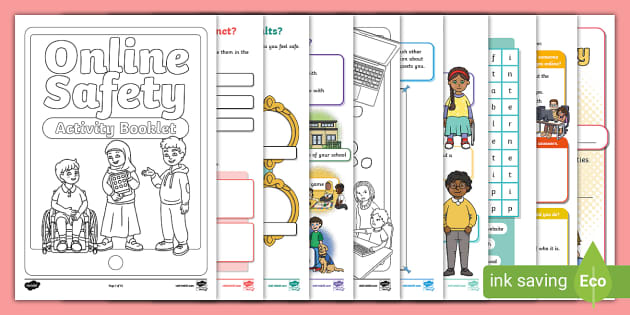
Educators and parents can effectively utilize the “internet safety worksheet for grade 1” in various learning environments. The worksheet incorporates activity types designed for emerging readers and writers, including drawing exercises, simple matching tasks, and basic true/false questions, often supported by clear illustrations. Its difficulty level is perfectly tailored for Grade 1 students, with instructions presented in straightforward language to scaffold learning progressively. This resource can function as a standalone activity to introduce or review key concepts, integrate seamlessly as part of a comprehensive lesson plan on digital citizenship, or serve as a focused homework assignment to extend learning beyond the classroom. The visual nature of the activities ensures accessibility and engagement for diverse learning styles.
Practical Tips for Parents and Teachers
Maximizing the educational impact of the “internet safety worksheet for grade 1” involves thoughtful preparation and interaction:
- Preparation: Ensure the worksheet is printed clearly, and gather necessary supplies like crayons or pencils. A quick review of the worksheet’s concepts beforehand helps in guiding discussions effectively.
- Facilitation: Read all instructions aloud to the child or group, offering a model for the first answer to clarify expectations. Encourage independent thought while remaining available for support and clarification.
- Discussion Prompts: After completion, initiate a conversation about the answers. Ask “why” questions to deepen understanding and relate worksheet scenarios to real-life online experiences children might encounter.
- Extend Learning: Transform the worksheet’s lessons into practical applications. Role-play different online scenarios, or collaboratively create a family or classroom poster outlining key internet safety rules derived from the activity.
- Positive Reinforcement: Acknowledge effort and celebrate correct understanding. Positive feedback encourages continued learning and reinforces the importance of safe online habits.
Age-Appropriate Recommendations
The “internet safety worksheet for grade 1” is specifically designed for children aged 6-7 years, corresponding directly to the Grade 1 educational level. For this age group, a direct and interactive approach proves most beneficial. Adults should read instructions clearly, offering vocabulary support for terms such as “private information” or “permission.” The pacing of the activity should be unhurried, allowing ample time for children to process information, draw, and reflect on their answers. Parental or teacher involvement is crucial for guiding discussions and ensuring comprehension. While the worksheet is tailored for Grade 1, older elementary children (ages 8-10) might use it as a quick review of foundational concepts, though its content may be too simplistic for their developmental stage. For middle and high school students (ages 11-18), this particular worksheet serves primarily as a reminder of early foundational learning; their digital safety education requires more advanced resources addressing complex topics like cyberbullying, digital footprints, and online privacy settings, which are available in other SafeWiredSchools.org materials.
Frequently Asked Questions
Q: What topics does the “internet safety worksheet for grade 1” cover? A: This foundational resource introduces concepts such as identifying trusted adults, understanding private information, and seeking permission before going online. It uses engaging activities to build early digital literacy skills.
Q: How can this worksheet be integrated into a lesson plan? A: The worksheet serves as an excellent warm-up, wrap-up, or independent practice activity within a broader internet safety lesson. It reinforces core concepts taught through discussion, stories, or videos.
Q: Where can the free printable “internet safety worksheet for grade 1” be accessed? A: This valuable educational resource is available for free download directly from SafeWiredSchools.org. Visit the worksheets section to locate and print the file easily.
Explore More Free Printable Worksheets
A single worksheet works best as part of a broader, consistent digital safety learning routine. While the “internet safety worksheet for grade 1” provides an excellent starting point, continuous education remains vital for children’s online security. Educators and parents are encouraged to explore a full collection of free printable internet safety worksheets, activity sheets, checklists, quizzes, and more. SafeWiredSchools.org offers a comprehensive array of resources covering every internet safety topic, designed for every grade level and learning environment, ensuring a robust and evolving digital education. Visit SafeWiredSchools.org Worksheets to expand the learning journey.
Developmental Milestone & Activity Table
| Development Stage | Recommended Daily Duration | Primary Learning Objective |
|---|---|---|
| Preschool & Pre-K | 10 – 15 Minutes | Pencil grip development & basic pre-stroke lines |
| Kindergarten | 15 – 20 Minutes | Letter/number formation & spatial line awareness |
| Early Elementary (Grade 1–2) | 20 – 30 Minutes | Fluency, sentence construction & neatness |
Images References