Introduction
Guiding young children through the digital world requires tools that build confidence rather than instill fear. Modern classrooms and households often notice that children encounter online environments long before they fully grasp the invisible boundaries of the internet. Whether navigating multiplayer gaming lobbies with open chat functions or passing shared family tablets around the living room, children step into digital spaces daily. Introducing foundational internet safety concepts to elementary-aged learners works best through creative, tactile methods. Using the free printable digital safety coloring page provided by {site_name} bridges the gap between abstract technical concepts and concrete, everyday protective habits. Coloring actively reinforces positive safety messages while serving as a natural catalyst for relaxed, open-ended conversations between adults and children.
💡 Activity Key Takeaways:
- Core Focus: Printable Digital Safety Coloring Page designed for creative expression and fine-motor coordination.
- Target Scope: Ideal for toddlers, preschool, kindergarten, and classroom art activities.
- Best Recommendation: Use standard heavy printer paper (24–28 lb) or cardstock for vibrant results with crayons, colored pencils, or washable markers.
What This Printable Covers
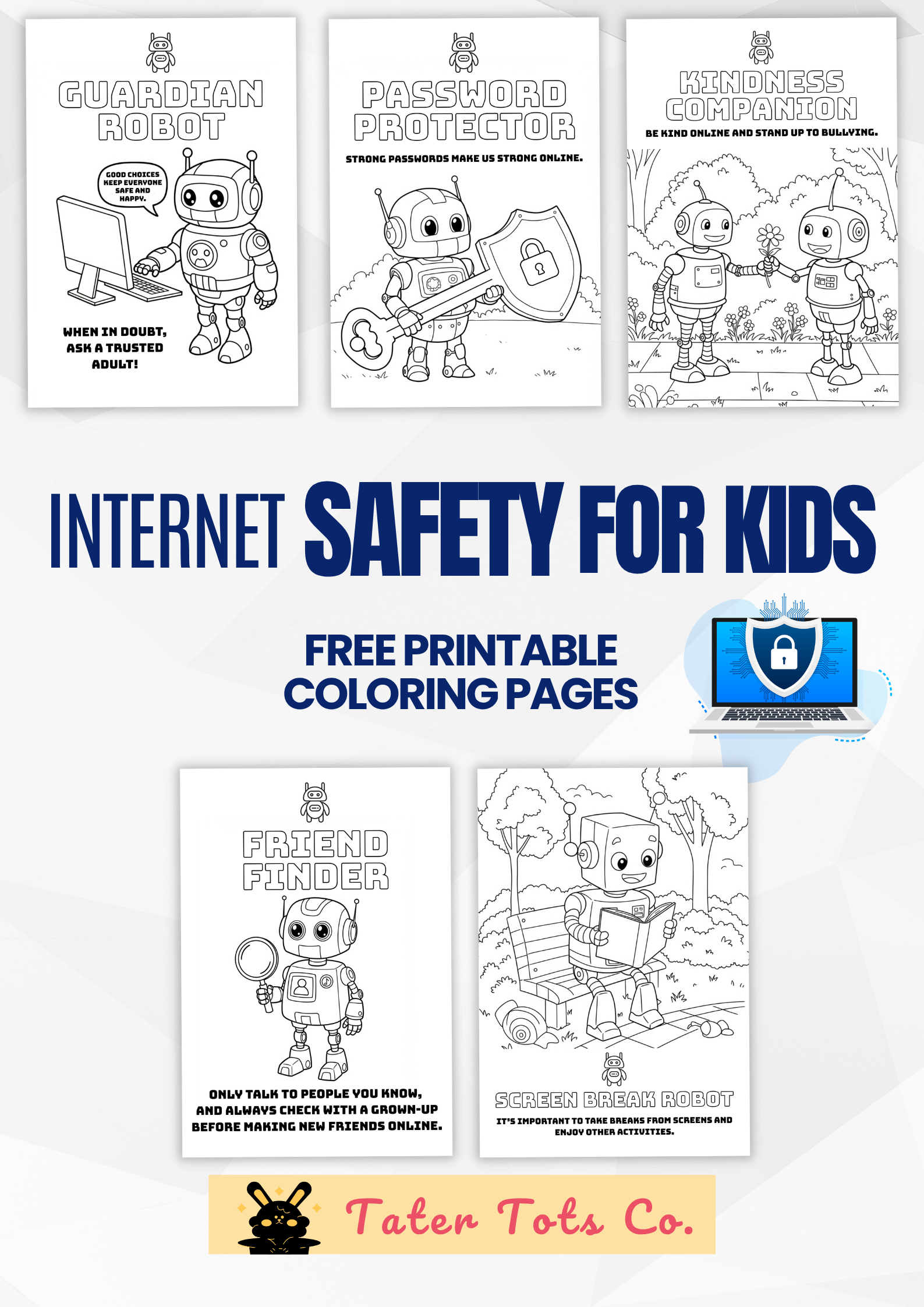
Visual learning tools simplify complex digital citizenship topics into memorable, age-appropriate lessons. The coloring resource addresses core pillars of online wellness, including recognizing private personal information, creating strong passwords, and understanding the importance of thinking before clicking or sharing. Children often struggle to visualize where the physical world ends and the digital world begins. Artwork depicting friendly robots, locked shields, and thoughtful offline play helps establish visual anchors for these abstract boundaries. Furthermore, the design emphasizes the golden rule of digital safety: trusted adults are always available to help, and children are never in trouble for reporting something that feels uncomfortable or confusing online. Related guide: Please Provide Free 8.5″X11″ Digital Safety Coloring Pages For K-2 Grade.
Key Learning Outcomes
Engaging with this creative activity strengthens several crucial protective habits. First, learners identify what constitutes private information, such as full names, home addresses, and school names. Second, the artwork prompts discussions about pausing before interacting with pop-ups, strange links, or unfamiliar requests in in-game chat interfaces. Third, the exercise normalizes asking for help immediately when encountering strange content on shared devices. It sounds simple, and that’s the point. Habit formation happens through repetition and calm reinforcement, laying the groundwork for critical thinking as children grow into more independent digital users.
How to Use This Printable
Implementing this resource requires very little preparation, making it flexible for busy classrooms, afternoon study sessions, or quiet homeschooling environments. Educators often pair the activity with a morning meeting discussion about responsible technology use, while families use crayons at the kitchen table to unwind after a school day. Coloring naturally lowers inhibitions, creating a relaxed space where children feel comfortable asking questions about things they have witnessed on video platforms or mobile apps. Adults can read the captions aloud, invite children to describe what the characters are doing, and connect the illustrations directly to the actual devices used at home or school. This turns a simple coloring exercise into a meaningful learning moment.
Practical Tips for Parents and Teachers
Maximizing the educational value of the printable involves asking open-ended questions rather than lecturing. Instead of asking if children know the rules, adults can ask what the character on the page should do next when faced with an unfamiliar message. Here’s what makes this resource different: it shifts the dynamic from rule enforcement to collaborative problem-solving. Educators can display completed artwork on bulletin boards alongside broader Internet and Digital Safety guidelines, keeping core messages visible throughout the school year. Consistent, low-pressure exposure helps children internalize these lessons without triggering anxiety.
Age-Appropriate Recommendations
Tailoring digital citizenship instruction to developmental stages ensures that content remains relevant and digestible. For five to seven-year-olds, the focus remains strictly on device sharing, asking permission before downloading apps, and keeping personal details private. Eight to twelve-year-olds engage with more nuanced scenarios involving peer communication, digital footprints, and respectful behavior in virtual communities. Aligned with the Common Sense Education Digital Citizenship Curriculum framework, these discussions help children understand the broader impact of their online choices. As kids mature, the conversations naturally evolve from basic device boundaries to empathy, critical media literacy, and independent self-regulation.
According to Common Sense Media research, a significant percentage of children under the age of eight use mobile devices daily, often unsupervised for periods of time, highlighting the need for early habit-formation tools. — Common Sense Media
Frequently Asked Questions
Finding clear answers helps educators and families make the most of digital citizenship resources. The following questions address common inquiries regarding downloading, educational application, and supporting research data.
According to the Federal Trade Commission, educating children early about privacy and secure sharing helps prevent identity theft and online manipulation. — Federal Trade Commission (FTC)
Explore More Free Kids Online Safety Printables
Expanding a digital citizenship toolkit requires a variety of engaging formats to reach every type of learner. Beyond creative coloring sheets, educators can explore comprehensive Coloring Pages collections designed for younger elementary students. For older learners ready for deeper discussions, incorporating targeted Worksheets provides structured practice in password strength and critical thinking. Maintaining an ongoing dialogue across multiple formats ensures children build resilient, lifelong habits for navigating Online and Digital Safety with confidence and poise.
Key Specifications & Age-Group Overview
| Age / Grade Group | Target Skill Focus | Recommended Medium |
|---|---|---|
| Toddlers (Ages 2–4) | Hand-eye coordination & broad motor grasp | Jumbo crayons & washable finger paints |
| Early Elementary (Ages 5–7) | Line boundaries & fine pencil control | Standard colored pencils & fine-tip markers |
| Intermediate (Ages 8+) | Color blending, shading & artistic patience | Watercolor pencils, gel pens & dual-brush markers |
Images References