Introduction
Warm weather brings more indoor screen time, unstructured afternoons, and new digital exploration for children. Young learners frequently encounter online risks in ordinary ways, such as chatting with peers inside multiplayer video games or streaming videos on shared household tablets. Children need practical tools to navigate these spaces safely without inducing fear. Adults often struggle to introduce digital citizenship topics naturally during the busy school year. Free summer safety coloring pages offer a relaxed, creative entry point for important conversations about internet habits. Coloring reinforces safety messages while keeping the tone light and empowering, building crucial digital resilience brick by brick.
💡 Activity Key Takeaways:
- Core Focus: Printable Free Summer Safety Coloring Pages designed for creative expression and fine-motor coordination.
- Target Scope: Ideal for toddlers, preschool, kindergarten, and classroom art activities.
- Best Recommendation: Use standard heavy printer paper (24–28 lb) or cardstock for vibrant results with crayons, colored pencils, or washable markers.
What This Printable Covers
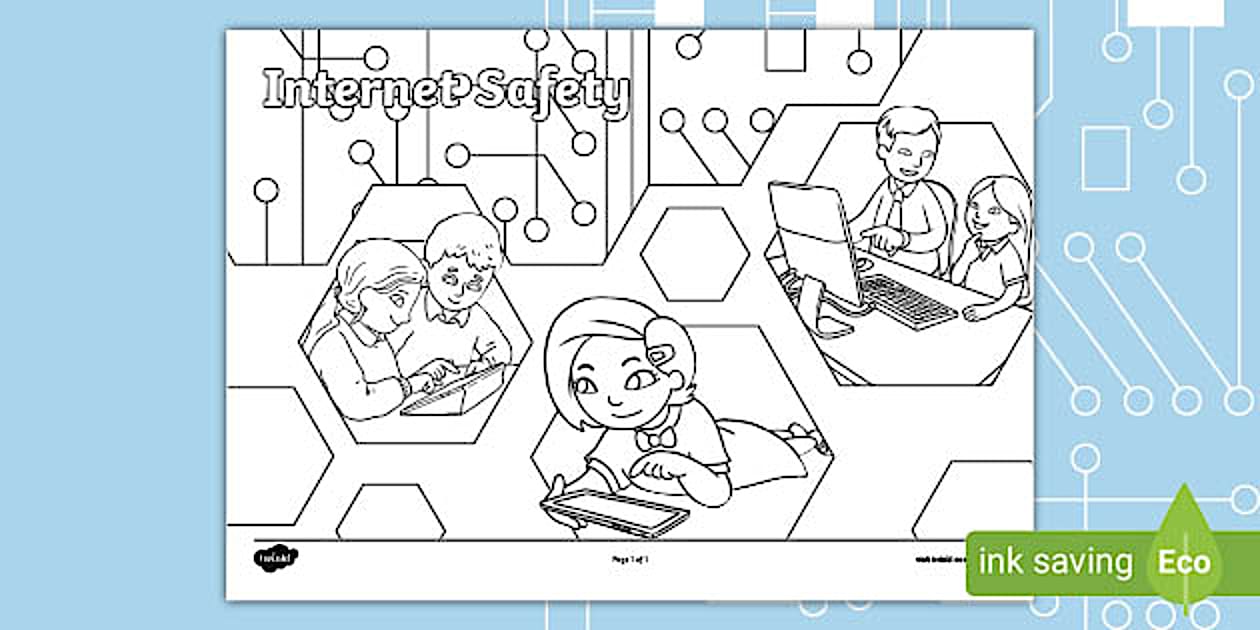
Every illustration focuses on positive digital habits rather than dwelling on online dangers. Children color scenes depicting kids keeping personal information private, using strong passwords, and pausing before sharing photos or messages. The artwork also normalizes the habit of telling a trusted adult when something online feels confusing or uncomfortable. It sounds simple, and that is the point. When children associate safety rules with familiar, low-stress artistic activities, retention increases significantly. Adults can explore additional options within the creative safety graphics collection to find more illustrated prompts.
Key Learning Outcomes
Engaging with these coloring pages helps cement several foundational digital citizenship concepts. Learners practice identifying what constitutes private data, such as full names, home addresses, and school names. Another primary focus teaches the absolute rule that children are never in trouble for reporting an uncomfortable online encounter to an adult. Recognizing safe communication boundaries prevents minor digital misunderstandings from escalating into serious privacy issues. According to the Common Sense Education Digital Citizenship Curriculum, early habit-building around privacy and respectful communication creates lasting behavioral guardrails for developing minds.
How to Use This Printable
Educators and caregivers can integrate these pages into morning tubs, quiet reading hours, or summer camp kickoff sessions. Sitting side-by-side at a table provides a natural, non-confrontational setting for open dialogue while crayons glide across the paper. Adults can ask open-ended questions about the pictures, prompting children to explain why the characters in the drawings are making smart digital choices. This approach transforms a quiet art activity into an active mentoring session. For those seeking broader exercises, pairing these sheets with related educational safety printables deepens conceptual understanding across multiple formats.
Practical Tips for Parents and Teachers
Patience and consistency remain the best tools for teaching digital literacy to young children. Adults should avoid hovering or lecturing, letting the artwork spark organic curiosity instead. Praise children when they correctly identify a positive safety habit depicted in the coloring scene. Establishing an atmosphere of trust ensures that young users feel comfortable asking questions long after the crayons are put away. Frame safety as a superpower rather than a restriction, emphasizing that smart choices keep online adventures fun and secure.
Age-Appropriate Recommendations
Children aged five through seven benefit most from focusing on basic sharing rules, such as checking with an adult before downloading a new game. Older elementary students aged eight through twelve can tackle more nuanced scenarios involving in-game chat etiquette and recognizing secure login credentials. These tiered approaches align closely with the CASEL framework for social-emotional learning, which emphasizes self-awareness, responsible decision-making, and relationship skills. Educators should tailor the accompanying discussions to match the developmental maturity of the group.
According to the Federal Trade Commission, children increasingly encounter digital risks through shared household devices and interactive gaming platforms, making early habit-building essential for families. — FTC
Frequently Asked Questions
Clear answers help adults maximize the educational value of these printable resources at home or in the classroom.
According to Common Sense Media, structured offline activities significantly improve children’s comprehension of digital safety concepts by allowing time for reflective discussion. — Common Sense Media
Explore More Free Kids Online Safety Printables
Building comprehensive digital citizenship requires a variety of engaging, accessible materials throughout the year. Caregivers can discover additional resources dedicated to foundational internet safety concepts to keep children learning. Expanding the home or classroom library with targeted digital safety guides ensures that young learners stay equipped for a secure, confident online journey.
Key Specifications & Age-Group Overview
| Age / Grade Group | Target Skill Focus | Recommended Medium |
|---|---|---|
| Toddlers (Ages 2–4) | Hand-eye coordination & broad motor grasp | Jumbo crayons & washable finger paints |
| Early Elementary (Ages 5–7) | Line boundaries & fine pencil control | Standard colored pencils & fine-tip markers |
| Intermediate (Ages 8+) | Color blending, shading & artistic patience | Watercolor pencils, gel pens & dual-brush markers |
Images References