Introduction
Establishing healthy digital habits from an early age remains paramount in an increasingly connected world. SafeWiredSchools.org proudly presents a valuable free printable resource, the “screen time during meals checklist for families,” designed to foster mindful technology use. This resource is particularly relevant for families with children in Elementary grades 15 and Middle School grades 68, offering foundational support for responsible digital citizenship. Printable worksheets serve as trusted, tangible tools for educators and parents, effectively translating abstract internet safety concepts into actionable, hands-on learning experiences. Their physical presence reinforces the importance of digital awareness, encouraging active participation in discussions about responsible online behavior. These resources are valued for their ability to engage learners directly, providing a clear structure for understanding and practicing essential digital wellness principles within the home and classroom environment.
💡 Educational Key Takeaways:
- Core Skill: Structured Screen Time During Meals Checklist For Families focused on developing pencil grip, stroke control, and early literacy/math confidence.
- Target Scope: Suited for homeschoolers, preschool, kindergarten, and elementary learners.
- Best Recommendation: Practice 10–15 minutes daily with ergonomic writing tools to reinforce muscle memory without hand fatigue.
What This Worksheet Covers
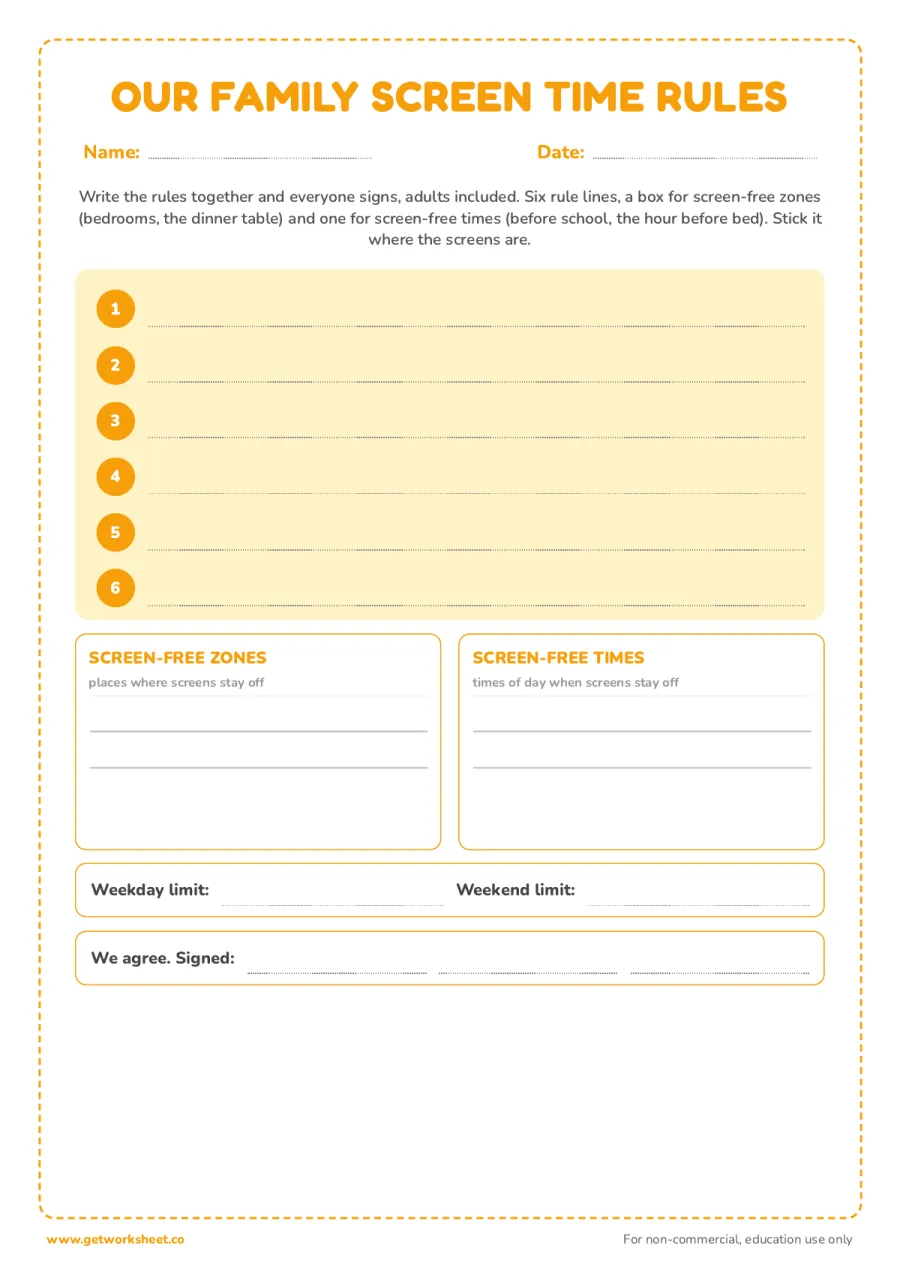
The “screen time during meals checklist for families” addresses the critical internet safety topic of digital wellness and mindful technology integration within daily family life. This resource specifically focuses on establishing healthy boundaries around screen use during mealtimes, promoting family connection and present-moment awareness. The checklist covers concepts such as designated screen-free zones, the importance of conversation, and the benefits of shared family time without digital distractions. It outlines simple, actionable rules and scenarios that encourage self-reflection and family discussion about technology’s role in personal and collective well-being. The worksheet content directly connects to recognized digital citizenship standards by promoting responsible media use, fostering respectful communication, and encouraging a balanced approach to technology that prioritizes real-world interactions over constant digital engagement.
Key Learning Outcomes
By utilizing the “screen time during meals checklist for families,” children and families will develop several crucial skills and knowledge areas:. Browse more guides on Safe Wired Schools.
- Enhanced Self-Regulation: Learners develop the ability to consciously manage screen impulses during specific times, fostering greater self-control.
- Improved Family Communication: The checklist encourages direct conversations and active listening, strengthening family bonds during shared meals.
- Increased Digital Awareness: Participants gain a deeper understanding of how screen use impacts personal and family interactions, promoting mindful technology choices.
- Practical Habit Formation: The structured nature of a checklist aids in establishing and reinforcing consistent, healthy screen-free mealtime routines.
- Responsible Digital Citizenship: Families learn to integrate technology thoughtfully into their lives, balancing digital engagement with real-world responsibilities and relationships.
How to Use This Worksheet
The “screen time during meals checklist for families” offers a straightforward and adaptable format for both classroom and home use. This resource functions as a reflective self-assessment and goal-setting tool, encouraging participants to review current habits and commit to new ones. The activity types primarily involve checking off items, indicating adherence to screen-free mealtime rules, and reflecting on the benefits of these practices. Its difficulty level is accessible, designed for clarity and ease of understanding across various age groups. Instructions scaffold learning progressively, starting with simple acknowledgment of rules and moving towards consistent practice. The worksheet can serve as a standalone activity to initiate discussions about digital boundaries, integrate seamlessly into a broader lesson plan on digital wellness, or be assigned as a practical homework activity to implement and track at home. Its versatility allows for flexible integration into diverse educational and family settings.
Practical Tips for Parents and Teachers
Maximizing the impact of the “screen time during meals checklist for families” involves thoughtful implementation and follow-up:
- Preparation and Introduction: Begin by discussing the “why” behind screen-free meals, focusing on benefits like better conversation and digestion, rather than just “no screens.”
- Collaborative Goal Setting: Encourage children to actively participate in setting the rules and expectations for mealtime screen use, fostering a sense of ownership.
- Consistent Reinforcement: Use the checklist daily or weekly as a visual reminder and a celebration of successful screen-free meals, offering positive affirmation.
- Open Discussion: After completing the checklist, prompt discussions about how everyone felt during the screen-free meal, what was noticed, and what challenges arose.
- Extend the Learning: Connect screen-free meals to other areas of digital wellness, such as creating technology-free zones in bedrooms or designating specific times for digital detox.
Age-Appropriate Recommendations
The “screen time during meals checklist for families” can be adapted effectively across a broad age range, with specific approaches tailored to developmental stages.
For Ages 5-8 (Early Elementary), direct parental or teacher involvement is crucial. The worksheet can be introduced as a fun game or a family challenge. Vocabulary support should be provided, explaining terms simply and clearly. Activity pacing should be brief, focusing on immediate positive reinforcement for successful screen-free meals. A visual reward system alongside the checklist can be highly motivating. Discussion should center on what was seen, heard, and felt during the meal without screens, emphasizing the joy of family connection.
For Ages 9-12 (Late Elementary to Early Middle School), the worksheet promotes growing independence and self-awareness. Children can take a more active role in checking off items and reflecting on their own habits. Discussions can delve deeper into the benefits of present-moment awareness and the impact of technology on communication. The checklist can be used to set personal goals for screen-free mealtimes, with less direct supervision but continued encouragement. The emphasis shifts towards understanding the rationale behind the rules and developing personal responsibility.
For Ages 13-18 (Middle to High School), the checklist serves as a tool for self-reflection and critical thinking about digital habits. Older learners can analyze their screen time patterns, discuss the societal implications of constant connectivity, and articulate their own reasons for adopting screen-free meal practices. The approach should be less about rule enforcement and more about personal choice and digital well-being advocacy. The worksheet can spark conversations about digital citizenship, mindfulness, and the importance of intentional technology use in preparation for independent living. This guidance empowers learners to make informed decisions about their digital lives.
Frequently Asked Questions
Q: What specific benefits result from using this screen time checklist during meals? A: Using the checklist helps families foster stronger communication, improve focus during meals, and establish consistent routines for mindful technology use. It promotes a healthier balance between digital engagement and real-world interactions.
Q: Can the “screen time during meals checklist for families” be customized for different family needs? A: While the printable offers a standard format, families are encouraged to adapt the checklist’s principles to their unique routines and values. Discussions around the checklist’s items allow for personalized adjustments and agreements.
Q: How can the free printable “screen time during meals checklist for families” be accessed? A: This valuable resource is available for immediate download and printing directly from the SafeWiredSchools.org website. Simply navigate to the worksheets section to find and acquire the checklist at no cost.
Explore More Free Printable Worksheets
A single resource, however effective, forms just one part of a comprehensive digital safety education strategy. Sustained learning and habit formation are best achieved through a consistent routine utilizing a variety of educational tools. Educators and parents are invited to explore a full collection of free printable internet safety worksheets, activity sheets, checklists, quizzes, and more at SafeWiredSchools.org Worksheets. These resources cover every essential internet safety topic, designed for every grade level and learning environment, ensuring a robust and continuous learning journey in digital citizenship for all ages.
Developmental Milestone & Activity Table
| Development Stage | Recommended Daily Duration | Primary Learning Objective |
|---|---|---|
| Preschool & Pre-K | 10 – 15 Minutes | Pencil grip development & basic pre-stroke lines |
| Kindergarten | 15 – 20 Minutes | Letter/number formation & spatial line awareness |
| Early Elementary (Grade 1–2) | 20 – 30 Minutes | Fluency, sentence construction & neatness |