Introduction
Protecting young minds in digital spaces often begins away from the keyboard through creative, hands-on learning moments. Long before children navigate complex social platforms or open shared family tablets, they build foundational habits of caution and critical thinking through tactile experiences. Educators and parents frequently search for intuitive tools that bridge the gap between abstract internet rules and daily reality. A free printable safety in the sun coloring sheet offers a refreshing avenue for introducing digital boundaries through the familiar metaphor of outdoor protection. Coloring serves a dual purpose by keeping young hands busy while engaging the brain in relaxed reflection. As crayons glide across paper depicting hats, shades, and sunscreen bottles, adults gain a natural window to discuss digital sunscreen, such as strong passwords and keeping personal information private. Children rarely absorb safety lectures delivered in high-stress moments, but they readily digest concepts explored during calm artistic activities. Framing online safety as a skill to build rather than a threat to dread empowers youngsters to make smart choices independently. Exploring foundational resources like Internet and Digital Safety guides helps adults establish a positive tone for these ongoing household and classroom conversations.
💡 Activity Key Takeaways:
- Core Focus: Printable Safety In The Sun Coloring designed for creative expression and fine-motor coordination.
- Target Scope: Ideal for toddlers, preschool, kindergarten, and classroom art activities.
- Best Recommendation: Use standard heavy printer paper (24–28 lb) or cardstock for vibrant results with crayons, colored pencils, or washable markers.
What This Printable Covers
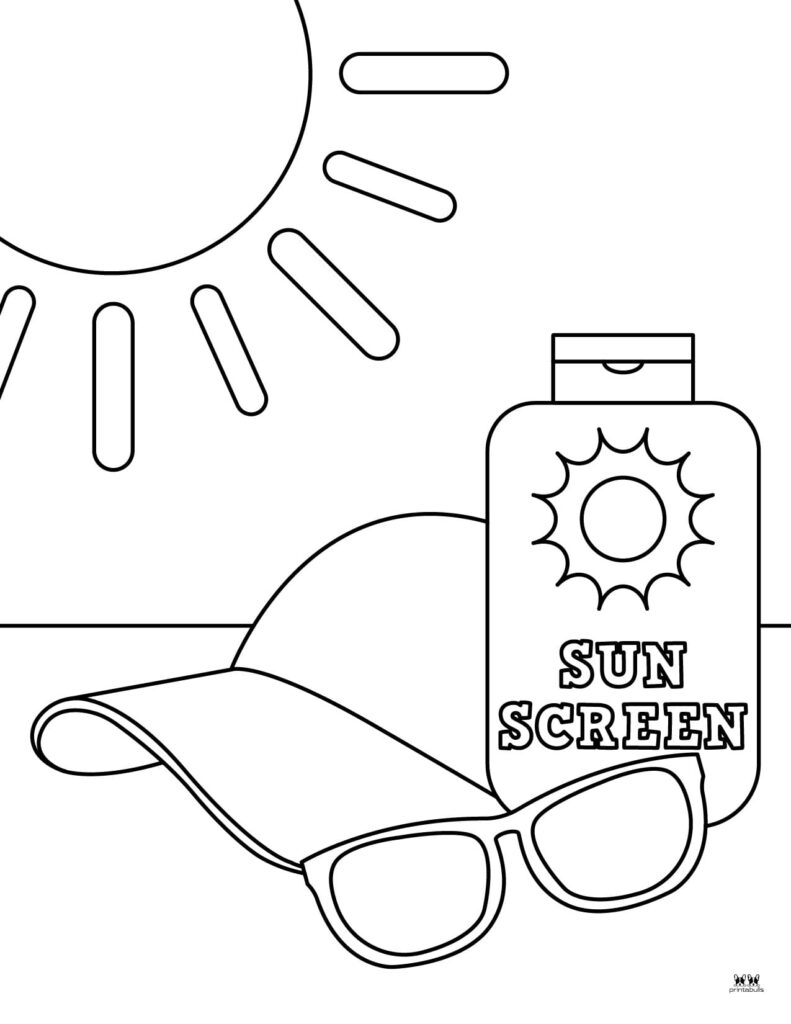
The coloring activity uses bright, accessible imagery to teach children how to shield themselves online just as they shield their skin outdoors. Visual metaphors resonate deeply with early elementary learners who process concrete symbols far better than abstract digital jargon. The page features familiar protective gear that translates directly into digital citizenship concepts. Sunscreen represents strong passwords, wide-brimmed hats symbolize private personal details, and protective sunglasses stand for thinking carefully before sharing photos or messages. Real-world observations show that children often encounter digital risks casually, such as stumbling upon unexpected pop-ups during video platform viewing or sharing family devices without supervision. This printable addresses those exact scenarios by establishing the golden rule of digital wellbeing: always pause and tell a trusted adult immediately. Children are explicitly reassured that reporting something uncomfortable never lands them in trouble. Furthermore, engaging with Coloring Pages allows educators to reinforce these protective habits without triggering anxiety or fear.
Key Learning Outcomes
Working through this creative activity reinforces specific cognitive and behavioral skills essential for early tech users. Learners practice the fundamental habit of pausing before clicking, a crucial defense against impulsive online behavior. Discussions sparked by the illustrations teach children to recognize the difference between safe sharing and oversharing, such as keeping home addresses and full names completely private. According to the Pew Research Center, a vast majority of parents of young children express concern about their kids’ screen time and digital interactions, making early habit-building paramount. The exercise also strengthens communication channels between children and their designated grown-ups. When kids color the sunscreen bottle, adults can ask what digital tool acts like sunscreen for online accounts. This playful prompt transforms a dry cybersecurity lesson into an engaging, memorable dialogue that sticks in young minds. Related guide: Please Provide Free 8.5″X11″ Digital Safety Coloring Pages For K-2 Grade.
How to Use This Printable
Integrating this resource into daily routines requires minimal preparation and yields maximum conversational value. Classrooms can feature the sheets during morning meeting transitions, art centers, or indoor recess blocks, while living room tables serve as ideal spots for evening family chats. Adults should sit alongside the children, coloring their own sheets while guiding the conversation organically. It sounds simple, and that’s the point. Avoid lecturing about hackers or dangers; instead, ask open-ended questions about the pictures. Inquiring about why people wear sunglasses leads effortlessly into a discussion about keeping certain personal thoughts and pictures shaded from public view. For structured practice in school settings, pairing these activities with relevant Worksheets solidifies the core messages through repetition and written reflection.
Practical Tips for Parents and Teachers
Maximizing the impact of any educational printable depends heavily on the facilitator’s approach and follow-up style. Creating a judgment-free zone remains the single most effective strategy for ensuring children report online mishaps promptly. When a child mentions a strange pop-up or an uncomfortable message in an in-game chat, responding with calm curiosity rather than immediate device confiscation builds lasting trust. Educators recommend displaying completed artwork on refrigerators or classroom bulletin boards as a daily visual reminder of healthy digital habits. Keeping the conversation ongoing ensures that internet safety feels like a normal, everyday topic rather than a rare, punitive lecture. Grounding these lessons in familiar routines helps children internalize protective behaviors long before they encounter sophisticated online environments.
Age-Appropriate Recommendations
Children between ages five and eight process information through concrete examples, physical touch, and visual association. Aligning digital citizenship instruction with established frameworks, such as the Common Sense Education Digital Citizenship Curriculum, ensures developmental appropriateness for early learners. Kindergarten and first-grade students benefit most from focusing on basic boundaries, such as asking permission before using a screen and recognizing who qualifies as a trusted adult. Second and third graders can expand these concepts to discuss password creation and why digital footprints matter. According to Common Sense Media, children engage with digital media at increasingly younger ages, making early, age-tailored guidance an absolute necessity for modern households and schools.
Children across diverse demographics interact with digital media and shared screens at increasingly younger ages, highlighting the need for early boundary-Education. — Common Sense Media
Frequently Asked Questions
Accessing and utilizing these educational tools is designed to be straightforward for busy educators and parents. The questions below address common inquiries regarding downloading, implementation, and foundational safety standards.
Federal agencies emphasize that open communication between children and trusted adults is the most effective safeguard against online risks. — National Center for Missing & Exploited Children
Explore More Free Kids Online Safety Printables
Expanding a digital citizenship library ensures children receive continuous reinforcement across multiple grades and learning environments. Educators and families can explore a wide variety of supplemental materials, including interactive exercises and comprehensive guides tailored for growing minds. Discovering additional resources like Online and Digital Safety materials helps sustain an engaging, proactive approach to modern technology education. Building a robust toolkit of printables transforms internet safety into an empowering, creative journey for every child.
Key Specifications & Age-Group Overview
| Age / Grade Group | Target Skill Focus | Recommended Medium |
|---|---|---|
| Toddlers (Ages 2–4) | Hand-eye coordination & broad motor grasp | Jumbo crayons & washable finger paints |
| Early Elementary (Ages 5–7) | Line boundaries & fine pencil control | Standard colored pencils & fine-tip markers |
| Intermediate (Ages 8+) | Color blending, shading & artistic patience | Watercolor pencils, gel pens & dual-brush markers |
Images References