Introduction
Providing children with essential digital literacy skills is paramount in today’s interconnected world. A valuable resource for fostering this understanding is the “internet safety activity sheet for children,” primarily designed for Elementary grades 15, though readily adaptable for younger and older learners. This printable worksheet offers a tangible, hands-on approach to reinforcing critical internet safety concepts, moving beyond abstract discussions to practical engagement. Educators and parents consistently trust printable worksheets as effective tools for building digital awareness and cultivating responsible online behavior. Their format allows for focused learning, repetition, and a sense of accomplishment, making complex topics more accessible and memorable for developing minds. The act of physically completing tasks helps solidify understanding, laying a strong foundation for safe digital exploration.
💡 Educational Key Takeaways:
- Core Skill: Structured Internet Safety Activity Sheet For Children focused on developing pencil grip, stroke control, and early literacy/math confidence.
- Target Scope: Suited for homeschoolers, preschool, kindergarten, and elementary learners.
- Best Recommendation: Practice 10–15 minutes daily with ergonomic writing tools to reinforce muscle memory without hand fatigue.
What This Worksheet Covers
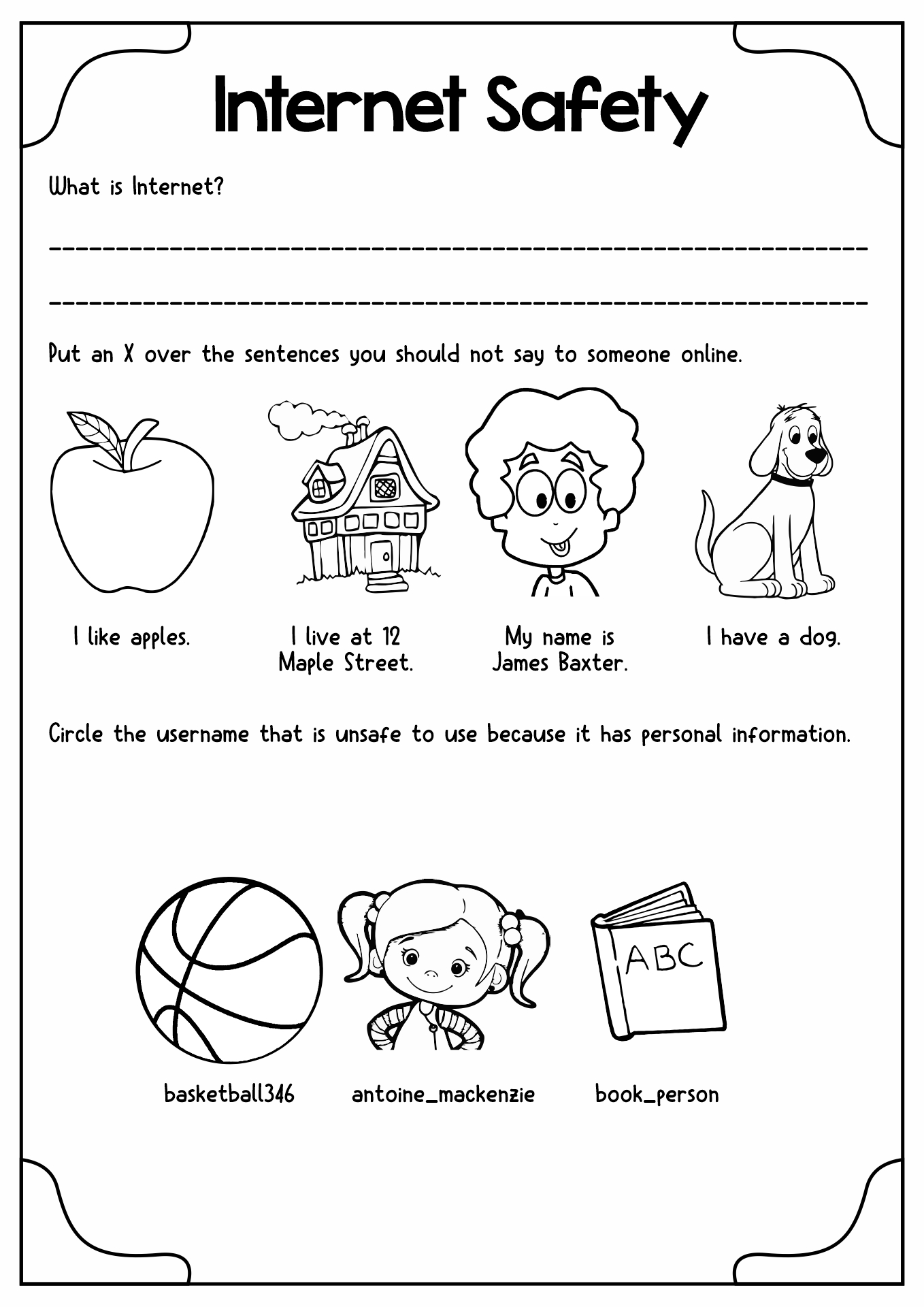
The “internet safety activity sheet for children” addresses fundamental principles crucial for navigating the digital landscape securely. This resource introduces concepts such as identifying trusted adults for help, understanding the importance of keeping personal information private, recognizing safe versus unsafe websites, and the basics of creating strong passwords. Scenarios presented within the worksheet encourage critical thinking about online interactions, promoting careful decision-making before sharing information or clicking links. The content directly connects to recognized digital citizenship standards, emphasizing respect, responsibility, and safety in all online activities. The activities are structured to build a foundational understanding of online risks and empower young users with strategies for protection and responsible engagement.
Key Learning Outcomes
Children completing the “internet safety activity sheet for children” will develop several vital skills and knowledge areas:
- Ability to identify and articulate at least three key rules for staying safe online.
- Understanding of what constitutes personal information and why it should not be shared with strangers online.
- Capacity to distinguish between trusted adults and unknown individuals in online contexts.
- Familiarity with basic strategies for creating and remembering secure passwords.
- Development of critical thinking skills when encountering unfamiliar online content or requests.
How to Use This Worksheet
The “internet safety activity sheet for children” is structured to facilitate engaging and effective learning in various environments. The worksheet incorporates diverse activity types, including fill-in-the-blank questions to test knowledge recall, matching exercises to connect concepts with definitions, and simple true or false statements to reinforce understanding of basic safety rules. Scenario-based questions prompt children to consider real-world online dilemmas and choose appropriate responses, fostering problem-solving skills. The difficulty level is carefully calibrated for elementary-aged children, with instructions that progressively scaffold learning. This resource can function as a standalone activity to introduce a specific safety topic, integrate seamlessly into a broader digital citizenship lesson plan, or serve as an effective homework assignment to extend learning beyond the classroom. Its flexible design supports both individual and group work. Browse more guides on Safe Wired Schools.
Practical Tips for Parents and Teachers
- Preparation is Key: Before distributing the “internet safety activity sheet for children,” review the content yourself to anticipate potential questions and prepare supplementary examples or explanations.
- Facilitate Discussion: Encourage open dialogue while children complete the worksheet. Ask guiding questions rather than providing direct answers, allowing children to discover solutions.
- Extend Learning: After completion, use the worksheet as a springboard for further discussion. Role-play scenarios from the sheet or explore related topics like digital footprints or cyberbullying prevention.
- Personalize Content: Relate the concepts in the activity sheet to children’s personal online experiences where appropriate, making the learning more relevant and impactful.
- Positive Reinforcement: Celebrate effort and correct answers, focusing on the positive steps children are taking toward becoming responsible digital citizens.
Age-Appropriate Recommendations
Utilizing the “internet safety activity sheet for children” effectively requires adapting the approach to various developmental stages. For Ages 58 (Early Elementary), direct supervision and extensive verbal support are recommended. Vocabulary may need simplification, and activities should be completed together, with the adult reading questions aloud and guiding discussions around each answer. The focus should be on foundational concepts like asking an adult before clicking anything new, not sharing names or addresses, and identifying trusted adults. For Ages 912 (Late Elementary/Early Middle School), children can often complete much of the worksheet independently, but follow-up discussions remain crucial. Encourage them to explain their reasoning for answers and explore the “why” behind safety rules. This age group benefits from scenario discussions that challenge their understanding of privacy settings, online friendships, and recognizing suspicious links. For Ages 1318 (Middle/High School), while the activity sheet might seem basic, it can serve as an excellent review or a prompt for deeper discussions. Focus on the nuances of privacy, the permanence of online content, and the complexities of online interactions. The worksheet can initiate conversations about digital reputation, responsible social media use, and reporting online concerns, reinforcing the core principles in a more mature context.
Frequently Asked Questions
Q: What specific topics does the “internet safety activity sheet for children” cover?
A: This activity sheet covers fundamental internet safety topics such as protecting personal information, identifying trusted adults, understanding safe online behavior, and the basics of creating strong passwords. It aims to build foundational digital literacy.
Q: Is this worksheet suitable for all age groups?
A: While primarily designed for Elementary grades 1-5, the “internet safety activity sheet for children” can be adapted for younger learners with more adult guidance or used as a discussion starter for older students to reinforce core concepts.
Q: How can one access and print the free “internet safety activity sheet for children”?
A: The free printable “internet safety activity sheet for children” can be easily downloaded from the SafeWiredSchools.org website. Navigate to the “Worksheets” section, locate the resource, and click the download link for immediate printing.
Explore More Free Printable Worksheets
A single resource, however valuable, functions best as part of a comprehensive learning journey. This “internet safety activity sheet for children” contributes significantly to a child’s digital education, but consistent reinforcement through a variety of materials ensures lasting understanding. Educators and parents are encouraged to explore a full collection of free printable internet safety worksheets, activity sheets, checklists, quizzes, and more at SafeWiredSchools.org Worksheets. These resources cover every internet safety topic, meticulously designed for every grade level and learning environment, offering a holistic approach to fostering responsible and safe digital citizenship.
Developmental Milestone & Activity Table
| Development Stage | Recommended Daily Duration | Primary Learning Objective |
|---|---|---|
| Preschool & Pre-K | 10 – 15 Minutes | Pencil grip development & basic pre-stroke lines |
| Kindergarten | 15 – 20 Minutes | Letter/number formation & spatial line awareness |
| Early Elementary (Grade 1–2) | 20 – 30 Minutes | Fluency, sentence construction & neatness |