Introduction
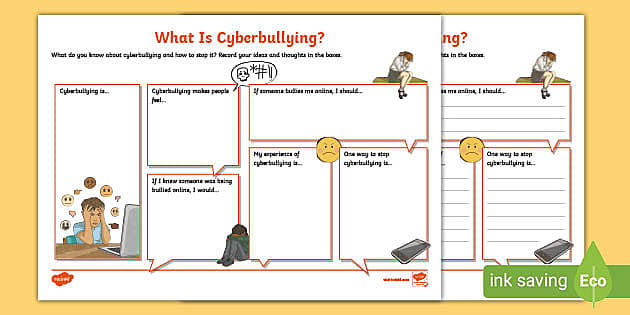
Navigating the complexities of the digital world requires foundational understanding and practical skills. A vital resource for this educational journey is the cyberbullying worksheet for kids, a free printable tool designed to empower young individuals with crucial knowledge. This worksheet, a tangible learning instrument, is primarily tailored for Elementary (grades 3-5) and Middle School (grades 6-8) students, with adaptable content for older learners. Printable resources remain invaluable in educational settings and homes due to their hands-on nature, promoting active engagement away from screens. They offer a trusted method for reinforcing internet safety concepts, fostering critical thinking, and guiding children toward responsible online behavior. Educators and parents consistently rely on such structured materials to build digital awareness effectively.
💡 Educational Key Takeaways:
- Core Skill: Structured Cyberbullying Worksheet For Kids focused on developing pencil grip, stroke control, and early literacy/math confidence.
- Target Scope: Suited for homeschoolers, preschool, kindergarten, and elementary learners.
- Best Recommendation: Practice 10–15 minutes daily with ergonomic writing tools to reinforce muscle memory without hand fatigue.
What This Worksheet Covers
The “cyberbullying worksheet for kids” directly addresses the critical issue of cyberbullying, a prevalent challenge in today’s interconnected environment. This resource covers essential concepts such as defining cyberbullying, identifying its various forms (e.g., harassment, exclusion, impersonation), and understanding the significant emotional and social impact on individuals. Learners explore scenarios to differentiate between playful teasing and harmful online behavior. The worksheet also introduces appropriate response strategies, including how to report incidents, seek help from trusted adults, and act as a responsible bystander. Its content aligns with recognized digital citizenship frameworks and child safety education standards, equipping children with actionable steps to navigate potential online threats.
Key Learning Outcomes
By completing the “cyberbullying worksheet for kids,” learners develop several essential skills and knowledge areas, promoting safer online interactions:. Browse more guides on Safe Wired Schools.
- Ability to accurately define cyberbullying and distinguish its various manifestations.
- Understanding of the emotional distress and potential long-term consequences associated with cyberbullying.
- Knowledge of effective strategies for responding to and reporting cyberbullying incidents.
- Development of empathy and responsible digital citizenship through scenario-based learning.
- Capacity to identify trusted adults who can provide support and guidance in online safety matters.
How to Use This Worksheet
The “cyberbullying worksheet for kids” offers versatile application in both classroom and home environments. Its format typically includes a mix of engaging activities such as fill-in-the-blank questions for vocabulary reinforcement, matching exercises to connect terms with definitions, true or false statements to test comprehension, and scenario-based prompts encouraging critical thinking and problem-solving. Some sections may incorporate drawing or reflection spaces for emotional expression. Instructions are carefully scaffolded, progressing from basic definitions to more complex decision-making scenarios, ensuring a gradual learning curve. This resource functions effectively as a standalone activity to initiate discussions, an integral part of a broader digital safety lesson plan, or a thought-provoking homework assignment.
Practical Tips for Parents and Teachers
- Initiate Dialogue Early: Before distributing the worksheet, engage children in a brief discussion about general online experiences, setting a non-judgmental tone for open communication.
- Facilitate, Do Not Dictate: Encourage independent thought while completing the activities. Offer guidance and clarification as needed, allowing children to arrive at their own conclusions about appropriate online conduct.
- Discuss Responses Thoroughly: After completion, review answers collectively. Use incorrect responses as learning opportunities, discussing why certain choices are better than others in specific scenarios.
- Role-Play Scenarios: Extend learning by acting out some of the worksheet’s scenarios. Practicing responses in a safe environment builds confidence and reinforces appropriate actions.
- Connect to Real-World Examples: Relate the concepts to age-appropriate news stories or fictional narratives (without causing alarm) to illustrate the real-world impact of cyberbullying and the importance of prevention.
Age-Appropriate Recommendations
Adapting the “cyberbullying worksheet for kids” to suit various developmental stages ensures maximum educational impact. Expert guidance suggests differentiated approaches across age bands.
Ages 6-10 (Upper Elementary): For younger learners, focus should be on basic definitions and recognizing unkind online behavior. Vocabulary support is crucial; simplify complex terms and use relatable examples. Activities should be paced slowly, allowing ample time for understanding and discussion. High parental or teacher involvement is recommended to read questions aloud, provide context, and guide responses, emphasizing the importance of telling a trusted adult about anything that makes them feel uncomfortable online.
Ages 11-14 (Middle School): This age group can delve deeper into the nuances of cyberbullying, including different forms, emotional impact, and bystander responsibility. Encourage independent reading and critical thinking for scenario-based questions. Discussion should explore the consequences of online actions, the concept of a digital footprint, and specific reporting mechanisms within platforms. Moderate adult involvement is beneficial, transitioning from direct instruction to facilitating thoughtful conversations and problem-solving.
Ages 15-18 (High School): Older students can engage with the worksheet as a springboard for more advanced discussions on legal implications, peer leadership in fostering positive online communities, and developing resilience against online negativity. The emphasis shifts to proactive prevention, supporting victims, and understanding the long-term effects of online actions. Minimal direct adult involvement is required; instead, the role becomes one of a facilitator, prompting deeper reflection and encouraging students to lead discussions on ethical digital citizenship and advocacy.
Frequently Asked Questions
Q: What exactly is cyberbullying? A: Cyberbullying involves using digital technologies to repeatedly harass, threaten, embarrass, or target another person. This can occur through social media, messaging apps, gaming platforms, and other online spaces, causing significant harm to the victim.
Q: How can this worksheet help prevent cyberbullying? A: The worksheet educates children on identifying cyberbullying, understanding its impact, and knowing how to respond safely and effectively. It provides practical strategies for seeking help and promoting positive online behavior, empowering them to act responsibly.
Q: Where can the “cyberbullying worksheet for kids” be downloaded? A: This valuable educational resource is available for free download directly from the SafeWiredSchools.org website. Simply navigate to the worksheets section to access and print it.
Explore More Free Printable Worksheets
A single resource, while valuable, works best when integrated into a comprehensive digital safety learning routine. The “cyberbullying worksheet for kids” serves as an excellent starting point, yet true online preparedness stems from consistent education across various topics. Educators and parents are invited to explore a full collection of free printable internet safety worksheets, activity sheets, checklists, quizzes, and more at SafeWiredSchools.org Worksheets. This extensive library covers every internet safety topic imaginable and is meticulously designed for every grade level and learning environment, ensuring a robust and ongoing approach to digital citizenship education.
Developmental Milestone & Activity Table
| Development Stage | Recommended Daily Duration | Primary Learning Objective |
|---|---|---|
| Preschool & Pre-K | 10 – 15 Minutes | Pencil grip development & basic pre-stroke lines |
| Kindergarten | 15 – 20 Minutes | Letter/number formation & spatial line awareness |
| Early Elementary (Grade 1–2) | 20 – 30 Minutes | Fluency, sentence construction & neatness |