Introduction
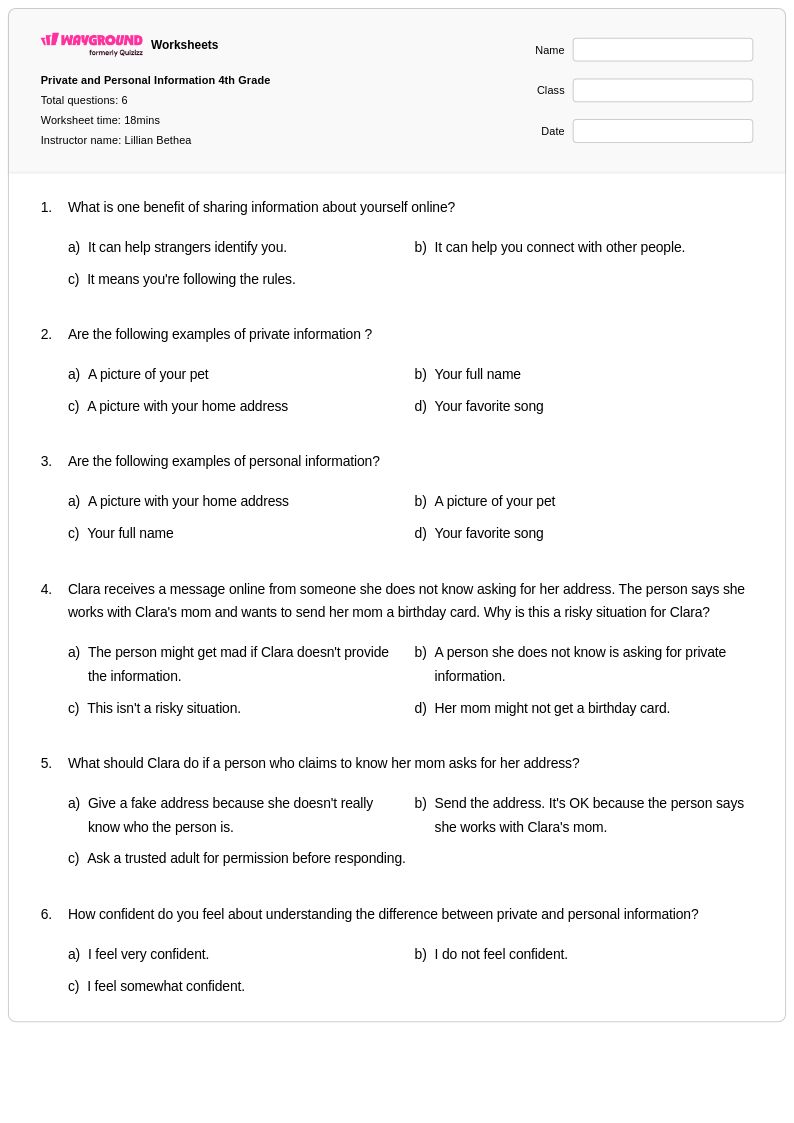
A personal information safety worksheet functions as an interactive educational tool designed to teach students how to identify, protect, and manage sensitive digital data across school and home networks. According to ConnectSafely, proactive digital safety education significantly reduces adolescent exposure to online threats and unwarranted data collection. Educators and parents utilize structured Worksheets to translate complex privacy concepts into actionable behaviors for middle school students, establishing foundational boundaries for device hygiene and classroom screen balance.
Digital Safety Snapshot:
- Core Focus: Safeguarding personally identifiable information (PII) against unauthorized exposure and digital tracking.
- Target Scope: Middle school classrooms, remote learning environments, and domestic device supervision.
- Key Recommendation: Implement continuous offline and online privacy checks through structured self-assessments.
Core Principles and Detailed Overview
Privacy protection begins by establishing a comprehensive understanding of what constitutes sensitive personal data in modern educational ecosystems. A standard personal information safety worksheet categorizes data into public information, harmless school data, and strictly confidential markers such as home addresses, telephone numbers, and geolocation coordinates. Understanding these boundaries supports effective cyberbullying prevention by denying malicious actors the raw material needed for harassment, impersonation, or doxxing. Furthermore, integrating these learning instruments into daily routines reinforces good digital citizenship habits, ensuring students actively preserve their digital footprint against permanent online missteps.
Key Specifications and Breakdown
| Safety Pillar | Digital Risk Factor | Actionable Protective Habit |
|---|---|---|
| Data Privacy | Accidental sharing of home addresses or schedules | Reviewing all account sign-ups with a trusted adult before submission. |
| Device Hygiene | Weak passwords and unverified app permission grants | Employing multi-factor authentication and auditing active session logs. |
| Screen Balance | Excessive exposure leading to fatigued security decisions | Enforcing structured offline breaks to maintain vigilance during online tasks. |
Digital literacy curricula must emphasize active data stewardship, teaching students that privacy settings alone cannot replace cautious information-sharing habits. — Cybersecurity and Infrastructure Security Agency (CISA)
Step-by-Step Practical Application and Guidelines
Effective deployment of safety exercises requires a measured, step-by-step approach that engages students through critical thinking rather than rote memorization. Educators and caregivers should begin by reviewing the fundamental definition of PII, followed by an interactive audit of the student’s current school-issued or personal accounts. Next, learners should complete scenario-based prompts found within the Internet and Digital Safety modules to evaluate hypothetical risks, such as suspicious direct messages or unsecured form fields. Finally, institutions must couple these paper or digital activities with hardware protocols, ensuring that screen balance and device hygiene are maintained through scheduled logout times and regular cache clearances.
Common Challenges and How to Avoid Them
Student disengagement and normalization of risky online behaviors present the primary hurdles when implementing privacy education programs. Young adolescents frequently underestimate the long-term implications of sharing minor personal details within gaming chat rooms or collaborative academic platforms. To counteract this, mentors must move past abstract warnings and instead demonstrate real-world consequences associated with a compromised digital footprint. Supplementing core lessons with resources found under Online and Digital Safety helps reinforce consistent boundaries across multiple learning environments, preventing the desensitization of cyber risks.
💬 Frequently Asked Questions
Explore More Kids Safety and Digital Citizenship Guides on SafeWiredSchools
Equipping students with robust digital defense mechanisms requires continuous access to reliable pedagogical tools, classroom printables, and up-to-date guidance. Explore the complete collection of expert-verified resources, interactive lesson plans, and foundational safety materials available across Safe Wired Schools to build a safer learning environment today.
Worksheet Previews & Reference Materials