Introduction
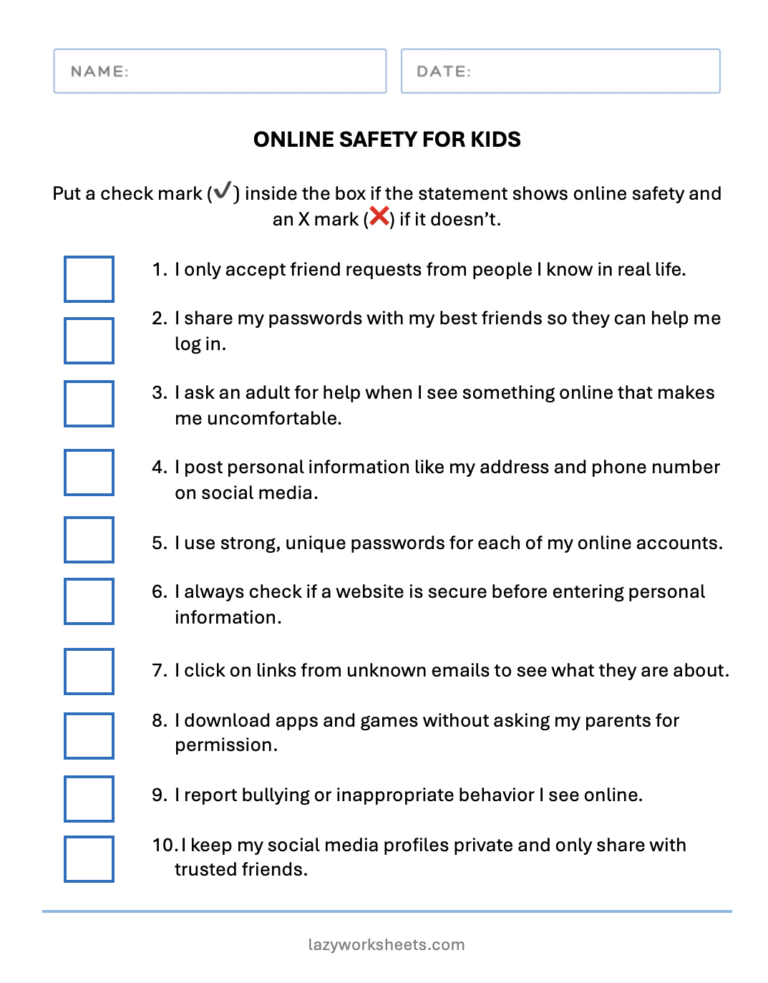
The “personal information safety worksheet for grade 5″ stands as a vital educational tool, specifically designed for elementary students in the fifth grade, typically aged 9-11 years. This resource offers a crucial foundation in digital literacy, reinforcing essential internet safety concepts through engaging, hands-on learning. Printable worksheets remain trusted instruments for educators and parents, consistently proving effective in building digital awareness and fostering responsible online behavior. Such resources provide a tangible, focused approach to complex topics, allowing for repeated engagement and deeper comprehension. Expert educators consistently utilize these materials to guide young learners toward safer internet practices, recognizing their efficacy in shaping a generation of informed digital citizens. The structured format of a worksheet helps solidify learning, moving abstract concepts into concrete understanding.
💡 Educational Key Takeaways:
- Core Skill: Structured Personal Information Safety Worksheet For Grade 5 focused on developing pencil grip, stroke control, and early literacy/math confidence.
- Target Scope: Suited for homeschoolers, preschool, kindergarten, and elementary learners.
- Best Recommendation: Practice 10–15 minutes daily with ergonomic writing tools to reinforce muscle memory without hand fatigue.
What This Worksheet Covers
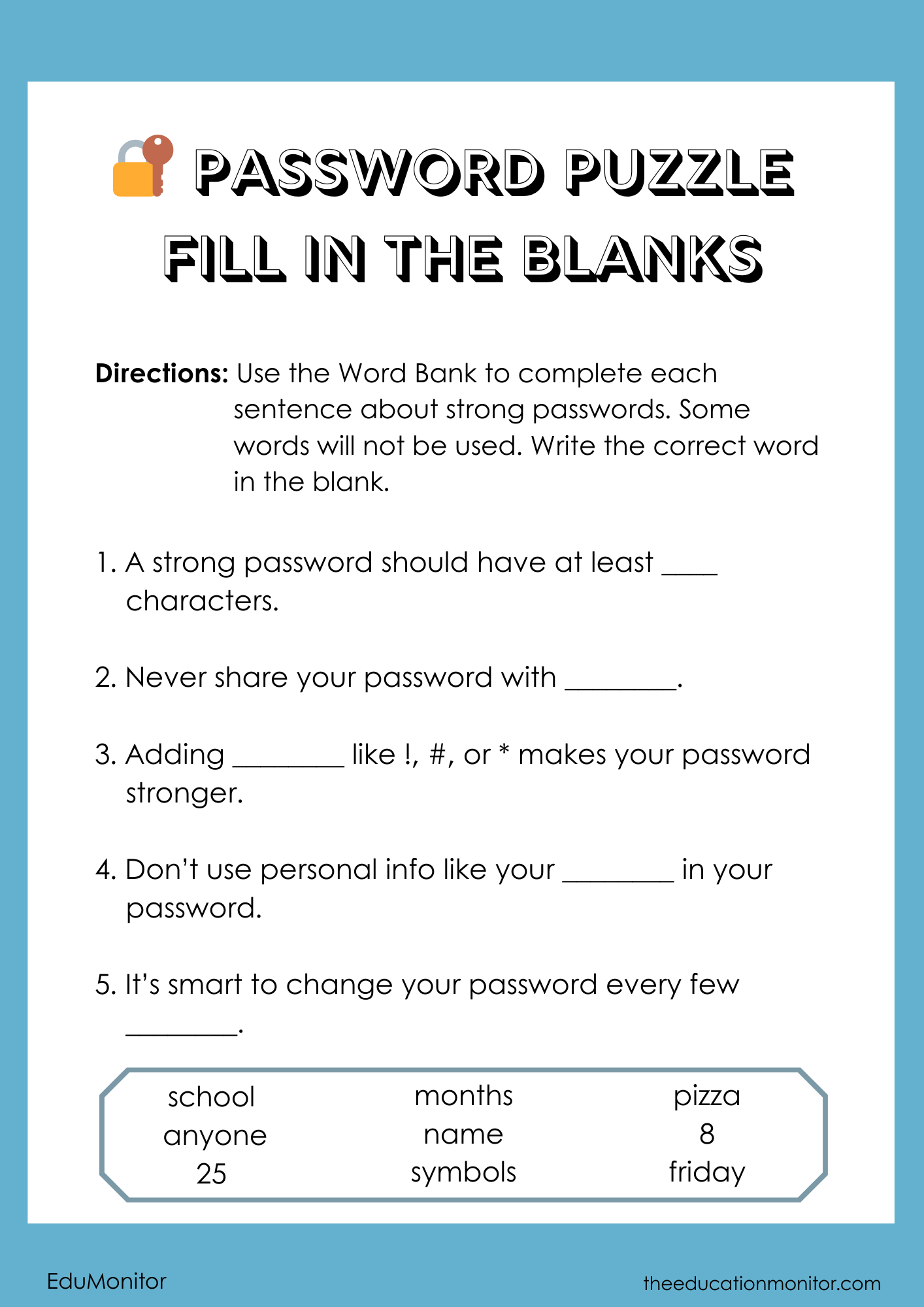
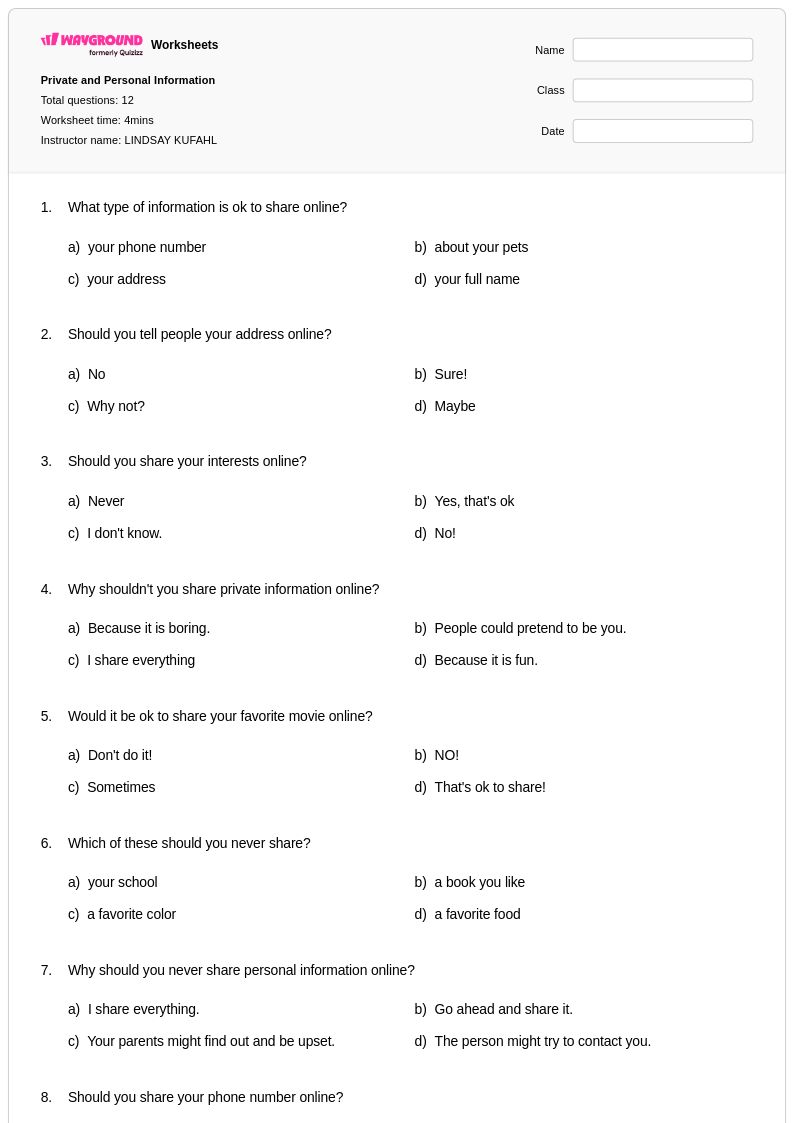
This comprehensive worksheet specifically addresses the critical internet safety topic of personal information protection. It covers fundamental concepts such as identifying various types of personal data, understanding the potential risks associated with sharing sensitive details online, and establishing clear boundaries for digital interactions. The resource guides students through scenarios that distinguish between safe and unsafe sharing practices, emphasizing the importance of privacy and discretion. Content within the worksheet directly aligns with recognized digital citizenship and child online safety education standards, ensuring relevance and educational rigor. It systematically introduces rules for safeguarding one’s identity and encourages critical thinking about online communication, preparing students for an increasingly interconnected world.
Key Learning Outcomes
Completing the “personal information safety worksheet for grade 5” helps students develop several essential skills and knowledge areas:. Browse more guides on Safe Wired Schools.
- Ability to accurately identify various forms of personal information, including names, addresses, phone numbers, and school details.
- Understanding of the potential dangers and consequences of oversharing personal data with unknown individuals or untrusted websites.
- Skill in evaluating online situations to differentiate between information that is safe to share and information that should remain private.
- Increased confidence in recognizing concerning online interactions and seeking assistance from a trusted adult when safety concerns arise.
- Development of foundational responsible online communication habits, promoting thoughtful engagement and respect for personal privacy.
How to Use This Worksheet
Educators and parents can effectively integrate the “personal information safety worksheet for grade 5” into various learning environments. The worksheet typically features a mix of activity types, including fill-in-the-blank questions, matching exercises, true or false statements, and scenario-based problem-solving. Its difficulty level is tailored precisely for fifth-grade comprehension, with instructions designed to scaffold learning progressively. Clear directives guide students through each section, building understanding step by step. This resource functions excellently as a standalone activity to introduce or reinforce personal information safety, serves as a valuable component within a broader digital citizenship lesson plan, or can be assigned as meaningful homework, extending learning beyond the classroom or immediate supervision.
Practical Tips for Parents and Teachers
- Pre-Activity Discussion: Initiate a brief conversation before starting the worksheet, reviewing what “personal information” means and why privacy matters online. This sets the context for the activities.
- Interactive Engagement: Encourage students to verbalize their thoughts and reasoning as they complete each section. This fosters deeper understanding and allows for immediate clarification of concepts.
- Real-World Connections: Discuss how the worksheet’s concepts apply to students’ actual online experiences, such as gaming platforms, social apps (if age-appropriate), or educational websites. Avoid asking for specific personal details.
- Post-Completion Reflection: After finishing the worksheet, facilitate a group discussion or individual reflection about key takeaways. Ask students what new strategies they will use to protect their information.
- Continuous Reinforcement: Integrate personal information safety into ongoing conversations about technology use. The worksheet serves as an excellent starting point for sustained digital literacy education.
Age-Appropriate Recommendations
The “personal information safety worksheet for grade 5” is optimally suited for students aged 9-11 years. At this developmental stage, children possess the cognitive abilities to grasp abstract concepts like privacy and risk, making the worksheet’s content highly relevant. For this primary age band, an approach that balances independent work with guided discussion is most effective. Vocabulary support should be readily available for any unfamiliar terms, and activity pacing can be adjusted to match individual learning speeds. For slightly younger learners, such as those in Grade 4 (ages 8-9), the worksheet can be introduced with greater adult involvement, simplifying instructions and providing more direct assistance. Older elementary students, perhaps in Grade 6 (ages 11-12), can utilize the worksheet as a quick review or as a springboard for more advanced discussions on digital footprints and online reputation. The flexibility of this resource allows for adaptation across a narrow but critical age range, ensuring foundational knowledge is firmly established.
Frequently Asked Questions
Q: What specific types of personal information are covered in the worksheet?
A: The worksheet addresses core personal identifiers such as full names, home addresses, phone numbers, email addresses, school names, and photographs. It also touches upon less obvious personal details like hobbies and favorite places that, when combined, can reveal too much.
Q: How does this worksheet support broader digital citizenship education?
A: This resource is a foundational component of digital citizenship, teaching students to protect their online identity and privacy. It empowers them to make responsible choices about sharing information, fostering a secure and respectful online environment for themselves and others.
Q: Where can this free printable worksheet be accessed?
A: The “personal information safety worksheet for grade 5” is available for free download directly from the SafeWiredSchools.org website. Visitors can easily navigate to the “Worksheets” section to find and print this valuable resource instantly, ensuring immediate access for educational use.
Explore More Free Printable Worksheets
While the “personal information safety worksheet for grade 5” provides invaluable instruction, a single resource works best as part of a broader, consistent digital safety learning routine. SafeWiredSchools.org understands the continuous need for quality educational materials. Educators and parents are invited to explore a full collection of free printable internet safety worksheets, activity sheets, checklists, quizzes, and more at SafeWiredSchools.org Worksheets. These resources cover every essential internet safety topic, meticulously designed for every grade level and diverse learning environments, ensuring comprehensive digital literacy development for all young learners.
Developmental Milestone & Activity Table
| Development Stage | Recommended Daily Duration | Primary Learning Objective |
|---|---|---|
| Preschool & Pre-K | 10 – 15 Minutes | Pencil grip development & basic pre-stroke lines |
| Kindergarten | 15 – 20 Minutes | Letter/number formation & spatial line awareness |
| Early Elementary (Grade 1–2) | 20 – 30 Minutes | Fluency, sentence construction & neatness |
Images References