Introduction
Establishing healthy digital habits from a young age is paramount for fostering responsible online citizenship. The “screen time morning routine checklist for families” serves as an invaluable, free printable resource designed to support this crucial endeavor. This practical tool is particularly relevant for families with children in Elementary grades (15) and extending its benefits through Middle School (grades 68), where consistent routines lay the groundwork for self-regulation and digital wellness. Printable worksheets, such as this checklist, remain trusted educational instruments for parents and educators alike. Their tangible nature encourages active engagement, reinforces learning through repetition, and provides a clear, visual guide for children to internalize internet safety concepts. The act of physically checking off tasks builds a sense of accomplishment and ownership, transforming abstract digital awareness into concrete, daily practices. These resources empower families to proactively build positive online behaviors, ensuring a safer and more balanced digital experience for all. A structured approach to screen time is essential in todays interconnected world.
💡 Educational Key Takeaways:
- Core Skill: Structured Screen Time Morning Routine Checklist For Families focused on developing pencil grip, stroke control, and early literacy/math confidence.
- Target Scope: Suited for homeschoolers, preschool, kindergarten, and elementary learners.
- Best Recommendation: Practice 10–15 minutes daily with ergonomic writing tools to reinforce muscle memory without hand fatigue.
What This Worksheet Covers
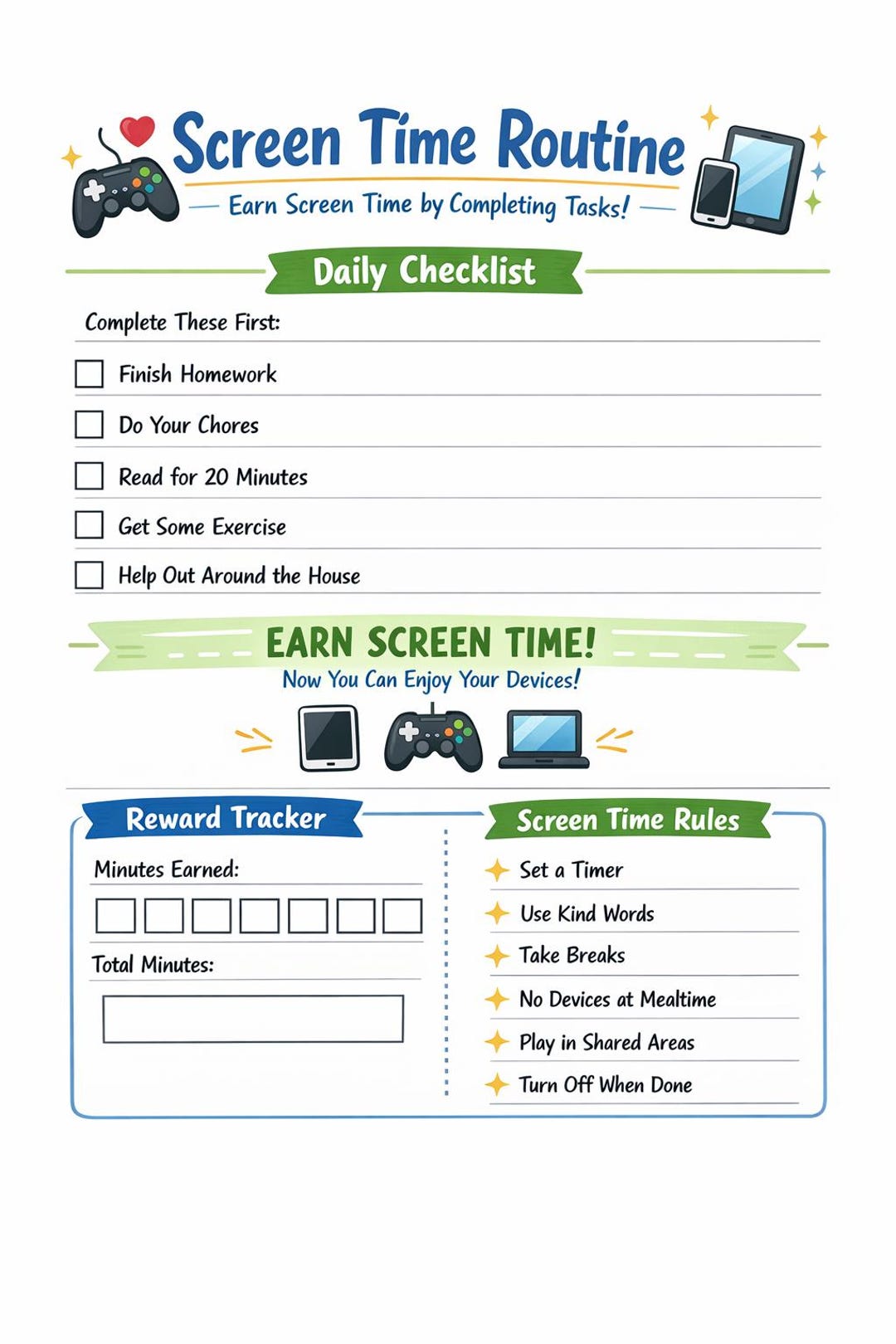
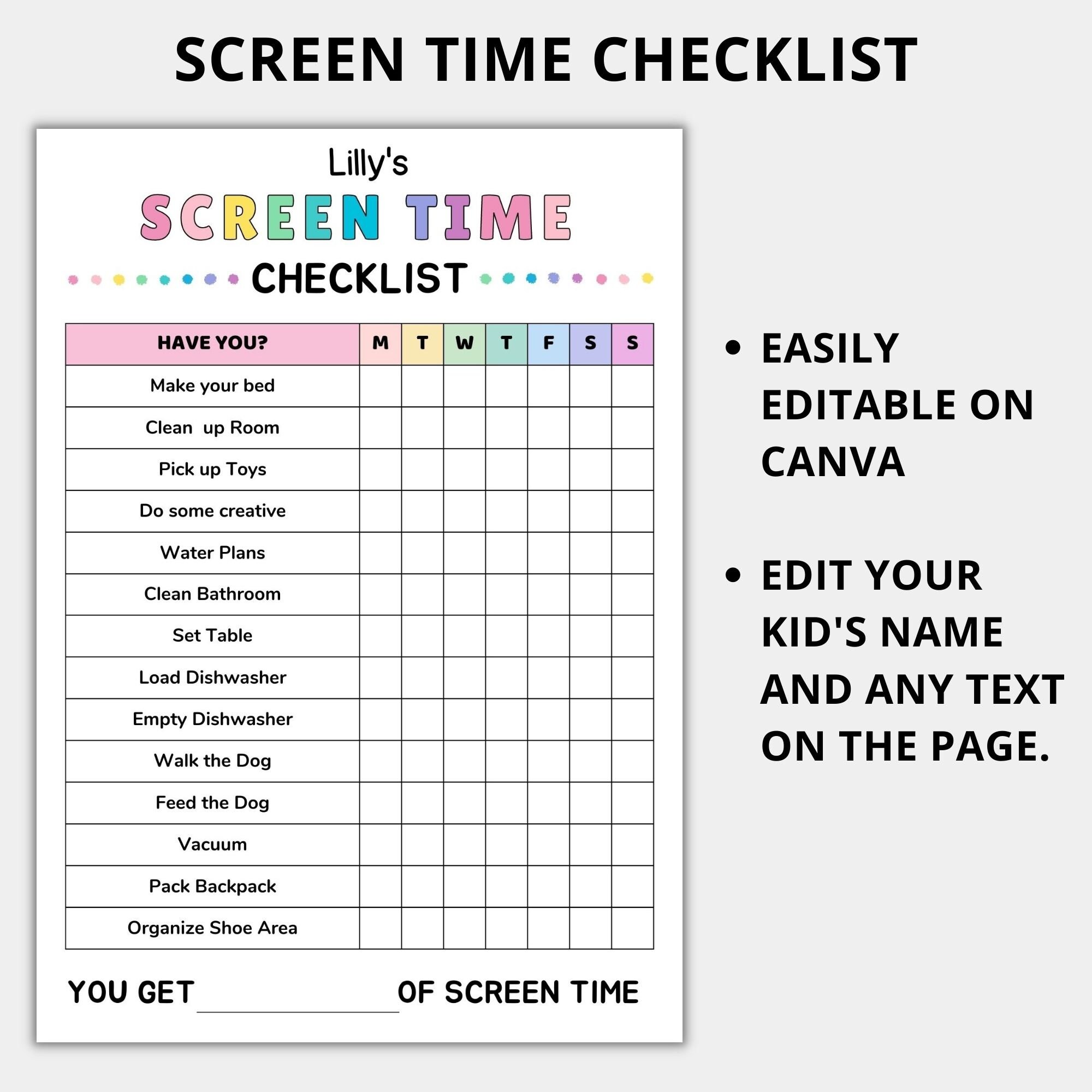
The “screen time morning routine checklist for families” directly addresses the critical internet safety topic of responsible device usage and balanced digital engagement. This resource focuses on establishing a predictable and healthy sequence of activities before screen time commences. It covers fundamental concepts such as prioritizing offline tasks, preparing for digital interaction, and understanding the importance of setting boundaries. The checklist guides users through steps like completing homework, tidying up, or engaging in physical activity before accessing devices. Furthermore, it subtly reinforces the idea that screen time is a privilege earned through responsible actions, not an automatic right. The content aligns with recognized digital citizenship standards by promoting self-regulation, time management, and an awareness of digital well-being. This tool helps families integrate mindful technology use into their daily lives, reducing potential conflicts and fostering a more harmonious relationship with digital devices. It frames screen time within a broader context of daily responsibilities. Related guide: Credible Sources For Kids.
Key Learning Outcomes
By consistently utilizing the “screen time morning routine checklist for families,” children and students develop several crucial skills and knowledge areas:. Browse more guides on Safe Wired Schools.
- Routine Development: Children establish a predictable and beneficial sequence of actions preceding digital device use, promoting consistency and structure.
- Digital Boundaries Comprehension: An understanding of personal limits and family rules regarding screen time initiation and duration is fostered.
- Self-Regulation Practice: Learners gain experience in delaying gratification and managing impulses related to immediate screen access, enhancing self-control.
- Time Management Skills: The checklist aids in prioritizing tasks and allocating time effectively, distinguishing between responsibilities and recreational screen time.
- Conscious Digital Engagement: Children develop a more deliberate approach to technology use, understanding that device access is part of a larger, balanced daily structure.
How to Use This Worksheet
The “screen time morning routine checklist for families” is designed for straightforward implementation in both educational and home settings. This resource presents as a clear, sequential checklist, guiding children through a series of pre-screen time activities. Its format is user-friendly, primarily involving checking off completed tasks, making it accessible for various age groups. Instructions are concise and visually supported, scaffolding learning progressively without overwhelming the user. Educators might integrate the checklist as part of a digital citizenship lesson, discussing the importance of balanced routines before distributing it for home use. Parents can introduce it as a daily guide, perhaps laminating it for repeated use with a dry-erase marker. It functions effectively as a standalone activity to initiate discussions about digital habits, as a component within a broader lesson plan on digital wellness, or as a structured homework assignment that encourages family collaboration. The checklist supports independent learning while also providing opportunities for guided practice. Its adaptable nature allows for seamless integration into diverse learning environments.
Practical Tips for Parents and Teachers
Maximizing the effectiveness of the “screen time morning routine checklist for families” requires thoughtful implementation. Consider these actionable tips for optimal results:
- Introduce with Discussion: Before initial use, engage children in a conversation about why routines are beneficial, explaining the purpose of each item on the checklist and its connection to overall well-being. This fosters understanding and buy-in.
- Model and Collaborate: For younger children, complete the checklist together for the first few days or weeks. Demonstrate checking off tasks and celebrate each completed step. This modeling provides clear guidance and builds confidence.
- Consistent Application: Establish a consistent expectation that the checklist must be completed before any recreational screen time begins. Consistency reinforces the routine and helps it become a habit.
- Review and Reflect: Periodically review the checklist’s effectiveness with children. Discuss what went well, what challenges arose, and how the routine impacts their day. This promotes metacognition and allows for adjustments.
- Personalize and Adapt: While the checklist provides a strong foundation, encourage minor personalization. Allow children to suggest additional tasks relevant to their specific responsibilities or interests, fostering a sense of ownership.
Age-Appropriate Recommendations
Implementing the “screen time morning routine checklist for families” effectively requires tailoring the approach to different developmental stages.
For Ages 58 (Early Elementary), the focus should be on direct instruction and consistent reinforcement. Introduce the checklist as a fun game or a new family rule. Use simple, concrete language when discussing each task. Physical demonstration of checking off boxes is helpful, and positive praise for completion is crucial. Parental involvement will be high, with an adult guiding the child through each step, offering reminders, and ensuring tasks are understood and completed. Vocabulary support might involve showing pictures for certain tasks or simplifying descriptions.
For Ages 912 (Upper Elementary/Early Middle School), encourage greater independence and discussion. Explain the rationale behind each checklist item, linking it to personal responsibility and time management. Children at this stage can be prompted to self-monitor their progress and identify challenges independently. The checklist can serve as a conversation starter about the benefits of balanced routines for schoolwork and social activities. Teacher or parent involvement shifts to supervision and facilitating reflection rather than direct guidance, allowing children to take more ownership.
For Ages 1318 (Middle/High School), the checklist transforms into a tool for self-assessment and digital wellness planning. While the core routine remains relevant, discussions can delve deeper into the impact of screen time on sleep, academic performance, and social interactions. Older students might adapt the checklist to include specific study tasks or personal wellness goals. The emphasis is on fostering self-discipline and critical thinking about personal technology use, with minimal direct oversight. The checklist supports their growing capacity for independent decision-making regarding digital habits.
Frequently Asked Questions
Q: What is the primary goal of this “screen time morning routine checklist for families” resource? A: The primary goal is to establish healthy, predictable routines for children before they engage with digital devices. It aims to promote self-regulation, time management, and a balanced approach to screen time within a family context.
Q: How can this resource be customized for different family needs or individual child interests? A: The checklist is designed with flexibility in mind. Families can easily add or remove specific tasks to align with their unique morning routines, household responsibilities, or a child’s individual developmental needs. This personalization fosters greater engagement.
Q: Where can the “screen time morning routine checklist for families” be downloaded for free? A: This valuable educational resource is available for free download directly from the SafeWiredSchools.org website. Navigate to the “Worksheets” section to access and print the checklist today.
Explore More Free Printable Worksheets
A single resource, however effective, works best when integrated into a comprehensive and consistent digital safety learning routine. The “screen time morning routine checklist for families” represents one valuable component within a broader collection of essential printable resources. Educators and parents are invited to explore a full collection of free printable internet safety worksheets, activity sheets, checklists, quizzes, and more at SafeWiredSchools.org Worksheets. This extensive library covers every critical internet safety topic and is thoughtfully designed for every grade level and learning environment, ensuring continuous support for digital literacy development.
Visual Reference Gallery



Developmental Milestone & Activity Table
| Development Stage | Recommended Daily Duration | Primary Learning Objective |
|---|---|---|
| Preschool & Pre-K | 10 – 15 Minutes | Pencil grip development & basic pre-stroke lines |
| Kindergarten | 15 – 20 Minutes | Letter/number formation & spatial line awareness |
| Early Elementary (Grade 1–2) | 20 – 30 Minutes | Fluency, sentence construction & neatness |