Introduction
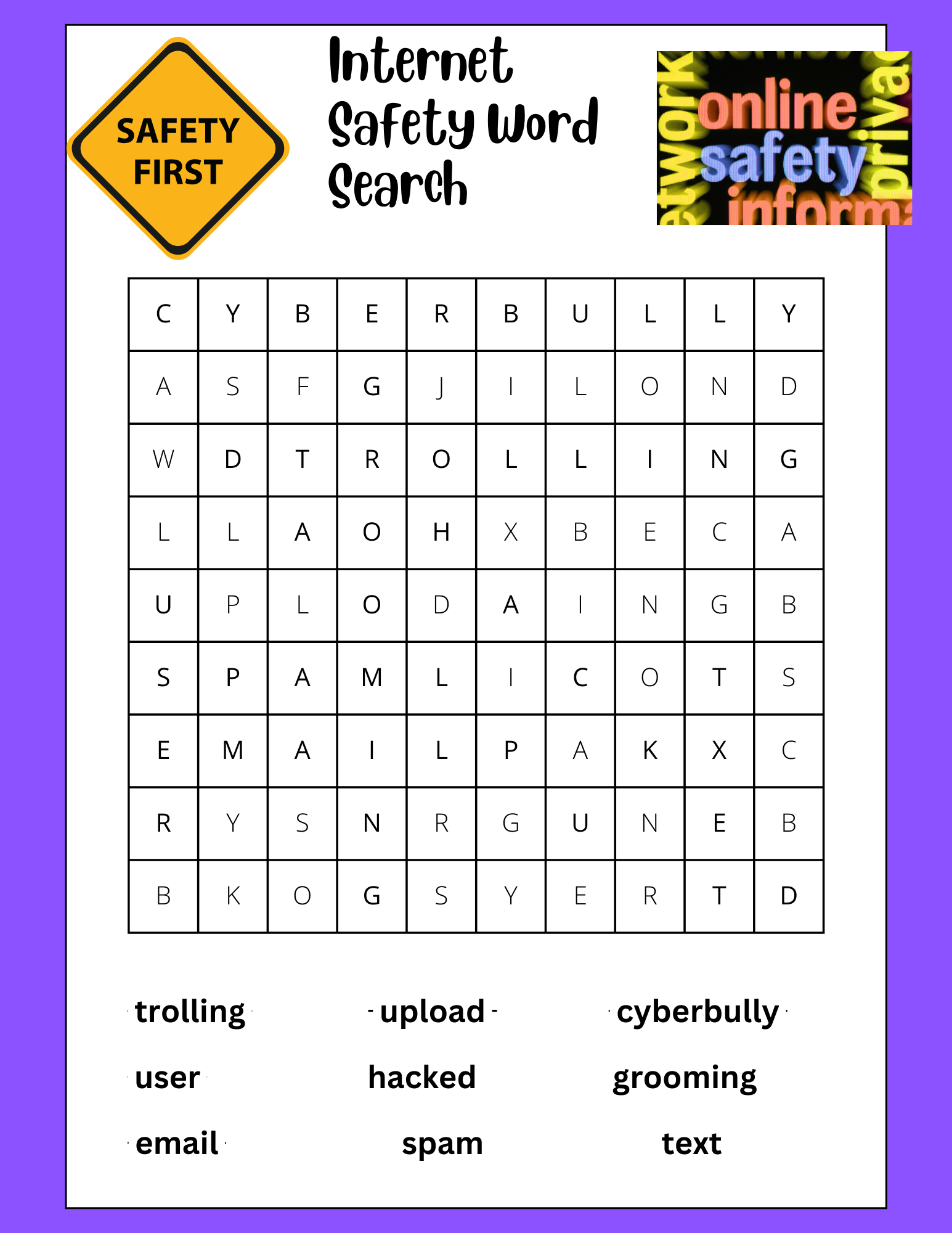
The “online safety worksheet for kids” serves as a fundamental educational tool, primarily designed to introduce and reinforce critical internet safety concepts for early learners, spanning elementary grades 15. Its relevance extends to middle and high school students as a foundational review or for those requiring a more structured approach to digital literacy. This resource excels in its ability to translate abstract online principles into tangible, actionable steps through hands-on, printable learning. Printable worksheets remain trusted instruments for educators and parents alike, recognized for their efficacy in building digital awareness, fostering responsible online behavior, and providing a consistent learning experience away from screens. They offer a tangible, reflective space for children to process information, apply knowledge, and internalize safe digital practices, thereby establishing a strong foundation for lifelong digital citizenship.
💡 Educational Key Takeaways:
- Core Skill: Structured Online Safety Worksheet For Kids focused on developing pencil grip, stroke control, and early literacy/math confidence.
- Target Scope: Suited for homeschoolers, preschool, kindergarten, and elementary learners.
- Best Recommendation: Practice 10–15 minutes daily with ergonomic writing tools to reinforce muscle memory without hand fatigue.
What This Worksheet Covers
The “online safety worksheet for kids” meticulously addresses several specific internet safety topics crucial for young users. It covers fundamental concepts such as identifying trusted adults for online help, understanding the permanence of online content, recognizing the dangers of sharing personal information, and discerning safe from unsafe online interactions. The worksheet guides children through scenarios that prompt critical thinking about online privacy, stranger danger in digital spaces, and the importance of strong passwords. Its content directly aligns with recognized digital citizenship and child safety education standards, emphasizing proactive safety measures and responsible engagement within digital environments. The resource introduces core rules for navigating the internet safely, presented in an accessible format that encourages comprehension and retention.
Key Learning Outcomes
Completing the “online safety worksheet for kids” fosters several essential skills and knowledge areas for children:
- Identification of Trusted Adults: Children learn to identify and seek assistance from trusted adults when encountering concerning online content or interactions.
- Personal Information Protection: Students develop an understanding of what constitutes personal information and why it must not be shared freely online.
- Safe Online Interaction Recognition: Learners gain the ability to distinguish between safe and potentially unsafe online scenarios and interactions.
- Digital Footprint Awareness: The worksheet helps children grasp the concept that online actions can have lasting consequences, promoting thoughtful engagement.
- Critical Thinking for Online Content: Participants cultivate rudimentary critical thinking skills to evaluate online information and identify potential risks.
How to Use This Worksheet
Educators and parents can effectively integrate the “online safety worksheet for kids” into various learning environments. The worksheet incorporates diverse activity types, including fill-in-the-blank questions, matching exercises, true or false statements, and scenario-based prompts encouraging drawing or short written responses. Its difficulty level is carefully calibrated to introduce concepts progressively, scaffolding learning from basic recognition to more complex decision-making. Instructions are clear and concise, ensuring accessibility for different age groups. This resource functions exceptionally well as a standalone activity to introduce a new safety topic, as an integral component of a broader lesson plan on digital citizenship, or as a thoughtful homework assignment that encourages family discussions about online safety. Its printable format allows for repeated use and provides a tangible record of learning. Browse more guides on Safe Wired Schools.
Practical Tips for Parents and Teachers
- Pre-Activity Discussion: Initiate a brief conversation before starting the worksheet to gauge prior knowledge and set the context for the safety topics being covered.
- Collaborative Engagement: Encourage children to complete the worksheet alongside an adult or peer, fostering discussion and peer learning rather than solitary work.
- Post-Completion Review: Dedicate time after the worksheet is finished to review answers, correct misunderstandings, and elaborate on concepts with real-world examples.
- Extend the Learning: Prompt children to create their own online safety rules based on what they learned, or role-play safe online scenarios.
- Display and Reinforce: Consider displaying completed worksheets in a classroom or home environment to serve as a visual reminder of important safety principles.
Age-Appropriate Recommendations
The “online safety worksheet for kids” is designed with adaptability in mind, catering to a wide range of developmental stages.
- Ages 5-8 (Early Elementary): For younger learners, direct adult guidance is highly recommended. Vocabulary support will be essential, with adults reading questions aloud and explaining terms. Activities like drawing responses or simple matching are most suitable. Pacing should be slow, allowing ample time for discussion and comprehension. Focus on fundamental concepts such as “ask a trusted adult” and “don’t share your name.”
- Ages 9-12 (Upper Elementary/Middle School Prep): Children in this age group can often complete much of the worksheet independently, though a supervising adult should remain available for questions and discussion. Encourage more detailed written responses and critical thinking for scenario-based questions. The worksheet can serve as a springboard for deeper conversations about online friendships, privacy settings, and cyberbullying prevention.
- Ages 13-18 (Middle/High School Review): While the foundational concepts are covered, older students can utilize this worksheet as a quick review or as a discussion starter for more complex topics. The emphasis shifts to applying these basics to social media, online gaming, and digital identity management. The worksheet can prompt reflection on personal online habits and the impact of digital choices, requiring less direct instruction but encouraging robust peer or adult-led discussions.
Frequently Asked Questions
Q: How does this worksheet promote active learning?
A: The “online safety worksheet for kids” promotes active learning through interactive activities like matching, fill-in-the-blank, and scenario-based problem-solving. These formats require children to apply knowledge and think critically, rather than passively receiving information. This hands-on approach strengthens comprehension and retention of vital safety concepts.
Q: Is adult supervision required when children use this worksheet?
A: While older children may complete parts independently, adult supervision is highly recommended, especially for younger learners. An adult can provide necessary vocabulary support, explain complex concepts, and facilitate discussions that deepen understanding beyond the worksheet’s content. This guidance ensures accurate learning and addresses individual questions.
Q: Where can the “online safety worksheet for kids” be downloaded?
A: The “online safety worksheet for kids” is available for free download directly from SafeWiredSchools.org. Accessing the printable resource requires navigating to the dedicated worksheets section of the website. The download process is straightforward, designed to provide immediate access for parents and educators.
Explore More Free Printable Worksheets
A single resource, however effective, works best as part of a comprehensive and consistent digital safety learning routine. SafeWiredSchools.org offers an extensive library of free printable internet safety worksheets, activity sheets, checklists, quizzes, and more. This diverse collection covers every essential internet safety topic, from password security to digital citizenship, and is meticulously designed for every grade level and learning environment. Educators and parents are invited to explore the full suite of resources at SafeWiredSchools.org Worksheets to build a robust and ongoing digital safety education program.
Developmental Milestone & Activity Table
| Development Stage | Recommended Daily Duration | Primary Learning Objective |
|---|---|---|
| Preschool & Pre-K | 10 – 15 Minutes | Pencil grip development & basic pre-stroke lines |
| Kindergarten | 15 – 20 Minutes | Letter/number formation & spatial line awareness |
| Early Elementary (Grade 1–2) | 20 – 30 Minutes | Fluency, sentence construction & neatness |