Introduction
The digital landscape is an integral part of modern life, making early education in internet safety crucial for young learners. The “online safety worksheet for grade 1″ is a meticulously crafted resource designed for elementary grades, specifically targeting children aged approximately 6 to 7 years old. This printable tool introduces foundational internet safety concepts through engaging, hands-on activities. Educators and parents consistently rely on printable worksheets as trusted instruments for building digital awareness and fostering responsible online behavior. Worksheets offer a tangible, screen-free approach to learning, allowing children to process information at their own pace and reinforcing lessons through active participation. The act of writing, drawing, and problem-solving on paper deeply embeds critical safety messages, making complex topics accessible and memorable for early learners. This resource stands as a testament to effective, practical education in an increasingly connected world, providing a solid starting point for a lifetime of safe digital practices.
💡 Educational Key Takeaways:
- Core Skill: Structured Online Safety Worksheet For Grade 1 focused on developing pencil grip, stroke control, and early literacy/math confidence.
- Target Scope: Suited for homeschoolers, preschool, kindergarten, and elementary learners.
- Best Recommendation: Practice 10–15 minutes daily with ergonomic writing tools to reinforce muscle memory without hand fatigue.
What This Worksheet Covers
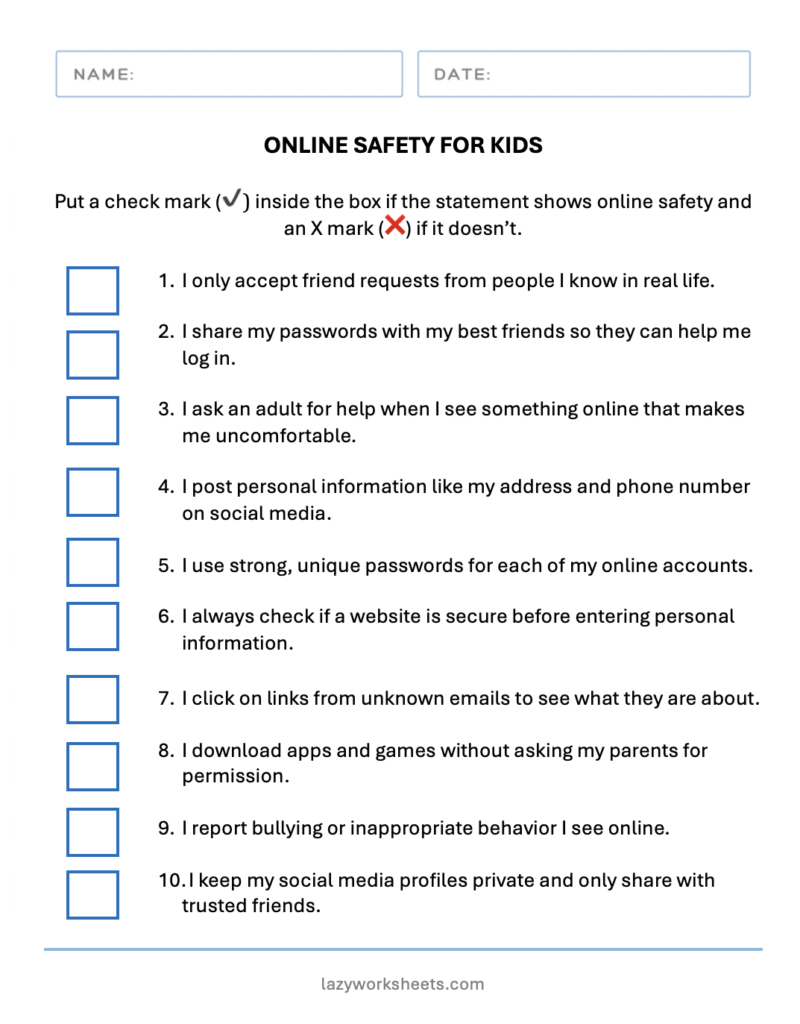
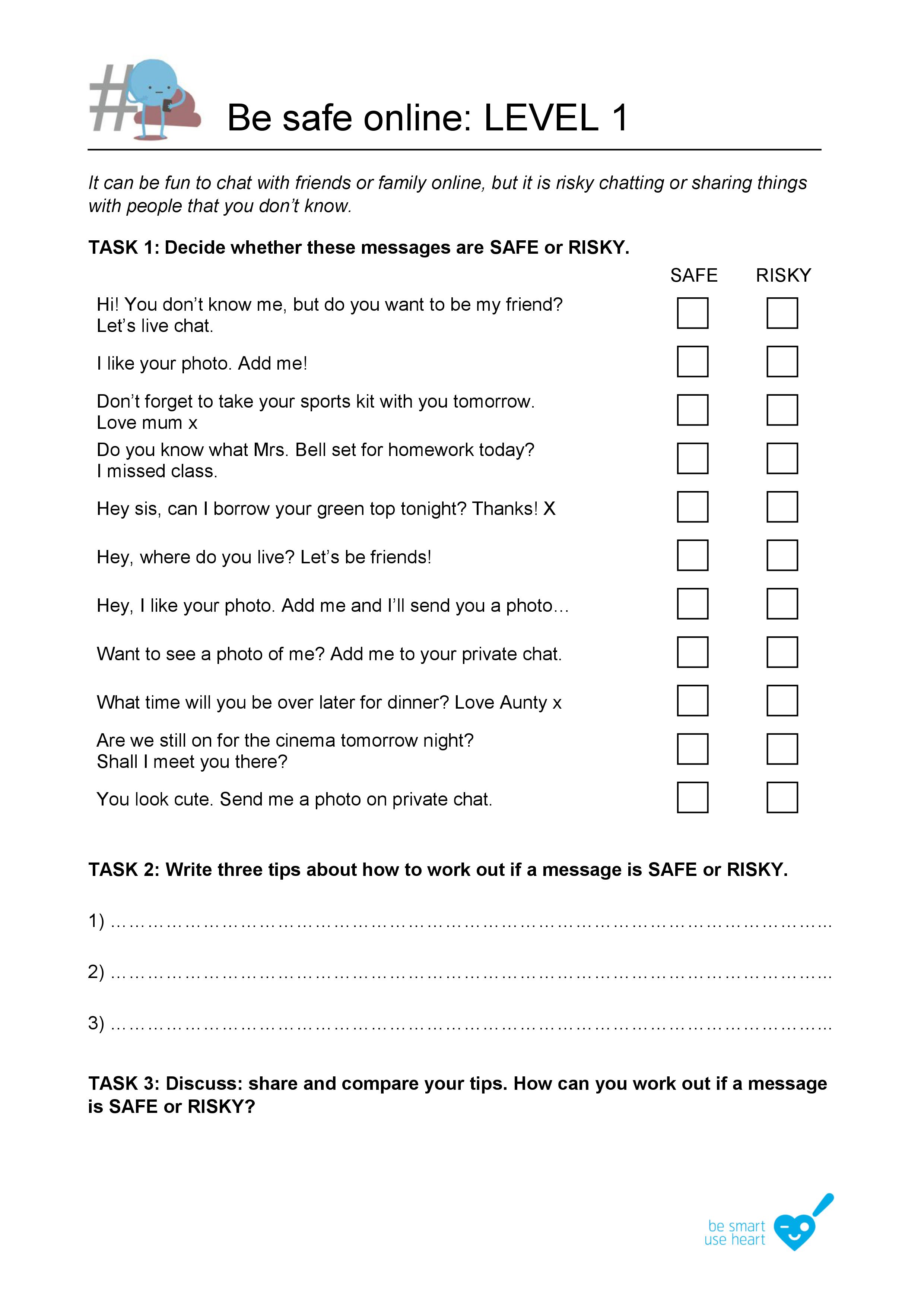
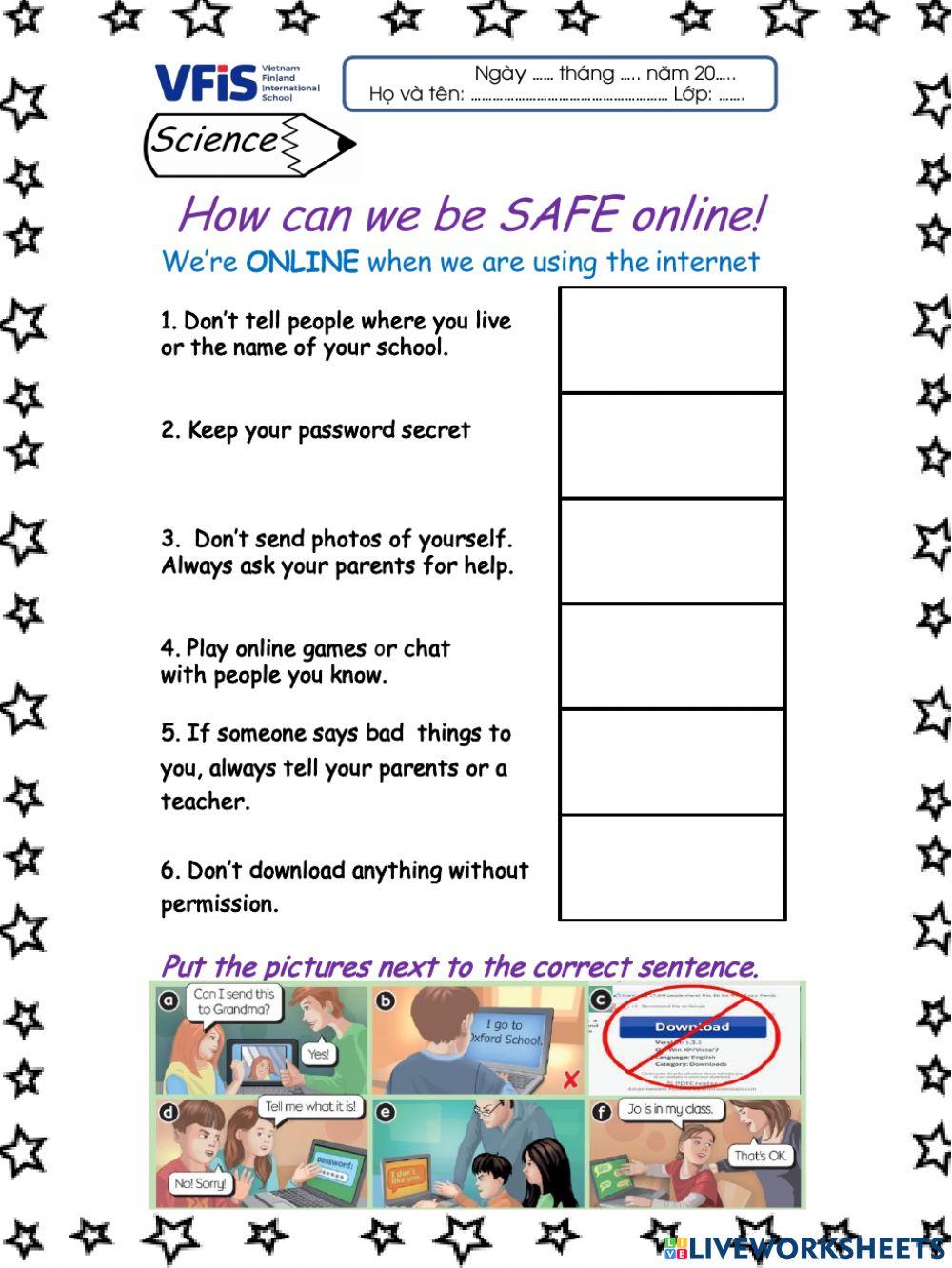
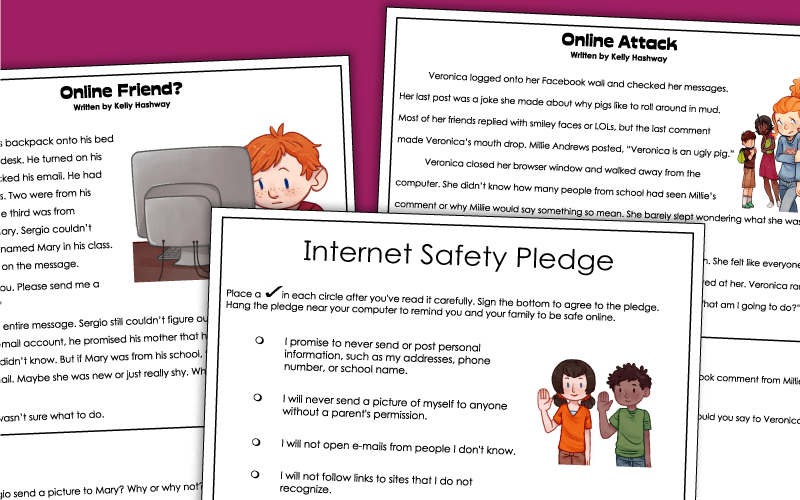
The “online safety worksheet for grade 1″ addresses essential internet safety topics tailored for young minds. This resource focuses on core concepts such as identifying private information (e.g., full name, address, phone number), understanding the importance of asking a trusted adult for permission before going online or clicking links, and recognizing that not everything seen online is true. The worksheet also introduces the idea of “strangers” online and emphasizes the critical “Stop, Think, Tell” rule when encountering anything uncomfortable or confusing. Content is aligned with recognized early digital citizenship and child online safety education standards, laying the groundwork for more advanced topics later. Scenarios are presented in a simple, relatable manner, often using visual cues to aid comprehension and encourage discussion. This approach ensures that vital safety messages are conveyed effectively without overwhelming young students.
Key Learning Outcomes
Upon completing the “online safety worksheet for grade 1,” young learners will develop several crucial skills and areas of knowledge:. Browse more guides on Safe Wired Schools.
- Recognition of personal identifying information and its importance in maintaining privacy online.
- Identification of trusted adults whom children can approach with online concerns or questions.
- Understanding the necessity of obtaining permission before accessing new online content or websites.
- Development of basic critical thinking skills to question unfamiliar or suspicious online prompts.
- Reinforcement of the “Stop, Think, Tell” strategy for responding to uncomfortable online experiences.
How to Use This Worksheet
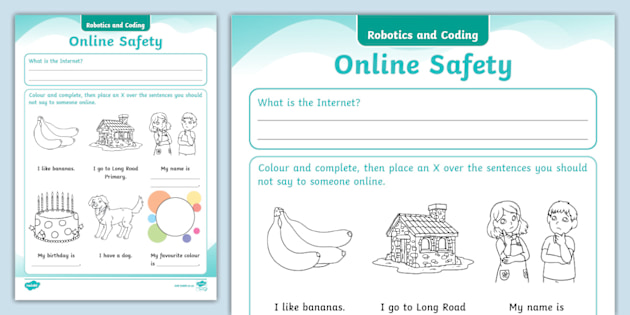
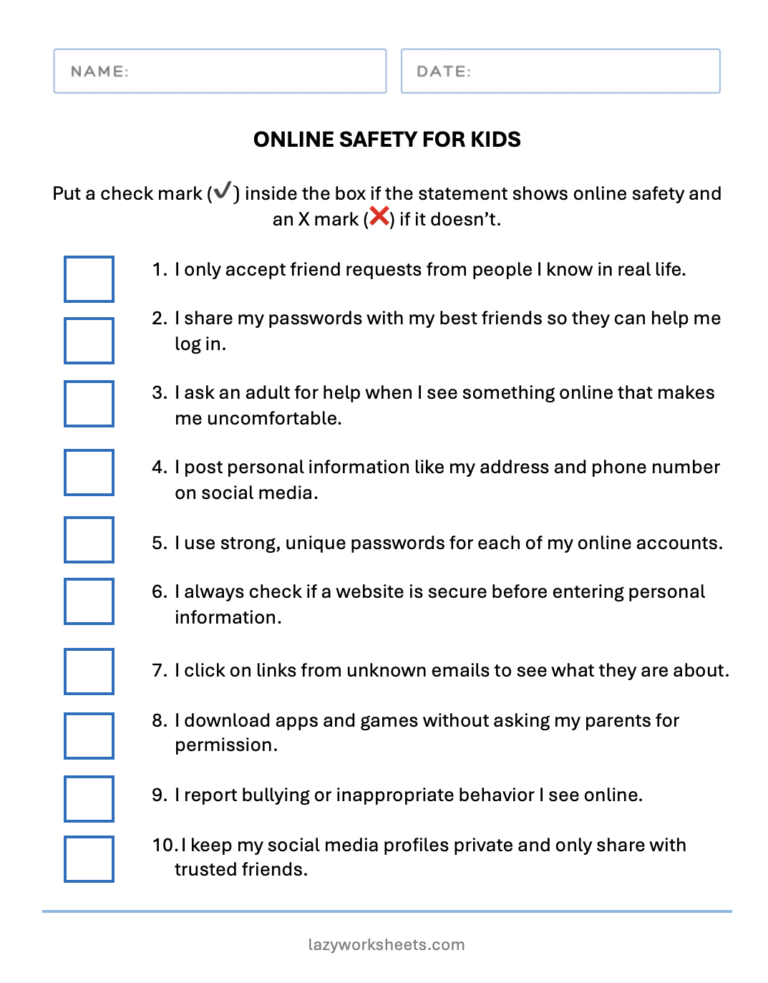
The “online safety worksheet for grade 1” offers versatile application for both classroom instruction and home learning environments. The worksheet incorporates a variety of activity types, including matching, simple true/false questions, drawing exercises to illustrate safe actions, and picture-based scenarios requiring children to identify appropriate responses. Instructions are clear, concise, and often supported by visual aids, effectively scaffolding learning progressively. The difficulty level is carefully calibrated for Grade 1 students, ensuring engagement without frustration. This resource functions excellently as a standalone activity to introduce or review specific safety points. It can also be integrated seamlessly into a broader digital citizenship lesson plan, serving as a hands-on component. Furthermore, the worksheet makes for an effective homework assignment, encouraging family discussion and reinforcing learned concepts beyond the school day. Its adaptability makes it a valuable addition to any early learning curriculum.
Practical Tips for Parents and Teachers
- Prepare the Environment: Before presenting the “online safety worksheet for grade 1,” ensure a calm, focused setting. Have crayons, pencils, and any other necessary materials ready. Review the worksheet content beforehand to anticipate potential questions and tailor explanations.
- Facilitate Discussion, Not Just Completion: Encourage an interactive experience. Instead of simply having children fill in answers, prompt discussions around each question or scenario. Ask “Why do you think that?” or “What would you do in this situation?” to deepen understanding.
- Relate to Real-World Examples: Connect the worksheet’s concepts to the child’s own online experiences or familiar scenarios. For instance, discuss asking permission to use a tablet or identifying what information is safe to share with a new online game character versus a trusted family member.
- Praise Effort and Accuracy: Acknowledge and celebrate the child’s engagement and correct answers. Positive reinforcement builds confidence and encourages continued learning in digital safety. Correct misunderstandings gently, using them as teachable moments.
- Extend the Learning: The worksheet is a starting point. Follow up by creating a family internet safety rule chart, role-playing safe online interactions, or revisiting the “Stop, Think, Tell” rule during real online activities. Consistent reinforcement is key.
Age-Appropriate Recommendations
For children in Grade 1, typically ages 6 to 7, the “online safety worksheet for grade 1” is optimally designed. The approach should be highly interactive and guided. Adult involvement is crucial; it is recommended that a parent or teacher sits with the child, reading questions aloud and discussing answers. Vocabulary support will likely be needed for terms like “private information” or “stranger,” which should be explained using simple, concrete examples. Activity pacing should be flexible, allowing children to work through sections without rush, perhaps completing the worksheet over two shorter sessions if attention spans wane. For slightly younger learners, such as those in Kindergarten (ages 5-6), the worksheet can still be beneficial with even greater adult guidance, focusing primarily on the visual recognition and drawing activities. Older children in Grade 2 (ages 7-8) might complete the worksheet more independently but would still benefit from a follow-up discussion to deepen their understanding and encourage them to articulate their reasoning. The core principles remain relevant across these early elementary years, with the level of direct adult involvement being the primary adaptation.
Frequently Asked Questions
Q: What age group is the “online safety worksheet for grade 1” designed for? A: The worksheet is specifically tailored for children in Grade 1, typically ages 6 to 7. Its content and activities align with the developmental stage of early elementary learners, introducing foundational internet safety concepts in an accessible manner.
Q: How can this worksheet be integrated into a school curriculum? A: This resource serves as an excellent supplementary tool for digital citizenship lessons. It can be used as an engaging introductory activity, a main lesson component to reinforce specific topics, or a post-lesson review to solidify understanding and assess comprehension.
Q: Where can the “online safety worksheet for grade 1” be downloaded? A: This valuable free printable resource is available for immediate download on the SafeWiredSchools.org website. Navigate to the worksheets section to easily access and print the file for classroom or home use.
Explore More Free Printable Worksheets
A single resource, however effective, works best as part of a comprehensive digital safety learning routine. The “online safety worksheet for grade 1” provides an excellent foundation, but continuous learning and reinforcement are vital. Educators and parents are invited to explore a full collection of free printable internet safety worksheets, activity sheets, checklists, quizzes, and more at SafeWiredSchools.org Worksheets. This extensive library covers every essential internet safety topic and is meticulously designed for every grade level and learning environment. Building a robust understanding of online safety requires consistent engagement with age-appropriate materials, ensuring children develop into responsible and secure digital citizens.
Developmental Milestone & Activity Table
| Development Stage | Recommended Daily Duration | Primary Learning Objective |
|---|---|---|
| Preschool & Pre-K | 10 – 15 Minutes | Pencil grip development & basic pre-stroke lines |
| Kindergarten | 15 – 20 Minutes | Letter/number formation & spatial line awareness |
| Early Elementary (Grade 1–2) | 20 – 30 Minutes | Fluency, sentence construction & neatness |
Images References