Introduction
Reinforcing internet safety concepts requires accessible, engaging tools that resonate with learners across various age groups. A crucial resource in this endeavor is the “digital citizenship worksheet free,” specifically designed for Elementary (grades 1-5) and Middle School (grades 6-8) students, with adaptable elements for younger and older learners. This printable worksheet serves as a foundational component in building digital awareness and promoting responsible online behavior. Educators and parents consistently trust printable worksheets for their tangible nature, allowing for hands-on interaction that solidifies understanding. Such resources provide a structured approach to complex topics, transforming abstract internet safety rules into concrete, actionable learning experiences. The physical act of completing a worksheet aids retention, making it an invaluable tool for reinforcing critical digital literacy skills in both classroom and home environments.
💡 Educational Key Takeaways:
- Core Skill: Structured Digital Citizenship Worksheet Free focused on developing pencil grip, stroke control, and early literacy/math confidence.
- Target Scope: Suited for homeschoolers, preschool, kindergarten, and elementary learners.
- Best Recommendation: Practice 10–15 minutes daily with ergonomic writing tools to reinforce muscle memory without hand fatigue.
What This Worksheet Covers
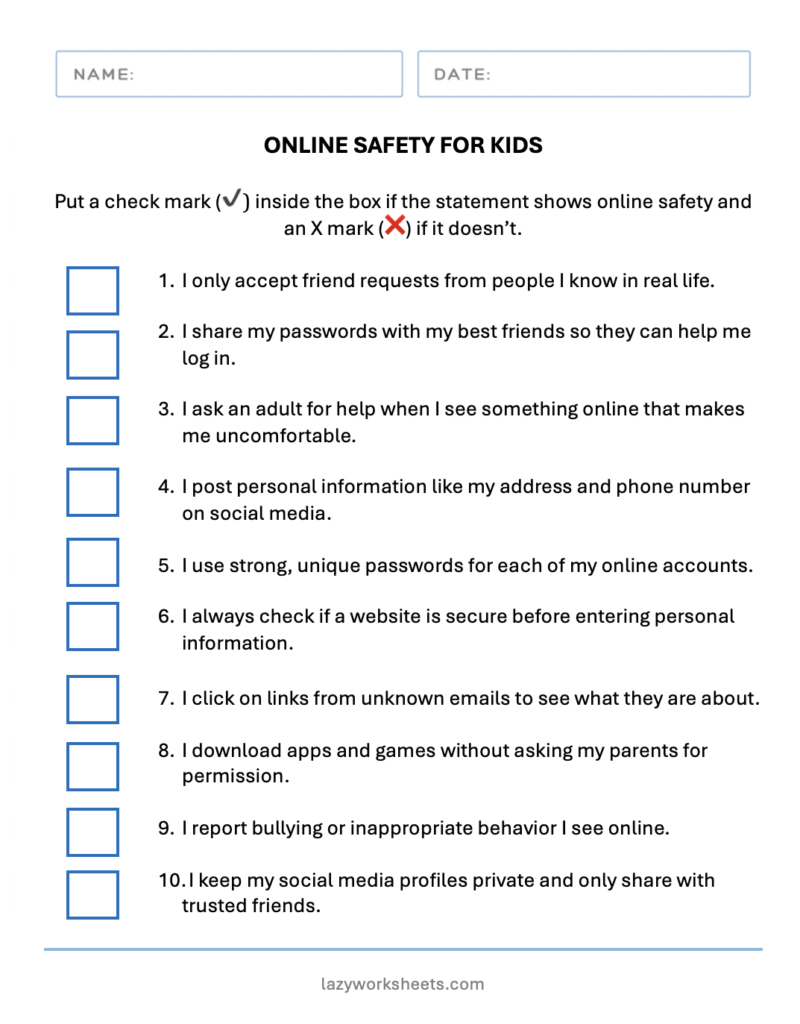
The “digital citizenship worksheet free” addresses several core internet safety topics essential for young digital citizens. It covers concepts such as understanding personal information, identifying safe and unsafe online interactions, recognizing cyberbullying scenarios, and the importance of responsible communication. Rules for online etiquette, including respectful language and appropriate sharing, are also explored. The worksheet introduces skills related to critical thinking about online content and the fundamental principle of “stop, think, and tell” when encountering concerning situations. These concepts align with widely recognized digital citizenship and child safety education standards, focusing on empowering children to navigate the digital world with confidence and caution. The content encourages proactive rather than reactive engagement with online safety, fostering an environment where learners can make informed decisions.
Key Learning Outcomes
Completing the “digital citizenship worksheet free” facilitates several important developmental and educational milestones for students. Learners will develop the ability to distinguish between public and private information, enhancing personal online safety. They will gain an understanding of respectful online communication, fostering positive digital interactions. Students will learn to identify potential online risks and appropriate responses, building resilience against harmful content or contact. The worksheet cultivates critical thinking skills necessary for evaluating online sources and making responsible choices. Furthermore, it reinforces the importance of seeking help from trusted adults when faced with uncomfortable or unsafe online situations. Browse more guides on Safe Wired Schools.
How to Use This Worksheet
Educators and parents can effectively integrate the “digital citizenship worksheet free” into various learning settings. The worksheet typically features a blend of activity types, including fill-in-the-blank questions to test vocabulary, matching exercises for concept association, true or false statements to assess understanding, and scenario-based questions prompting critical thinking. Some sections may include drawing prompts for younger learners or reflective writing exercises for older students, allowing for diverse engagement. Instructions are clearly presented, often scaffolding learning progressively from simpler definitions to more complex application scenarios. This resource functions effectively as a standalone activity to introduce or review specific concepts. It can also be seamlessly incorporated as part of a broader lesson plan on digital citizenship or assigned as homework to extend learning beyond the immediate instructional period. Its adaptable format supports various teaching methodologies and learning styles.
Practical Tips for Parents and Teachers
Maximizing the educational impact of the “digital citizenship worksheet free” involves thoughtful preparation and facilitation. Firstly, initiating a brief discussion before distributing the worksheet helps activate prior knowledge and sets the stage for learning. Secondly, allowing students to complete the worksheet individually or in small groups encourages independent thought and collaborative problem-solving. Thirdly, facilitating a post-completion discussion enables learners to share their answers, clarify misunderstandings, and explore different perspectives on the presented scenarios. Fourthly, extending the learning beyond the worksheet can involve role-playing different online situations or creating personal internet safety pledges. Finally, regularly revisiting digital citizenship topics, perhaps using this worksheet as a refresher, reinforces long-term retention and adaptation to evolving online environments.
Age-Appropriate Recommendations
Utilizing the “digital citizenship worksheet free” effectively requires tailoring its application to different age bands, ensuring optimal engagement and comprehension. For Ages 5-7 (Early Elementary), direct adult involvement is crucial. Vocabulary support should be provided, breaking down complex terms into simple language. Activities should be paced slowly, focusing on drawing, simple matching, and verbal responses. Discussions should be guided, emphasizing core concepts like “asking permission” before clicking and “telling a grown-up” about anything confusing. For Ages 8-12 (Mid-Elementary to Early Middle School), students can work more independently, though teacher or parent guidance remains valuable. The worksheet can prompt discussions on privacy settings, identifying trusted websites, and understanding the permanence of online content. Scenario-based questions can lead to deeper conversations about cyberbullying prevention and responsible digital footprints. For Ages 13-18 (Middle to High School), the worksheet serves as a strong foundation for more nuanced discussions. The focus can shift to critical evaluation of online information, understanding digital reputation, navigating social media responsibly, and identifying advanced phishing or scam attempts. The worksheet can initiate projects, debates, or research assignments on current digital safety challenges, fostering a more sophisticated understanding of digital citizenship.
Frequently Asked Questions
Q: What is digital citizenship? A: Digital citizenship encompasses the responsible, ethical, and safe use of technology. It involves understanding rights and responsibilities in the digital world, promoting positive online interactions, and protecting oneself and others from online risks.
Q: How does this worksheet specifically help with internet safety? A: The worksheet provides practical scenarios and definitions that educate learners on identifying online dangers, understanding privacy, and practicing respectful communication. It reinforces the importance of seeking adult help and making informed decisions while navigating digital platforms.
Q: How can one download or access the free printable “digital citizenship worksheet free”? A: This valuable educational resource is available for immediate download from the SafeWiredSchools.org website. Simply navigate to the resources section, locate the worksheet by its title, and click the download link to obtain the printable PDF file.
Explore More Free Printable Worksheets
A single worksheet, while impactful, functions most effectively as part of a comprehensive and consistent digital safety learning routine. The “digital citizenship worksheet free” offers an excellent starting point, yet a broader collection of resources amplifies its value. Educators and parents are encouraged to explore a full array of free printable internet safety worksheets, activity sheets, checklists, quizzes, and other educational materials available at SafeWiredSchools.org Worksheets. These resources cover every essential internet safety topic, including online privacy, cyberbullying prevention, digital footprint management, and media literacy. Each item is meticulously designed for every grade level and learning environment, ensuring that comprehensive digital citizenship education remains accessible and engaging for all learners.
Developmental Milestone & Activity Table
| Development Stage | Recommended Daily Duration | Primary Learning Objective |
|---|---|---|
| Preschool & Pre-K | 10 – 15 Minutes | Pencil grip development & basic pre-stroke lines |
| Kindergarten | 15 – 20 Minutes | Letter/number formation & spatial line awareness |
| Early Elementary (Grade 1–2) | 20 – 30 Minutes | Fluency, sentence construction & neatness |