Introduction
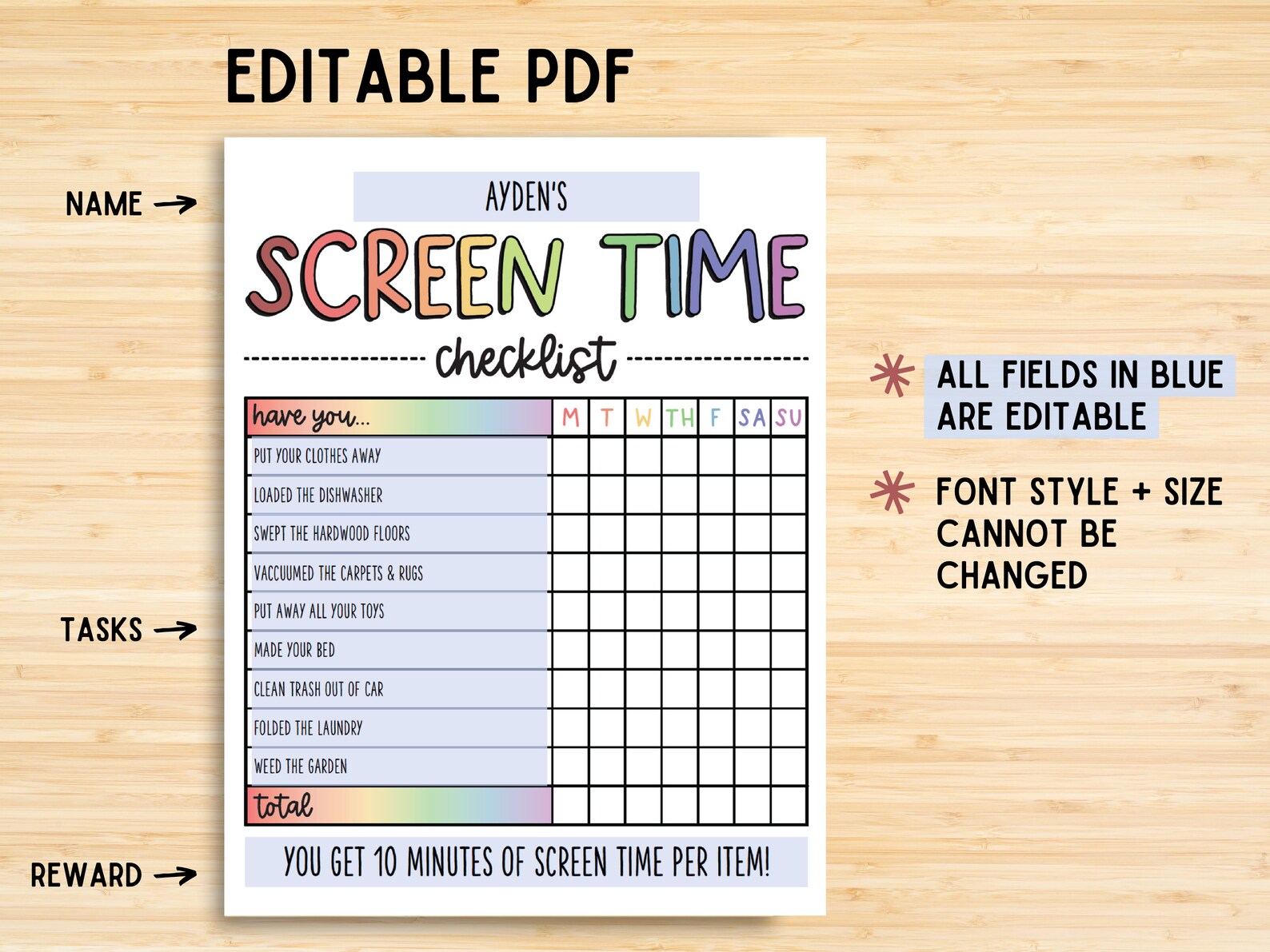
Reinforcing essential internet safety concepts within the home and classroom environment stands as a crucial endeavor. The “free printable screen time checklist for kids” serves as a valuable resource for guiding young learners toward responsible digital habits. This particular resource is ideally suited for Elementary grades 15, offering adaptable principles that can extend into early middle school settings. The checklist provides a hands-on, tangible tool for reinforcing digital awareness and fostering balanced online behavior, making abstract concepts concrete and actionable. Educators and parents consistently trust printable worksheets for their proven effectiveness in engaging children, establishing routines, and building foundational skills necessary for navigating the digital world safely and responsibly. Such resources empower children to become proactive participants in managing their screen time, cultivating self-awareness and decision-making skills from a young age.
💡 Educational Key Takeaways:
- Core Skill: Structured Free Printable Screen Time Checklist For Kids focused on developing pencil grip, stroke control, and early literacy/math confidence.
- Target Scope: Suited for homeschoolers, preschool, kindergarten, and elementary learners.
- Best Recommendation: Practice 10–15 minutes daily with ergonomic writing tools to reinforce muscle memory without hand fatigue.
What This Worksheet Covers
The “free printable screen time checklist for kids” directly addresses the critical internet safety topic of balanced screen time management and the cultivation of healthy digital habits. This resource helps children understand the importance of moderation, the value of diverse activities, and the need for clear boundaries around digital device use. Specific concepts covered include distinguishing between educational screen activities and purely recreational ones, recognizing the benefits of physical play and outdoor time, and understanding family or classroom rules regarding device usage. The checklist encourages a mindful approach to technology, prompting children to consider what they do online, for how long, and in balance with offline pursuits. Its content aligns with recognized digital citizenship standards that emphasize media literacy, responsible technology use, and promoting overall well-being in a connected world. The worksheet provides a structured framework for children to track their activities and reflect on their daily digital engagement.
Key Learning Outcomes
Completing the “free printable screen time checklist for kids” helps develop several vital skills and knowledge areas:
- Understanding of Balanced Digital Habits: Children learn to recognize the components of a healthy mix of online and offline activities.
- Identification of Appropriate Screen Activities: The checklist guides children in differentiating between beneficial and less constructive uses of digital devices.
- Development of Self-Regulation Skills: Children begin to practice managing their own screen time, fostering independence and decision-making.
- Recognition of Offline Activity Importance: The resource highlights the value of physical activity, social interaction, and creative play away from screens.
- Enhanced Communication about Screen Time: The checklist provides a tangible basis for discussions about screen time rules and expectations within families or classrooms.
How to Use This Worksheet
Educators and parents can effectively integrate the “free printable screen time checklist for kids” into daily routines to foster responsible digital habits. The worksheet typically presents as a simple checklist or tracker, prompting children to mark off various activities throughout the day. Activity types might include checking off “completed homework,” “played outside,” “read a book,” or “used screen for learning,” alongside “used screen for entertainment.” The difficulty level is designed to be accessible for elementary-aged children, utilizing straightforward language and clear visual cues where appropriate. Instructions scaffold learning progressively, starting with simple tracking and moving towards reflection on daily choices. This resource functions exceptionally well as a standalone daily or weekly activity, promoting consistent self-monitoring. It can also be seamlessly incorporated as part of a broader digital citizenship lesson plan, serving as a practical application of learned principles. Furthermore, the checklist makes an excellent homework assignment, encouraging family discussion and collaborative habit-building at home. Browse more guides on Safe Wired Schools.
Practical Tips for Parents and Teachers
- Review Expectations Together: Before beginning, discuss each item on the checklist to ensure children understand the activities and goals.
- Model Desired Behavior: Adults can demonstrate balanced screen use and active participation in offline activities, reinforcing the checklist’s message.
- Use as a Conversation Starter: The completed checklist provides an excellent opportunity for meaningful discussions about daily choices and screen time experiences.
- Adapt to Individual Needs: Adjust specific items or goals on the checklist to align with a child’s age, interests, and family or classroom rules.
- Celebrate Achievements: Acknowledge and praise efforts in completing the checklist and making balanced choices, fostering positive reinforcement.
Age-Appropriate Recommendations
Implementing the “free printable screen time checklist for kids” effectively requires consideration of developmental stages. For Ages 5-8 (Early Elementary), the focus should remain on basic understanding and consistent parental or teacher guidance. Vocabulary support is crucial; simplify complex terms and use visual aids if possible. Activities should be brief, engaging, and involve simple check-offs for concrete actions like “played outside for 30 minutes” or “read a book.” Direct supervision and shared completion of the checklist are highly recommended to build foundational awareness. For Ages 9-12 (Upper Elementary/Early Middle School), children can engage with greater independence and critical thinking. The checklist can prompt more self-reflection, asking them to consider not just what they did, but how long, and how it made them feel. Discussions can delve deeper into the reasons behind screen time rules and the benefits of a balanced lifestyle. While adult involvement remains important for guidance and discussion, children can take more ownership of tracking their activities and setting personal goals. This structured approach helps cultivate enduring habits for responsible digital engagement.
Frequently Asked Questions
Q: What age group is the “free printable screen time checklist for kids” most suitable for? A: This checklist is primarily designed for elementary school-aged children, typically between 5 and 12 years old. Its adaptable nature allows for use with slightly younger or older children depending on their developmental stage and specific needs.
Q: How can this checklist effectively encourage better screen habits in children? A: The checklist promotes better habits by providing a clear, visual structure for daily activities. It fosters self-awareness, encourages mindful choices, and facilitates open communication about screen time expectations and healthy routines within the family or classroom.
Q: Where can the “free printable screen time checklist for kids” be downloaded? A: The “free printable screen time checklist for kids” is readily available for download directly from the SafeWiredSchools.org website. Simply navigate to the resources section to access and print this valuable tool.
Explore More Free Printable Worksheets
A single resource, while powerful, works best when integrated into a comprehensive and consistent digital safety learning routine. The “free printable screen time checklist for kids” serves as an excellent starting point, but its impact is amplified when complemented by a broader collection of educational materials. Educators and parents are invited to explore a full collection of free printable internet safety worksheets, activity sheets, quizzes, and more at SafeWiredSchools.org Worksheets. These resources cover every essential internet safety topic, including online privacy, cyberbullying prevention, critical media literacy, and digital citizenship, and are meticulously designed for every grade level and learning environment. Building a strong foundation in digital safety requires ongoing education and practical application, and a diverse array of printables supports this crucial objective.
Developmental Milestone & Activity Table
| Development Stage | Recommended Daily Duration | Primary Learning Objective |
|---|---|---|
| Preschool & Pre-K | 10 – 15 Minutes | Pencil grip development & basic pre-stroke lines |
| Kindergarten | 15 – 20 Minutes | Letter/number formation & spatial line awareness |
| Early Elementary (Grade 1–2) | 20 – 30 Minutes | Fluency, sentence construction & neatness |
Images References