Introduction
Navigating the digital landscape responsibly presents a significant challenge for today’s youth. Equipping students with the knowledge and skills for safe online interaction is a paramount concern for educators and parents alike. A robust, hands-on resource, the “social media safety worksheet for grade 6,” offers a structured approach to addressing these critical topics. This printable learning tool is specifically designed for students in middle school, typically encompassing grades 6 through 12, with a direct focus on the developmental stage of sixth graders. Printable worksheets serve as trusted educational instruments, providing a tangible, screen-free method for reinforcing complex internet safety concepts. Their utility lies in fostering active engagement and facilitating meaningful discussions, thereby building crucial digital awareness and promoting responsible online behavior from an early age. Educators and parents consistently rely on such resources to ground theoretical safety principles in practical, relatable exercises, ensuring a foundational understanding of digital citizenship.
💡 Educational Key Takeaways:
- Core Skill: Structured Social Media Safety Worksheet For Grade 6 focused on developing pencil grip, stroke control, and early literacy/math confidence.
- Target Scope: Suited for homeschoolers, preschool, kindergarten, and elementary learners.
- Best Recommendation: Practice 10–15 minutes daily with ergonomic writing tools to reinforce muscle memory without hand fatigue.
What This Worksheet Covers
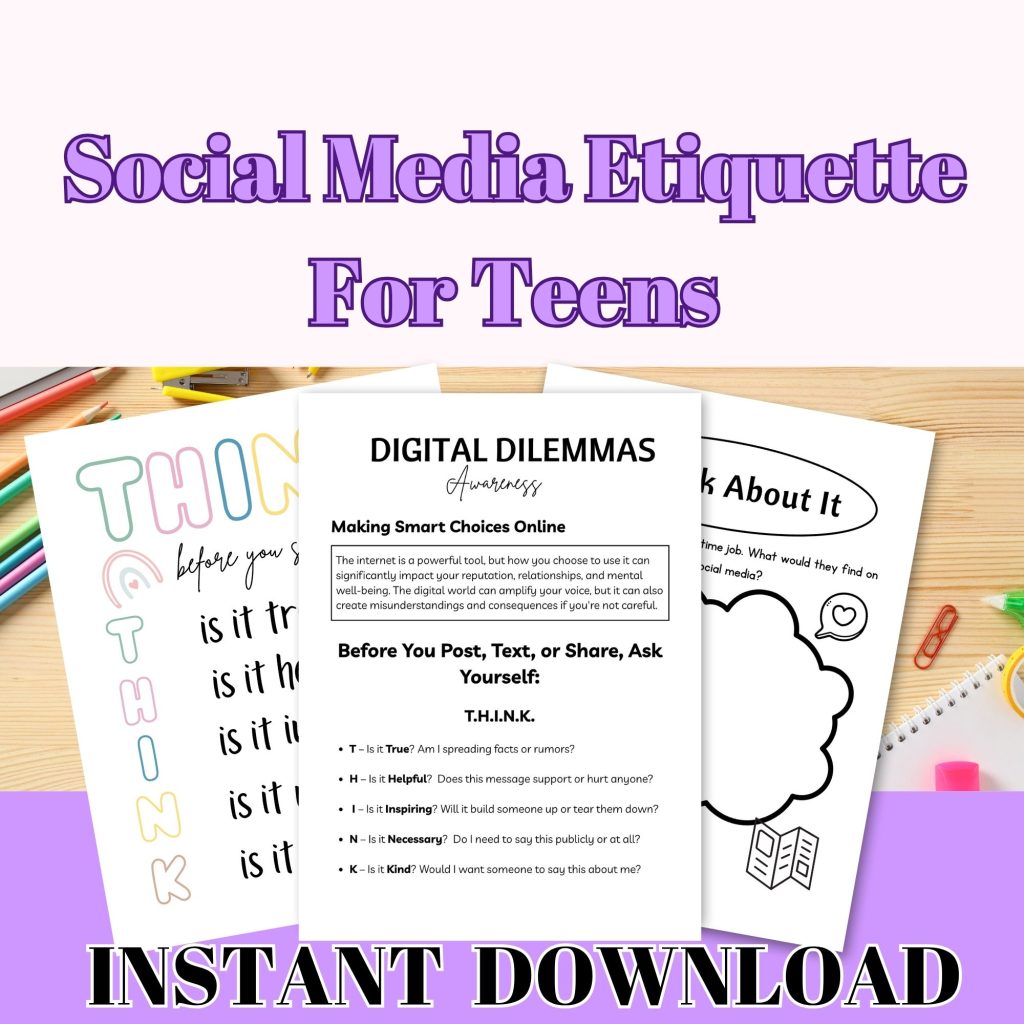
The “social media safety worksheet for grade 6″ directly addresses fundamental aspects of online interaction pertinent to pre-teens and young adolescents. Content within the worksheet encompasses critical concepts such as understanding privacy settings on various platforms, recognizing and avoiding misinformation, strategies for preventing and responding to cyberbullying, and the lasting impact of a digital footprint. It also guides students through scenarios involving responsible sharing of personal information and identifying trusted adults for reporting inappropriate content or uncomfortable situations. The material is carefully aligned with recognized digital citizenship frameworks and child online protection standards, ensuring comprehensive coverage of essential safety protocols. Explanations are presented in an authoritative yet accessible manner, enabling students to grasp complex ideas through engaging activities.
Key Learning Outcomes
Completion of the “social media safety worksheet for grade 6” facilitates several vital learning outcomes for students.
- Students will develop a clear understanding of personal privacy settings on social media and the importance of maintaining them.
- Ability to identify common online risks, including phishing attempts, inappropriate content, and requests for personal information, will be enhanced.
- Critical thinking skills for evaluating online content, discerning truth from misinformation, and understanding the potential consequences of sharing will be strengthened.
- Knowledge of effective strategies for preventing and responding to cyberbullying will be acquired, alongside an understanding of reporting mechanisms.
- Students will recognize the permanence of their digital footprint and learn how to cultivate a positive online presence.
How to Use This Worksheet
The “social media safety worksheet for grade 6” offers versatile application in both classroom and home learning environments. Its format typically includes a variety of activity types designed to cater to different learning styles, such as fill-in-the-blank questions, matching exercises, true or false statements, short-answer scenarios, and reflective prompts. The difficulty level is carefully calibrated for a sixth-grade comprehension, with instructions that progressively scaffold learning, moving from foundational definitions to more complex situational analysis. This resource can be effectively integrated as a standalone activity to introduce or review key concepts, incorporated as a component of a broader digital citizenship lesson plan, or assigned as homework to extend learning beyond the immediate instructional period. Its printable nature ensures accessibility and encourages focused engagement without digital distractions. Browse more guides on Safe Wired Schools.
Practical Tips for Parents and Teachers
- Review the worksheet content beforehand to familiarize yourself with the topics and anticipate potential discussion points. This preparation ensures a smooth learning experience.
- Facilitate an open and non-judgmental discussion after the worksheet’s completion. Encourage students to share their answers and elaborate on their reasoning, fostering deeper understanding.
- Utilize the scenarios within the worksheet as prompts for role-playing exercises. Simulating real-life online situations can help students practice safe responses in a controlled environment.
- Connect the worksheet’s lessons to current events or relevant examples students may encounter online. This contextualization makes the safety concepts more tangible and impactful.
- Extend learning by encouraging the creation of family or classroom digital safety rules based on the worksheet’s principles. This collaborative effort reinforces commitment to responsible online behavior.
Age-Appropriate Recommendations
The “social media safety worksheet for grade 6” is specifically tailored for students typically aged 11-12 years old. At this developmental stage, students are often beginning to explore social media platforms and require targeted guidance. For this age group, an independent completion approach is recommended, followed by a guided group discussion led by a teacher or parent. Vocabulary within the worksheet, such as “privacy settings,” “digital footprint,” “cyberbullying,” and “phishing,” should be reviewed and clarified as needed. The activity pacing can be flexible; the worksheet can be completed in a single session or broken into smaller segments over several days, depending on student focus and instructional time available. For slightly younger learners, such as fifth graders, increased adult involvement might be necessary, including reading instructions aloud and simplifying complex terms. Conversely, for seventh or eighth graders, the worksheet can serve as a valuable refresher, potentially leading to more advanced discussions on digital ethics and online advocacy.
Frequently Asked Questions
Q: What specific topics does the “social media safety worksheet for grade 6” address?
A: The worksheet covers essential social media safety topics, including privacy settings, digital footprints, cyberbullying prevention, recognizing misinformation, and responsible online sharing. It aims to equip sixth graders with practical skills for navigating online platforms safely.
Q: Is the “social media safety worksheet for grade 6” truly free to access and print?
A: Yes, this educational resource is entirely free. SafeWiredSchools.org is committed to providing accessible internet safety tools to all parents and educators without cost or subscription requirements.
Q: How can one download or access the free printable “social media safety worksheet for grade 6”?
A: The worksheet can be easily accessed and downloaded directly from the SafeWiredSchools.org website. Simply navigate to the worksheets section, locate the resource, and click the download link to print it at home or in the classroom.
Explore More Free Printable Worksheets
A single worksheet serves as an excellent starting point, but consistent digital safety learning requires a comprehensive approach. The “social media safety worksheet for grade 6” is an integral part of a broader collection of valuable printable resources. Educators and parents are encouraged to explore a full suite of free printable internet safety worksheets, activity sheets, checklists, quizzes, and more at SafeWiredSchools.org Worksheets. This extensive collection covers every essential internet safety topic and is meticulously designed for every grade level and learning environment, ensuring continuous support for digital citizenship education.
Developmental Milestone & Activity Table
| Development Stage | Recommended Daily Duration | Primary Learning Objective |
|---|---|---|
| Preschool & Pre-K | 10 – 15 Minutes | Pencil grip development & basic pre-stroke lines |
| Kindergarten | 15 – 20 Minutes | Letter/number formation & spatial line awareness |
| Early Elementary (Grade 1–2) | 20 – 30 Minutes | Fluency, sentence construction & neatness |
Images References