Introduction
Reinforcing vital internet safety concepts requires engaging and accessible educational tools. The “online safety activity sheet for kids” serves as a fundamental resource, specifically designed for Elementary grades 15. This printable learning aid plays a crucial role in cultivating digital awareness and fostering responsible online behavior from a young age. Educators and parents consistently trust printable worksheets as effective instruments for teaching foundational skills and reinforcing complex ideas. Such hands-on materials provide a tangible learning experience, allowing children to interact directly with important safety messages. This approach helps solidify understanding, making abstract online concepts more concrete and actionable for young learners. The integration of such resources into daily routines supports the development of crucial digital citizenship skills, preparing children for a progressively interconnected world.
💡 Educational Key Takeaways:
- Core Skill: Structured Online Safety Activity Sheet For Kids focused on developing pencil grip, stroke control, and early literacy/math confidence.
- Target Scope: Suited for homeschoolers, preschool, kindergarten, and elementary learners.
- Best Recommendation: Practice 10–15 minutes daily with ergonomic writing tools to reinforce muscle memory without hand fatigue.
What This Worksheet Covers
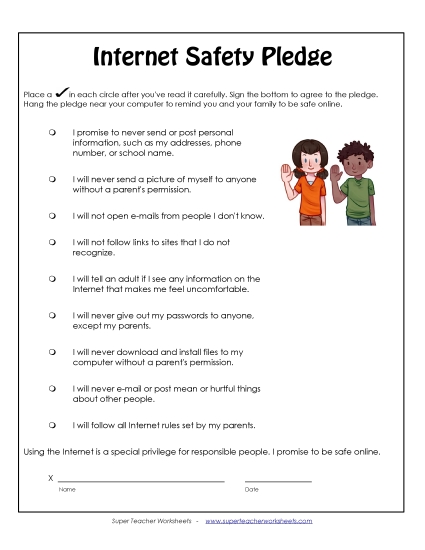
The “online safety activity sheet for kids” addresses several critical internet safety topics suitable for elementary-aged children. It introduces concepts such as identifying personal information that should never be shared online, understanding the importance of strong passwords, and recognizing what constitutes a trusted adult to report concerns to. Simple scenarios help illustrate the difference between safe and potentially unsafe online interactions. The worksheet also touches upon the idea of a digital footprint, explaining in child-friendly terms that actions online can leave a lasting trace. The content directly aligns with foundational digital citizenship education standards, emphasizing safety, privacy, and responsible communication. This resource provides a structured framework for discussing potentially complex topics in a straightforward and age-appropriate manner, ensuring essential safety rules are understood.
Key Learning Outcomes
Completing the “online safety activity sheet for kids” facilitates several important learning achievements:
- Children will identify types of personal information that must remain private online.
- Learners will distinguish between safe and potentially unsafe online scenarios.
- Students will understand the importance of seeking help from a trusted adult when encountering online concerns.
- Participants will begin to grasp the concept of a digital footprint and its implications.
- Individuals will develop an awareness of the need for strong, unique passwords for online accounts.
How to Use This Worksheet
The “online safety activity sheet for kids” is structured to maximize engagement and learning, suitable for both classroom and home environments. Its format incorporates various activity types, including fill-in-the-blank questions, matching exercises, simple true or false statements, and short scenario-based prompts that encourage critical thinking. Some sections might include drawing or reflection prompts, allowing for creative expression alongside learning. The difficulty level is carefully scaffolded, beginning with basic identification tasks and progressing to simple decision-making scenarios. Instructions are clear and concise, guiding learners progressively through the concepts. This worksheet can function as a standalone introductory activity, a reinforcing component within a broader internet safety lesson plan, or a thoughtful homework assignment designed to spark family discussions. Its versatility makes it a valuable addition to any digital safety curriculum. Browse more guides on Safe Wired Schools.
Practical Tips for Parents and Teachers
- Review Beforehand: Familiarize oneself with the worksheet content and potential discussion points prior to presenting it. This preparation ensures confidence in guiding learners through the activities and answering any questions.
- Facilitate Discussion: Encourage conversation around each section of the worksheet. Ask open-ended questions about why certain choices are safer or what a trusted adult might advise, moving beyond simple correct answers.
- Connect to Real Life: Relate the worksheet’s scenarios to children’s actual online experiences, such as using educational apps or watching videos. This contextualization makes the safety lessons more relevant and memorable.
- Extend the Learning: Consider follow-up activities, such as creating a family online safety pledge or role-playing how to report an uncomfortable online situation. This reinforces the concepts in practical ways.
- Celebrate Efforts: Acknowledge and praise children’s participation and understanding. Positive reinforcement encourages continued engagement with important safety topics and builds confidence in their digital literacy.
Age-Appropriate Recommendations
While the “online safety activity sheet for kids” is primarily designed for elementary students, its use can be adapted across a range of ages with appropriate guidance.
For Ages 5-7 (Grades K-2), direct supervision and extensive vocabulary support are recommended. Focus should remain on the most basic concepts, such as identifying trusted adults, knowing not to share personal information like their name or address, and understanding that some online content is not for them. Activities might be completed collaboratively, with an adult reading questions aloud and guiding responses. The pacing should be slow, allowing ample time for discussion and clarification of each point.
For Ages 8-10 (Grades 3-5), a more independent approach is suitable. Children can typically read and complete most sections on their own, with an adult available for questions and post-completion discussion. The focus can broaden to include understanding simple password creation, recognizing suspicious links, and discussing the concept of digital footprints. This age group benefits from analyzing the scenario-based questions, promoting critical thinking about online choices and consequences. Encourage them to explain their reasoning for their answers.
For Aages 11-12 (Grades 6-7), this worksheet can serve as a valuable review or a starting point for deeper conversations. While the content might seem foundational, it can highlight any gaps in basic understanding before moving to more complex topics like cyberbullying dynamics or privacy settings. The emphasis should be on critical analysis of scenarios, extending discussions to why certain behaviors are risky and how to apply these rules across various platforms they might encounter. The level of involvement shifts to facilitating their own insights and encouraging them to articulate sophisticated safety strategies.
Frequently Asked Questions
Q: What age group is the “online safety activity sheet for kids” most suitable for? A: This activity sheet is primarily designed for elementary school children, specifically those in grades 1-5 (ages 6-10). It introduces fundamental online safety concepts in an age-appropriate and engaging manner. While adaptable, its content is best suited for early learners.
Q: How can educators and parents access this free printable resource? A: The “online safety activity sheet for kids” is available for free download directly from SafeWiredSchools.org. Users can locate the resource in the worksheets section and print it for immediate use in classrooms or at home, ensuring easy access to valuable learning tools.
Q: Does this worksheet align with current digital citizenship education standards? A: Yes, the content of this activity sheet is carefully crafted to align with foundational digital citizenship education standards. It covers essential topics like personal information privacy, responsible online behavior, and seeking help from trusted adults, all crucial components of a comprehensive digital safety curriculum.
Explore More Free Printable Worksheets
A single “online safety activity sheet for kids” forms an excellent starting point, but consistent digital safety learning benefits greatly from a broader collection of resources. Educators and parents are invited to explore a full collection of free printable internet safety worksheets, activity sheets, checklists, quizzes, and more at SafeWiredSchools.org Worksheets. This extensive library covers every essential internet safety topic and is thoughtfully designed for every grade level and learning environment, ensuring comprehensive support for digital literacy education.
Visual Reference Gallery




Developmental Milestone & Activity Table
| Development Stage | Recommended Daily Duration | Primary Learning Objective |
|---|---|---|
| Preschool & Pre-K | 10 – 15 Minutes | Pencil grip development & basic pre-stroke lines |
| Kindergarten | 15 – 20 Minutes | Letter/number formation & spatial line awareness |
| Early Elementary (Grade 1–2) | 20 – 30 Minutes | Fluency, sentence construction & neatness |