Introduction
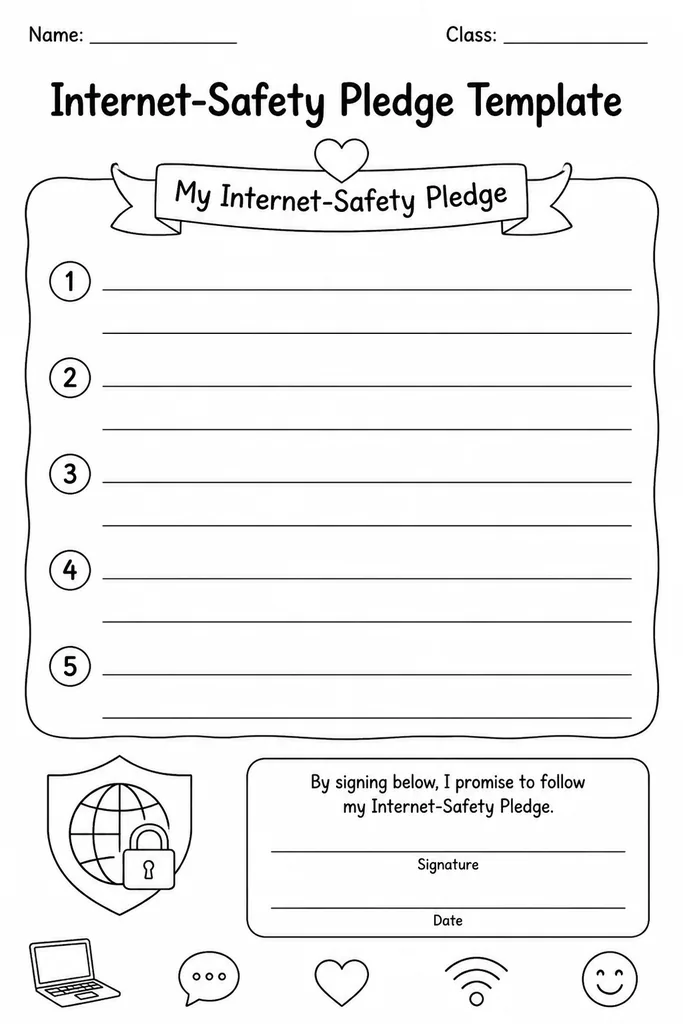
The “internet safety pledge for grade 3” resource is a vital tool for elementary education, specifically designed for students in the third grade, typically ages 8-9. This free printable worksheet serves as an engaging and actionable method to reinforce crucial internet safety concepts through a hands-on learning experience. Printable resources are consistently trusted by educators and parents alike for their effectiveness in building foundational digital awareness and promoting responsible online behavior. These tangible tools offer a direct pathway for young learners to internalize essential safety rules, transforming abstract concepts into concrete commitments. The act of physically completing and signing a pledge fosters a sense of personal responsibility and ownership over one’s online actions, making it a cornerstone in early digital citizenship education.
💡 Educational Key Takeaways:
- Core Skill: Structured Internet Safety Pledge For Grade 3 focused on developing pencil grip, stroke control, and early literacy/math confidence.
- Target Scope: Suited for homeschoolers, preschool, kindergarten, and elementary learners.
- Best Recommendation: Practice 10–15 minutes daily with ergonomic writing tools to reinforce muscle memory without hand fatigue.
What This Worksheet Covers
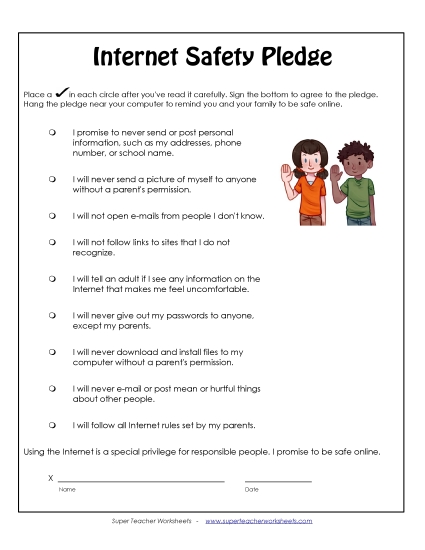
The “internet safety pledge for grade 3” directly addresses fundamental aspects of online safety pertinent to young elementary students. It covers critical concepts such as protecting personal information, understanding the importance of not sharing passwords, recognizing and reporting suspicious or uncomfortable online interactions, and identifying trusted adults for help. The pledge also encourages responsible content consumption and emphasizes the value of kindness and respect in online communications. This resource aligns seamlessly with established digital citizenship frameworks, focusing on safety, privacy, and positive online conduct, thereby equipping third graders with the initial knowledge required to navigate the digital world securely and confidently. Related guide: Internet Safety Pledge For Children.
Key Learning Outcomes
By engaging with the “internet safety pledge for grade 3,” young learners will develop several critical skills and areas of knowledge:. Browse more guides on Safe Wired Schools.
- Understanding the definition and importance of personal identifiable information and its protection.
- Identifying trusted adults (parents, teachers, guardians) as primary sources for help with online concerns.
- Committing to responsible online communication, including being kind and respectful to others.
- Recognizing the need to ask for permission before sharing personal details or engaging with new online content.
- Developing a foundational sense of personal responsibility for safe online choices and digital etiquette.
How to Use This Worksheet
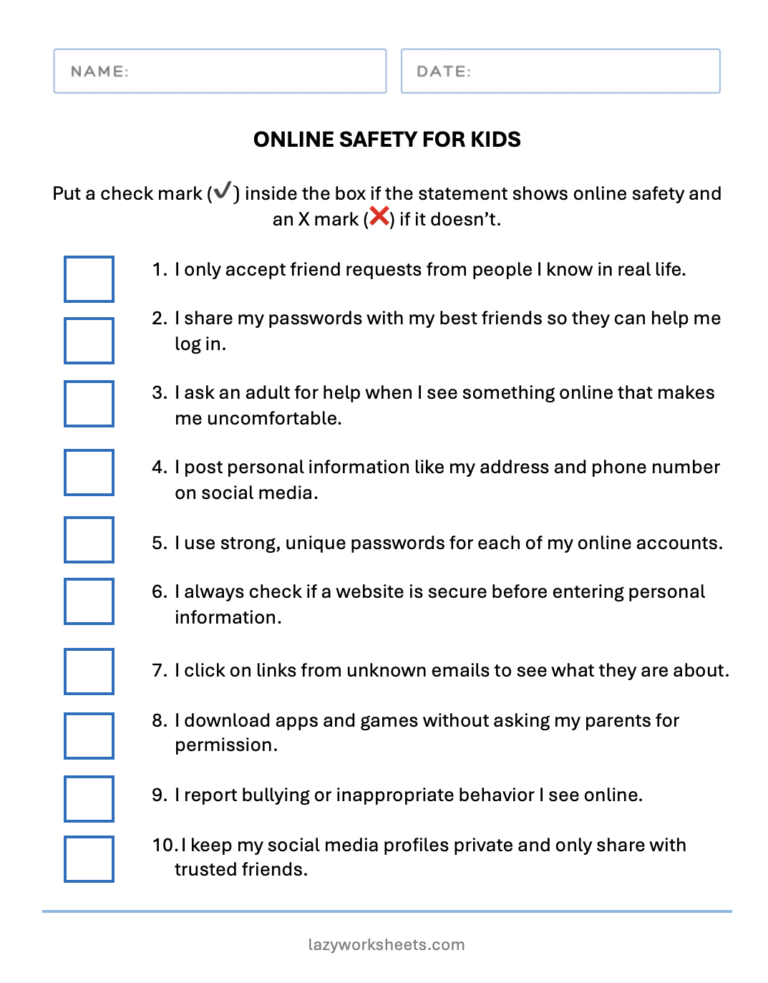
The “internet safety pledge for grade 3” worksheet is structured to facilitate clear understanding and active participation from young learners. It typically features fill-in-the-blank sections, simple checkboxes, or short reflective prompts that guide students through the core principles of internet safety. The difficulty level is carefully calibrated for third-grade comprehension, with instructions presented in straightforward language that scaffolds learning progressively. This resource can be utilized effectively as a standalone activity to kickstart a discussion on digital safety, integrated into a broader lesson plan on digital citizenship, or assigned as a valuable homework activity to extend learning into the home environment. Its flexible format allows for adaptation to various educational settings and learning styles.
Practical Tips for Parents and Teachers
- Pre-Activity Discussion: Before students begin, initiate a brief discussion about what a “pledge” means and why internet safety is important. This sets the context and purpose.
- Guided Completion: For younger or less confident learners, complete the pledge together as a group or individually, reading each statement aloud and discussing its meaning before writing.
- Personalization: Encourage students to sign and date their completed pledge. Consider having them draw a picture of a safe online activity or a trusted adult on the back.
- Display and Review: Display the completed pledges in the classroom or at home as a constant reminder of the commitments made. Periodically revisit the pledge to reinforce the concepts and discuss new online situations.
- Role-Playing Scenarios: Extend the learning by role-playing common online safety scenarios (e.g., what to do if a stranger messages you, or how to ask for permission before downloading an app) to practice applying the pledge’s principles.
Age-Appropriate Recommendations
While the “internet safety pledge for grade 3” is specifically tailored for ages 8-9, its core messages are adaptable across the elementary spectrum. For younger learners (ages 6-7, Grades 1-2), a greater degree of teacher or parent involvement is beneficial. Vocabulary support may be needed, with concepts simplified further through relatable examples and more visual aids. Activities should be paced slower, allowing ample time for questions and discussion. For students in Grade 3 (ages 8-9), the worksheet serves as an ideal independent or small-group activity, encouraging self-reflection and peer discussion. The vocabulary is generally accessible, and direct teacher guidance can shift towards facilitating deeper understanding and application. For slightly older elementary students (ages 10-11, Grades 4-5), the pledge can be used as a foundational review, prompting more advanced discussions on digital footprints, cyberbullying prevention, and critical evaluation of online content, perhaps even encouraging them to help create their own safety tips based on the pledge’s principles. This graduated approach ensures the resource remains valuable across various developmental stages.
Frequently Asked Questions
Q: What is an internet safety pledge? A: An internet safety pledge is a formal commitment or agreement made by individuals, particularly children, to follow specific rules and guidelines for safe, responsible, and respectful behavior while using the internet and digital devices. It helps solidify their understanding of online safety principles.
Q: How can this “internet safety pledge for grade 3” resource be downloaded? A: This free printable resource can be easily accessed and downloaded directly from the SafeWiredSchools.org website. Navigate to the worksheets section or search for the specific title to find the printable PDF file, ready for immediate use.
Q: How often should internet safety topics be discussed with children? A: Internet safety should be an ongoing conversation, not a one-time lesson. Regular, age-appropriate discussions, ideally weekly or monthly, help reinforce concepts, address new online challenges, and keep children informed about evolving digital landscapes.
Explore More Free Printable Worksheets
A single worksheet, while valuable, performs best when integrated into a consistent and comprehensive digital safety learning routine. The “internet safety pledge for grade 3” is just one component of a vast collection of free printable resources available to support educators and parents in fostering a safer online environment for children. SafeWiredSchools.org offers a diverse range of printable internet safety worksheets, engaging activity sheets, practical checklists, insightful quizzes, and much more. These resources cover every essential internet safety topic and are meticulously designed for every grade level and learning environment, ensuring a continuous and robust digital citizenship education. Explore the full collection today at SafeWiredSchools.org Worksheets.
Developmental Milestone & Activity Table
| Development Stage | Recommended Daily Duration | Primary Learning Objective |
|---|---|---|
| Preschool & Pre-K | 10 – 15 Minutes | Pencil grip development & basic pre-stroke lines |
| Kindergarten | 15 – 20 Minutes | Letter/number formation & spatial line awareness |
| Early Elementary (Grade 1–2) | 20 – 30 Minutes | Fluency, sentence construction & neatness |
Images References