Introduction
Teaching children how to navigate digital spaces successfully requires tools that move beyond fear-based warnings. Protecting youth online begins with building practical protective habits, such as keeping personal information private, recognizing the importance of telling a trusted adult immediately, creating strong passwords, and pausing to think before sharing digital content. Children need empowering frameworks rather than strict threats. Artistic activities provide a gentle, non-threatening entry point for complex concepts. Integrating creative exercises into a broader curriculum helps bridge the gap between abstract internet rules and everyday behaviors. When kids sit down with crayons, their guards drop. That relaxed focus creates an ideal mental space for meaningful mentorship. Coloring reinforces critical safety messages through visual association while naturally opening the door to organic conversations about digital footprints and screen boundaries. Resources found within collections like Internet and Digital Safety tools help adults guide these discussions effectively without causing anxiety.
💡 Educational Key Takeaways:
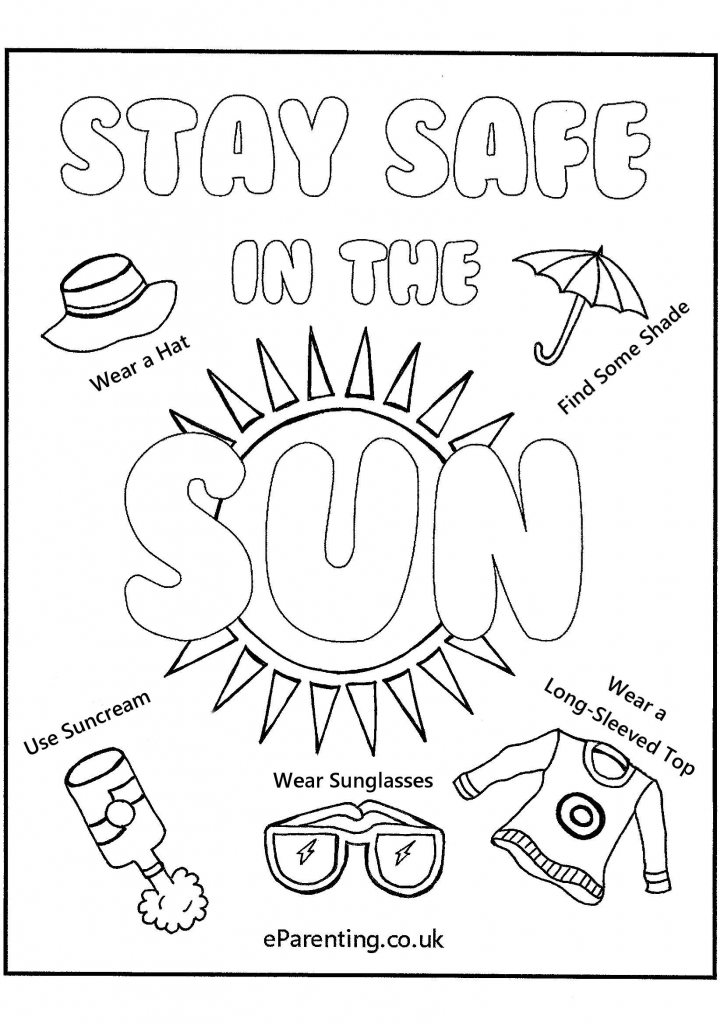
- Core Skill: Structured Sun Safety Colouring Page focused on developing pencil grip, stroke control, and early literacy/math confidence.
- Target Scope: Suited for homeschoolers, preschool, kindergarten, and elementary learners.
- Best Recommendation: Practice 10–15 minutes daily with ergonomic writing tools to reinforce muscle memory without hand fatigue.
What This Printable Covers
The free printable sun safety colouring page uses a bright, relatable weather theme to introduce foundational concepts of personal protection. Just as sunscreen shields skin from harmful ultraviolet rays, good digital boundaries shield young users from online overexposure. The artwork prompts discussions around digital sunscreen, meaning the protective layers kids apply when navigating virtual environments. Children explore themes of keeping personal details like home addresses and full names hidden from strangers. The design encourages thinking about sharing photos and videos responsibly. It sounds simple, and that’s the point. Young learners grasp abstract safety rules much faster when attached to tangible, everyday metaphors. According to the Pew Research Center, a vast majority of children access the internet daily via shared household tablets, family computers, or mobile phones, making everyday digital literacy an essential life skill. Exploring further resources through creative coloring materials provides educators with additional ways to reinforce these protective habits during quiet learning blocks.
Key Learning Outcomes
Working through this coloring activity helps cement specific digital citizenship behaviors in young minds. Children learn to identify when a virtual request feels uncomfortable and practice the crucial habit of looping in a trusted adult. A foundational rule emphasized during this exercise is that children are never in trouble for reporting something uncomfortable they encounter online. Whether an awkward pop-up appears during a favorite video platform or a strange message pops up in an in-game chat, open communication remains the ultimate safety net. The activity also encourages kids to pause and think before sharing creations or messages in multiplayer gaming environments. Building these mental speed bumps early transforms reactive panic into proactive decision-making. Related guide: Safe Websites Meaning For Kids.
How to Use This Printable
Implementing this resource requires minimal preparation for busy classrooms, homeschool co-ops, and living room tables. Print out enough copies for the group and supply a vibrant selection of coloring utensils. Adults can introduce the activity by asking children what they do to protect their skin on a hot summer day. From there, the conversation bridges naturally to protecting personal information online. Coloring sessions allow adults to observe how children process instructions and engage with artistic interpretation. Here’s what makes this resource different: it relies on tactile creation rather than screen time to teach screen boundaries. Keeping discussions lighthearted ensures that children associate digital safety with empowerment rather than restriction.
Practical Tips for Parents and Teachers
Facilitating a productive conversation during a coloring session takes patience and active listening. Ask open-ended questions while children work, such as inquiring about what characters on the page might do if a stranger asks them for personal information. Validate every answer with calm encouragement. If a child expresses confusion about what to share online, guide them toward the rule of thumb regarding private versus public details. Educators can pair this activity with relevant educational worksheets to extend the lesson into writing or critical thinking exercises. Consistency across home and school environments helps solidify these lifelong protective habits.
Age-Appropriate Recommendations
Tailoring the conversation to a child’s developmental stage ensures the message lands effectively without causing confusion or fear. For younger children ages five through eight, keep the focus entirely on basic boundaries, such as asking permission before clicking links or typing information. For older children ages nine through twelve, expand the dialogue to cover more nuanced topics like digital footprints, respectful communication in video game chats, and recognizing peer pressure in digital spaces. This incremental approach aligns closely with the Common Sense Education Digital Citizenship Curriculum framework, which emphasizes age-specific skill development year by year. According to the National Center for Missing & Exploited Children (NCMEC), teaching open lines of communication is one of the most effective strategies for keeping kids safe in any connected environment.
The majority of youth access digital platforms daily, highlighting the need for early habit-building through creative education. — Pew Research Center
Frequently Asked Questions
How can this printable be accessed and printed for a classroom? Downloading the PDF file is completely free, and standard printer paper works best for crayons or colored pencils. Does this single activity guarantee complete online safety for children? No printable or tool protects or guarantees safety on its own, but this page actively supports important family conversations and positive habit-building. What organizations recommend teaching digital citizenship through creative discussions? Common Sense Media emphasizes that creative and interactive activities help young learners retain critical online safety concepts more effectively.
Explore More Free Kids Online Safety Printables
Expanding a child’s digital literacy toolkit requires a diverse selection of engaging, screen-free activities. Educators and parents can discover additional ways to reinforce protective habits by browsing comprehensive directories dedicated to Online and Digital Safety resources. Combining artistic prompts, interactive games, and guided conversations ensures that children grow into confident, cautious, and digitally responsible citizens.
Developmental Milestone & Activity Table
| Development Stage | Recommended Daily Duration | Primary Learning Objective |
|---|---|---|
| Preschool & Pre-K | 10 – 15 Minutes | Pencil grip development & basic pre-stroke lines |
| Kindergarten | 15 – 20 Minutes | Letter/number formation & spatial line awareness |
| Early Elementary (Grade 1–2) | 20 – 30 Minutes | Fluency, sentence construction & neatness |
Images References