Introduction
Managing digital engagement presents a significant challenge for modern families and educators. Children and young people, from elementary through middle school (grades 1-8), navigate an increasingly digital world, making structured guidance on screen time essential. The “screen time dos and donts for families printable” serves as an invaluable resource, reinforcing critical internet safety concepts through tangible, hands-on learning. Printable worksheets are recognized and trusted pedagogical tools, frequently employed by educators and parents alike for their effectiveness in building digital awareness and fostering responsible online behavior. These resources offer a tactile learning experience, allowing for focused interaction and active engagement away from digital screens, thereby enhancing comprehension and retention of vital digital citizenship principles. This approach ensures foundational understanding is established, setting children on a path toward healthy digital habits.
💡 Educational Key Takeaways:
- Core Skill: Structured Screen Time Dos And Donts For Families Printable focused on developing pencil grip, stroke control, and early literacy/math confidence.
- Target Scope: Suited for homeschoolers, preschool, kindergarten, and elementary learners.
- Best Recommendation: Practice 10–15 minutes daily with ergonomic writing tools to reinforce muscle memory without hand fatigue.
What This Worksheet Covers
This educational worksheet directly addresses the nuanced topic of healthy screen time management. It delineates specific guidelines and practices that promote balanced digital engagement within a family context. The content explores essential concepts such as establishing reasonable time limits, discerning age-appropriate and beneficial online content, and recognizing the importance of balancing screen use with offline activities. Furthermore, the worksheet prompts discussions around identifying safe online spaces and understanding basic online etiquette. Its design directly aligns with recognized digital citizenship frameworks and child safety education standards, which emphasize responsible technology use, media literacy, and personal well-being in the digital realm. The resource provides a clear framework for understanding and implementing practical digital wellness strategies at home and in educational settings.
Key Learning Outcomes
By engaging with the “screen time dos and donts for families printable,” students and children will develop several crucial skills and knowledge areas:. Browse more guides on Safe Wired Schools.
- Identification of healthy screen time habits and practices.
- Understanding the critical importance of balancing digital activities with real-world interactions and responsibilities.
- Recognition and articulation of family-specific rules and expectations regarding screen use.
- Development of critical thinking skills when evaluating online content and personal time allocation.
- Initiation of constructive discussions about digital well-being with family members and caregivers.
How to Use This Worksheet
The “screen time dos and donts for families printable” offers versatile application for both educators and parents. The worksheet typically employs a combination of activity types, including fill-in-the-blank statements, true or false questions, scenario-based prompts for decision-making, and reflective drawing or writing sections. Its difficulty level is thoughtfully designed to scaffold learning progressively, starting with basic identification of safe practices and advancing to more nuanced application and personal reflection. Instructions provided within the printable are clear and concise, guiding learners through each activity step-by-step. This resource functions effectively as a standalone activity for individual reflection, as an integral component of a broader digital citizenship lesson plan, or as a take-home assignment to foster family discussion and collaboration. The hands-on format encourages active participation, making abstract digital concepts more concrete and manageable for young learners.
Practical Tips for Parents and Teachers
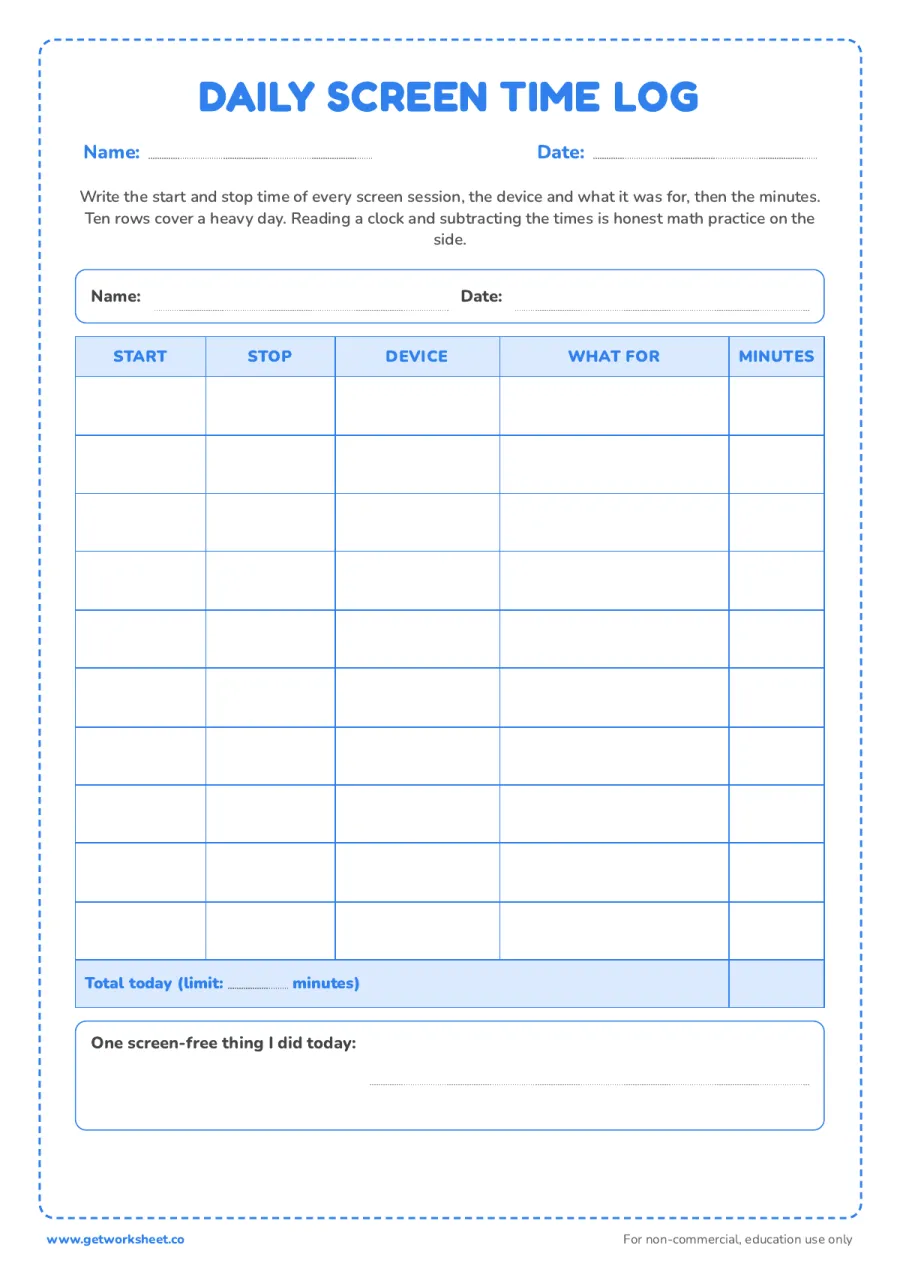
Maximizing the educational impact of the “screen time dos and donts for families printable” involves thoughtful preparation and engagement. First, adults should thoroughly review the worksheet themselves to anticipate questions and tailor discussions. Second, facilitate the activity interactively, rather than simply assigning it; this encourages deeper understanding and personal connection to the material. Third, utilize open-ended discussion prompts after completion, asking questions like, “Why is this ‘do’ important?” or “What might happen if we ignore this ‘don’t’?” Fourth, consider creating a personalized family screen time contract or visual chart based on the worksheet’s principles, reinforcing shared commitments. Finally, extend the learning by tracking screen time habits for a week or exploring related topics like cyberbullying or online privacy, maintaining an ongoing dialogue about digital safety.
Age-Appropriate Recommendations
The “screen time dos and donts for families printable” is adaptable across a broad age spectrum, requiring varying levels of adult guidance and discussion. For children aged 5-8 (early elementary), the focus should remain on foundational “dos” such as asking permission before using devices and seeking adult help for unfamiliar content, alongside simple “donts” like excessive screen time or interacting with strangers. Visual cues and very basic vocabulary support are essential, with activities paced slowly and requiring significant parental or teacher involvement for explanation and hands-on assistance. For children aged 9-12 (upper elementary to middle school), the worksheet can prompt more independent thought about the consequences of digital choices and the importance of balancing online activities with hobbies, schoolwork, and social interactions. Guided discussions about peer influence and identifying personal “dos and donts” become more pertinent, with adults acting as facilitators rather than direct instructors. For adolescents aged 13-18 (middle to high school), the resource can initiate critical self-reflection on the impact of screen time on well-being, academic performance, and digital reputation. Discussions should evolve to encompass time management skills, the complexities of online identity, and advocating for healthy digital habits within their peer groups. At this stage, the worksheet serves as a springboard for more sophisticated conversations and independent negotiation of family digital rules.
Frequently Asked Questions
Q: What specific age range is this printable best suited for? A: The “screen time dos and donts for families printable” is designed to be highly adaptable, with its core principles suitable for children and young people aged 5 to 18. Its effectiveness is enhanced through varying levels of adult guidance, tailoring the discussion to the learner’s developmental stage.
Q: How can this worksheet support ongoing family discussions about screen time? A: This printable provides a structured and neutral starting point for family conversations about digital habits. Its prompts and activities encourage collaborative rule-setting and shared understanding, fostering a positive environment for establishing and reinforcing healthy screen time boundaries.
Q: Where can I download the “screen time dos and donts for families printable” for free? A: This valuable educational resource is available for immediate and complimentary download from the SafeWiredSchools.org website. It can typically be located within the “Worksheets” section or through direct links provided in relevant articles.
Explore More Free Printable Worksheets
Effective digital safety education thrives on consistent engagement and a variety of learning tools. While the “screen time dos and donts for families printable” provides an excellent starting point, its true value is amplified when integrated into a broader collection of resources. Educators and parents are encouraged to explore the comprehensive suite of free printable internet safety worksheets, activity sheets, checklists, quizzes, and more available at SafeWiredSchools.org Worksheets. These resources cover every essential internet safety topic and are meticulously designed for every grade level and learning environment, ensuring a robust and continuous learning journey for all.
Developmental Milestone & Activity Table
| Development Stage | Recommended Daily Duration | Primary Learning Objective |
|---|---|---|
| Preschool & Pre-K | 10 – 15 Minutes | Pencil grip development & basic pre-stroke lines |
| Kindergarten | 15 – 20 Minutes | Letter/number formation & spatial line awareness |
| Early Elementary (Grade 1–2) | 20 – 30 Minutes | Fluency, sentence construction & neatness |