Introduction
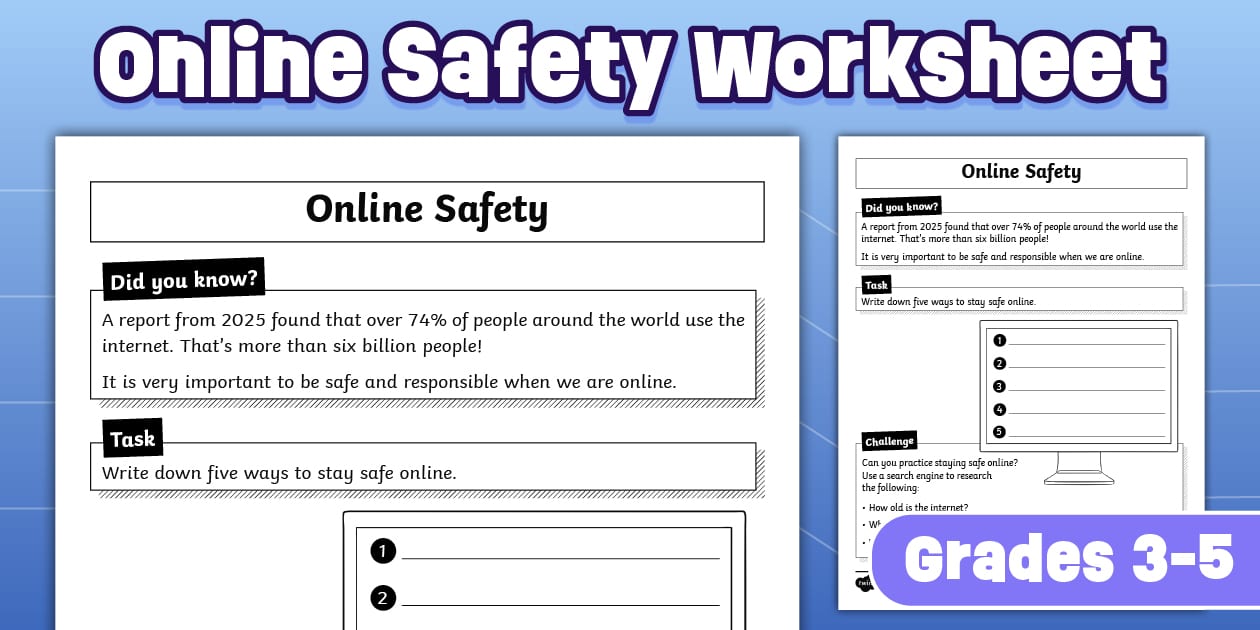
The “online safety activity sheet for grade 3” serves as an invaluable educational tool specifically designed for elementary students, typically aged 8-9 years old. This resource plays a pivotal role in reinforcing crucial internet safety concepts through engaging, hands-on, and printable learning experiences. In an increasingly digital world, equipping young learners with fundamental digital awareness and responsible online behaviors is paramount. Educators and parents consistently trust printable worksheets as effective instruments for establishing a strong foundation in digital citizenship. These resources provide a structured and tangible approach to abstract concepts, allowing children to interact directly with the material. Such methods foster deeper understanding and promote the development of essential skills necessary for navigating the internet safely and confidently from an early age.
💡 Educational Key Takeaways:
- Core Skill: Structured Online Safety Activity Sheet For Grade 3 focused on developing pencil grip, stroke control, and early literacy/math confidence.
- Target Scope: Suited for homeschoolers, preschool, kindergarten, and elementary learners.
- Best Recommendation: Practice 10–15 minutes daily with ergonomic writing tools to reinforce muscle memory without hand fatigue.
What This Worksheet Covers
The “online safety activity sheet for grade 3” addresses foundational internet safety topics tailored for young minds. This particular worksheet focuses on distinguishing between safe and unsafe online interactions and identifying personal information that should never be shared without adult permission. Key concepts covered include the importance of privacy, understanding what constitutes personal identifying information (like full names, addresses, phone numbers, and school names), and recognizing the difference between trusted adults and online strangers. The activity also introduces scenarios requiring children to think critically about online requests and to understand the necessity of seeking help from a parent or teacher when encountering anything uncomfortable or confusing online. Content aligns with recognized digital citizenship standards for elementary school, emphasizing responsible online behavior and critical evaluation of digital content.
Key Learning Outcomes
By completing the “online safety activity sheet for grade 3,” students will develop several critical skills and knowledge areas:. Browse more guides on Safe Wired Schools.
- Learners will accurately identify personal information that must remain private online.
- Children will distinguish between safe and potentially unsafe online scenarios or requests.
- Students will recognize the importance of asking a trusted adult before sharing anything online.
- Participants will understand basic rules for respectful and kind communication in digital spaces.
- Youngsters will develop an awareness of “stranger danger” principles as they apply to online interactions.
How to Use This Worksheet
Educators and parents can effectively integrate the “online safety activity sheet for grade 3” into various learning environments. The worksheet typically features a mix of engaging activity types, such as drawing exercises, simple fill-in-the-blank questions, matching activities, and short scenario-based prompts requiring a “safe” or “unsafe” designation. Instructions are clearly articulated and designed to scaffold learning progressively, ensuring accessibility for third-grade readers and thinkers. The difficulty level is carefully calibrated to be challenging yet achievable for the target age group. This resource functions excellently as a standalone activity to introduce or reinforce specific safety topics. It can also be seamlessly incorporated into a broader digital citizenship lesson plan, serving as an effective review tool or a practical homework assignment to extend learning beyond the classroom or initial discussion.
Practical Tips for Parents and Teachers
- Prepare the Environment: Before presenting the worksheet, initiate a brief discussion about the day’s online safety topic, using simple language and relatable examples.
- Facilitate Engagement: Encourage children to vocalize their thoughts and reasoning as they complete each section. Avoid simply giving answers; guide them to discover correct responses.
- Prompt Post-Activity Discussion: After completion, review the worksheet together. Ask open-ended questions like, “Why is it important not to share your address online?” or “What would you do if this happened?”
- Extend the Learning: Connect the worksheet concepts to real-world scenarios. Discuss family rules for internet use or classroom guidelines for digital device interaction.
- Celebrate Efforts: Acknowledge and praise careful thought and correct understanding. Reinforce positive digital habits and safety awareness.
Age-Appropriate Recommendations
While the “online safety activity sheet for grade 3” is primarily designed for 8-9 year olds, its foundational concepts can be adapted for slightly younger or older elementary learners with adjusted approaches.
For Ages 6-8 (Early Elementary), a higher degree of parental or teacher involvement is recommended. Vocabulary support will likely be needed, with complex terms explained in simpler language. Activities should be paced slowly, allowing ample time for questions and discussion. Focus on the visual aspects and drawing components, using them as conversation starters. The objective is to build initial awareness rather than deep understanding of every nuance.
For Ages 8-10 (Target Grade 3), the worksheet can be used with minimal direct supervision once instructions are understood. Learners at this age are typically developing independent reading and critical thinking skills. Encourage independent completion followed by a detailed group or one-on-one review session. This age group benefits from discussing the “why” behind the rules, fostering a deeper sense of responsibility. Scenario-based questions will prompt effective problem-solving.
For Ages 10-12 (Upper Elementary/Early Middle School), the worksheet can serve as an excellent review or a foundational refresher before introducing more complex digital citizenship topics. These learners may complete the sheet quickly, allowing more time for extended discussions on grey areas or personal experiences. The emphasis shifts from simply identifying rules to understanding their implications and the consequences of unsafe online behavior, preparing them for more autonomous online interactions.
Frequently Asked Questions
Q: What specific topics does the “online safety activity sheet for grade 3” cover? A: This activity sheet focuses on identifying personal information that should not be shared online and distinguishing between safe and unsafe online interactions. It emphasizes the importance of asking a trusted adult for help with online concerns.
Q: How can this activity sheet be integrated into a broader curriculum? A: The sheet can be used as a standalone lesson, a component of a larger digital citizenship unit, or a homework assignment. It provides a concrete activity to reinforce verbal lessons on online privacy and responsible behavior.
Q: Where can the “online safety activity sheet for grade 3” be downloaded for free? A: This valuable educational resource is available for free download directly from the SafeWiredSchools.org website. Simply navigate to the worksheets section to access and print it.
Explore More Free Printable Worksheets
A single activity sheet, while valuable, works best as part of a consistent and comprehensive digital safety learning routine. Establishing robust online safety habits requires repeated exposure to key concepts through varied activities and discussions. Safewiredschools.org provides a vast collection of free printable internet safety worksheets, activity sheets, checklists, and quizzes. These resources cover every essential internet safety topic, meticulously designed for every grade level and diverse learning environments. Educators and parents are encouraged to explore the full collection at SafeWiredSchools.org Worksheets to build a complete and effective digital citizenship curriculum.
Developmental Milestone & Activity Table
| Development Stage | Recommended Daily Duration | Primary Learning Objective |
|---|---|---|
| Preschool & Pre-K | 10 – 15 Minutes | Pencil grip development & basic pre-stroke lines |
| Kindergarten | 15 – 20 Minutes | Letter/number formation & spatial line awareness |
| Early Elementary (Grade 1–2) | 20 – 30 Minutes | Fluency, sentence construction & neatness |
Images References