Introduction
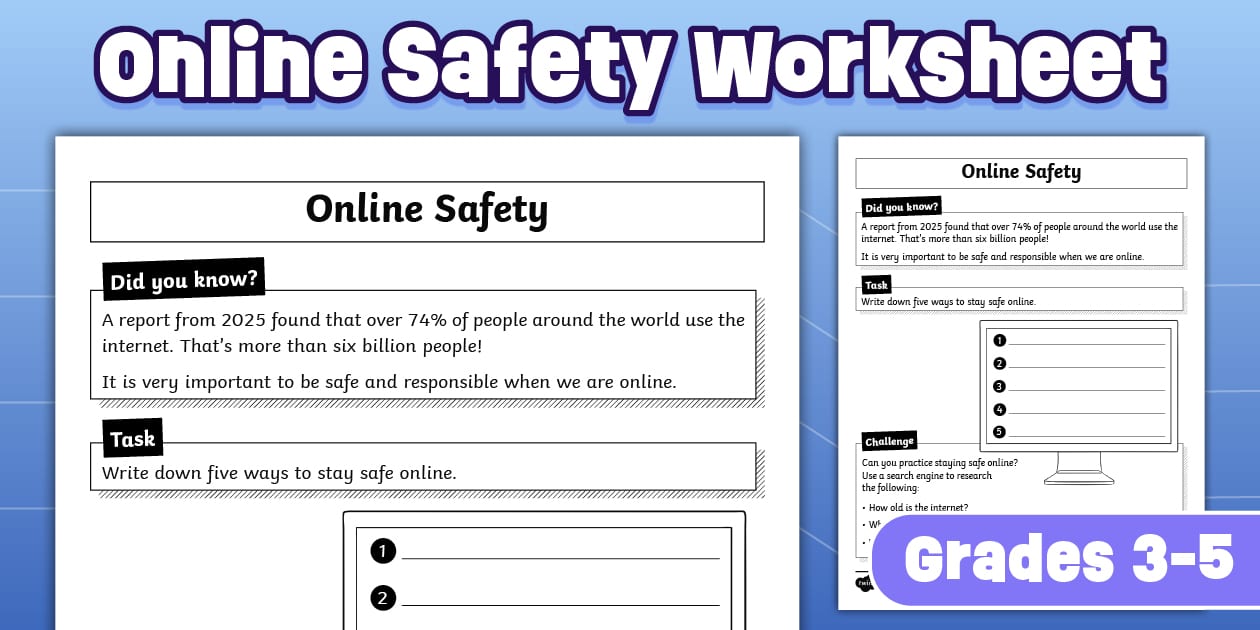
In the rapidly evolving digital landscape, equipping young learners with essential internet safety knowledge is not merely beneficial; it is imperative. The resource, an internet safety worksheet for grade 5, offers a foundational tool for educators and parents in this critical endeavor. Specifically tailored for elementary students, typically aged 9 to 11, this worksheet reinforces core internet safety concepts through engaging, hands-on printable activities. Printable worksheets remain trusted educational instruments, valued for their ability to foster active learning, encourage critical thinking, and provide tangible practice. They serve as a reliable method for building digital awareness and instilling responsible online behaviors, ensuring that foundational knowledge is firmly established before students navigate more complex online environments.
💡 Educational Key Takeaways:
- Core Skill: Structured Internet Safety Worksheet For Grade 5 focused on developing pencil grip, stroke control, and early literacy/math confidence.
- Target Scope: Suited for homeschoolers, preschool, kindergarten, and elementary learners.
- Best Recommendation: Practice 10–15 minutes daily with ergonomic writing tools to reinforce muscle memory without hand fatigue.
What This Worksheet Covers
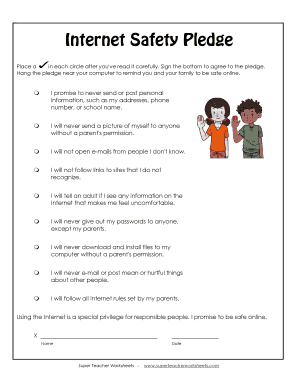
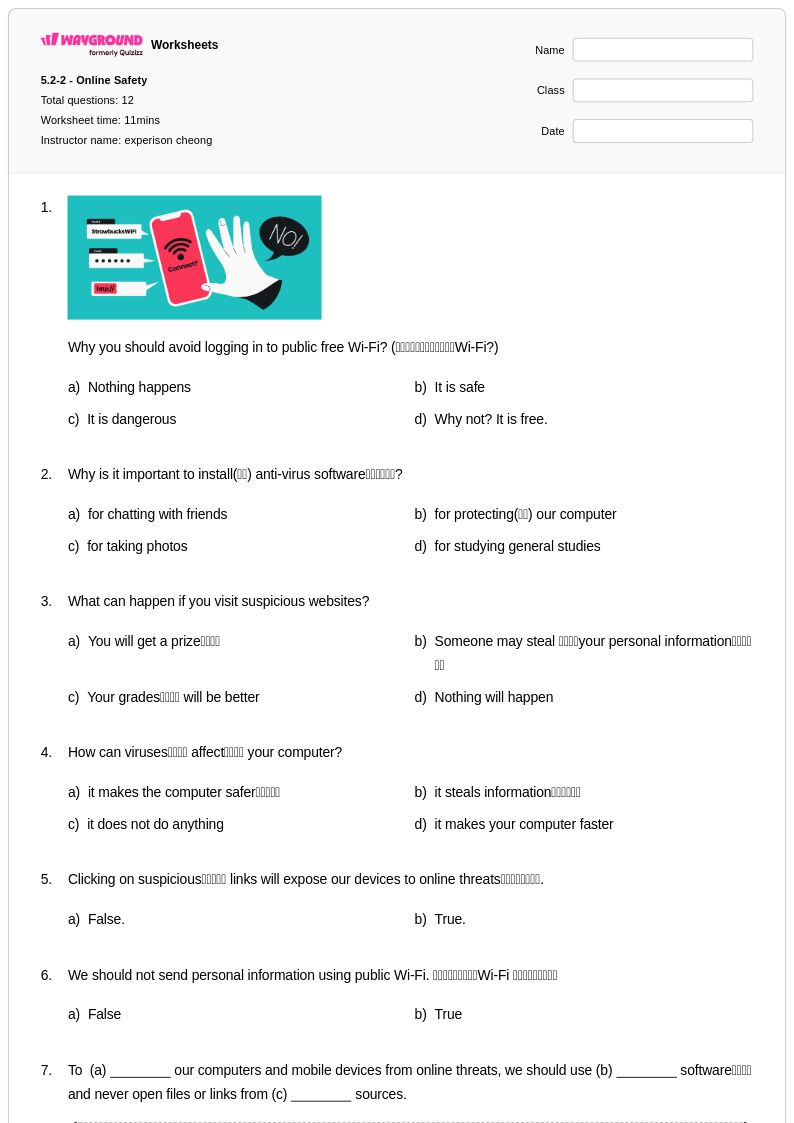
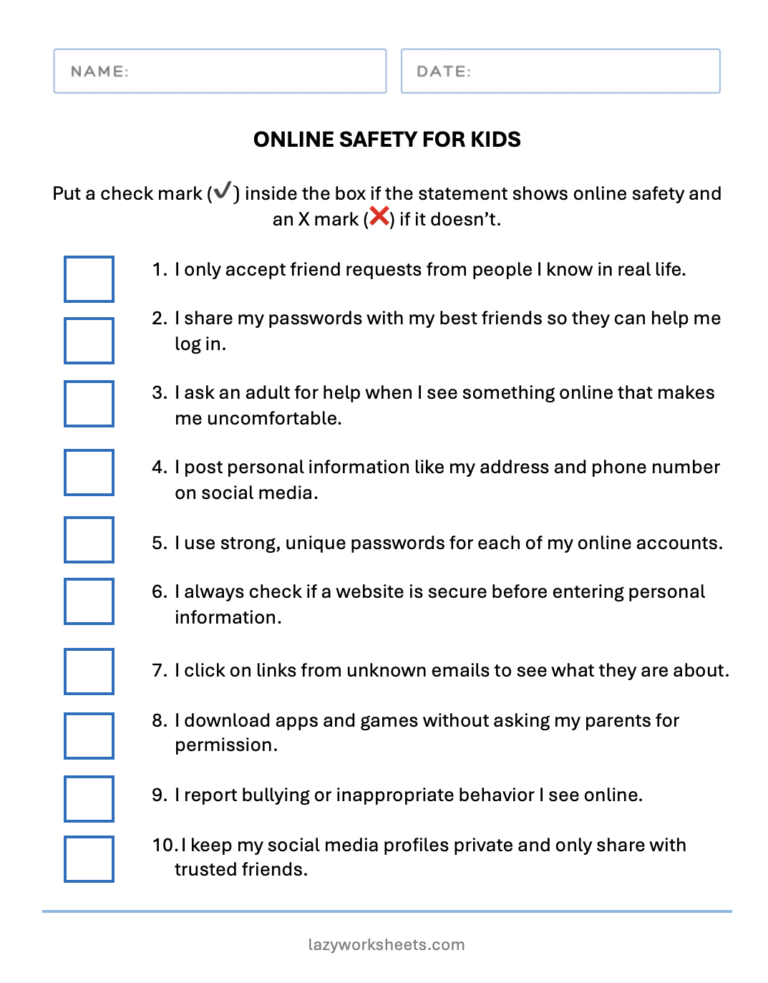
The internet safety worksheet for grade 5 addresses several crucial internet safety topics relevant to pre-teen learners. It covers concepts such as identifying trustworthy websites, understanding the importance of privacy settings, recognizing the dangers of sharing personal information online, and basic cyberbullying awareness. The worksheet also introduces the significance of strong passwords and the ‘Think Before You Click’ principle. Through various scenarios and questions, it encourages students to apply critical thinking skills to common online situations. The content directly aligns with recognized digital citizenship and child safety education standards, providing a structured approach to understanding responsible online conduct and personal protection in a digital world.
Key Learning Outcomes
By completing the internet safety worksheet for grade 5, students will develop several vital skills and knowledge areas:. Browse more guides on Safe Wired Schools.
- Identification of Personal Information: Students will learn to distinguish between safe and unsafe information to share online, protecting their privacy.
- Recognition of Online Risks: Learners will gain an understanding of common online dangers, such as strangers and misleading content, fostering cautious engagement.
- Understanding of Responsible Digital Behavior: The worksheet promotes principles of kindness and respect online, laying groundwork for positive digital citizenship.
- Application of Safety Strategies: Students will practice applying practical safety rules, like creating strong passwords and reporting suspicious activity, to real-world scenarios.
- Critical Evaluation of Online Content: The resource helps develop nascent skills for discerning reliable information from unreliable sources, a crucial digital literacy skill.
How to Use This Worksheet
The internet safety worksheet for grade 5 is designed for flexible implementation in both classroom and home settings. Its format typically includes a variety of activity types, such as fill-in-the-blank questions, matching exercises for terms and definitions, true or false statements, scenario-based problem-solving, and opportunities for drawing or reflective writing. The difficulty level is carefully calibrated for a fifth-grade comprehension, with instructions that scaffold learning progressively, guiding students through each concept. This worksheet can be utilized as a standalone activity to introduce a specific safety topic, integrated as part of a broader digital citizenship lesson plan, or assigned as homework to reinforce concepts discussed during class or family time.
Practical Tips for Parents and Teachers
- Pre-Activity Discussion: Before starting the internet safety worksheet for grade 5, initiate a brief discussion about the day’s topic. This primes students for learning and helps connect abstract concepts to their existing understanding.
- Guided Completion: Encourage students to work through the worksheet independently initially, but remain available to offer guidance and clarify instructions. For complex sections, consider completing them together to model critical thinking.
- Post-Completion Review: Once the worksheet is finished, review the answers collectively. This provides an opportunity to correct misunderstandings, deepen comprehension, and reinforce key safety messages through open dialogue.
- Role-Playing Scenarios: Extend the learning by role-playing some of the scenarios presented in the worksheet. This allows students to practice their responses in a safe environment, building confidence in applying safety rules.
- Connect to Real-World Examples: Discuss real-life situations or news stories (age-appropriately) that relate to the worksheet’s topics. This makes the concepts more tangible and emphasizes the importance of digital safety in their daily lives.
Age-Appropriate Recommendations
While the internet safety worksheet for grade 5 is specifically designed for students aged 9-11, its core concepts can be adapted for slightly younger or older learners with appropriate guidance. For students within the 9-11 age band, the worksheet serves as an excellent independent or small-group activity. Vocabulary support may be needed for specific technical terms, and activity pacing should allow for thoughtful reflection on scenarios. Parental or teacher involvement should focus on facilitating discussion and clarifying nuances of online behavior. For younger learners (e.g., ages 7-8), the worksheet can be used as a read-aloud activity, with an adult guiding every step and simplifying language as needed, focusing on key takeaways like “ask a trusted adult.” For slightly older students (e.g., ages 12-13), the worksheet can initiate more in-depth discussions, prompting them to elaborate on their reasoning for answers and consider broader implications of online choices, using the worksheet as a springboard for advanced digital citizenship topics.
Frequently Asked Questions
Q: What specific topics does the internet safety worksheet for grade 5 cover? A: This worksheet covers essential topics for fifth graders, including online privacy, recognizing safe information to share, identifying potential online risks, basic cyberbullying awareness, and creating strong passwords. It provides foundational knowledge for responsible digital citizenship.
Q: How can I access and download the free internet safety worksheet for grade 5? A: The worksheet is available for free download directly from SafeWiredSchools.org. Navigate to the “Worksheets” section, locate the resource titled “internet safety worksheet for grade 5,” and click the download link for instant access.
Q: Is the content of this worksheet aligned with current educational standards for digital safety? A: Yes, the content of the internet safety worksheet for grade 5 is carefully developed to align with recognized digital citizenship and child online safety education standards, ensuring its relevance and effectiveness in teaching critical skills.
Explore More Free Printable Worksheets
A single worksheet, however comprehensive, functions best as part of a continuous learning journey. Building robust digital safety habits requires consistent reinforcement across various topics and formats. SafeWiredSchools.org offers an extensive collection of free printable resources designed to support this ongoing education. Educators and parents are invited to explore a full array of free printable internet safety worksheets, activity sheets, checklists, quizzes, and more at SafeWiredSchools.org Worksheets. These resources cover every internet safety topic imaginable, from advanced cyberbullying prevention to media literacy, and are carefully designed for every grade level and learning environment, ensuring that comprehensive digital safety education is always accessible and engaging.
Developmental Milestone & Activity Table
| Development Stage | Recommended Daily Duration | Primary Learning Objective |
|---|---|---|
| Preschool & Pre-K | 10 – 15 Minutes | Pencil grip development & basic pre-stroke lines |
| Kindergarten | 15 – 20 Minutes | Letter/number formation & spatial line awareness |
| Early Elementary (Grade 1–2) | 20 – 30 Minutes | Fluency, sentence construction & neatness |
Images References