Introduction
Fostering responsible digital citizenship begins with foundational learning and consistent reinforcement. The “internet safety journal for students” is an invaluable free, printable educational resource designed primarily for Elementary (grades 15) and Middle School (grades 68) learners, offering adaptable content for a broader age range from early elementary to high school. This journal provides a hands-on approach to understanding crucial internet safety concepts, transforming abstract rules into actionable practices through engaging activities. Printable resources like this journal are trusted tools by educators and parents alike, offering a tangible, screen-free method to build digital awareness, promote critical thinking, and instill responsible online behavior in a structured and accessible format. Its design encourages personal reflection, making complex safety guidelines relatable and memorable for young learners navigating the digital world. Explore more in our Worksheets category.
💡 Educational Key Takeaways:
- Core Skill: Structured Internet Safety Journal For Students focused on developing pencil grip, stroke control, and early literacy/math confidence.
- Target Scope: Suited for homeschoolers, preschool, kindergarten, and elementary learners.
- Best Recommendation: Practice 10–15 minutes daily with ergonomic writing tools to reinforce muscle memory without hand fatigue.
What This Worksheet Covers
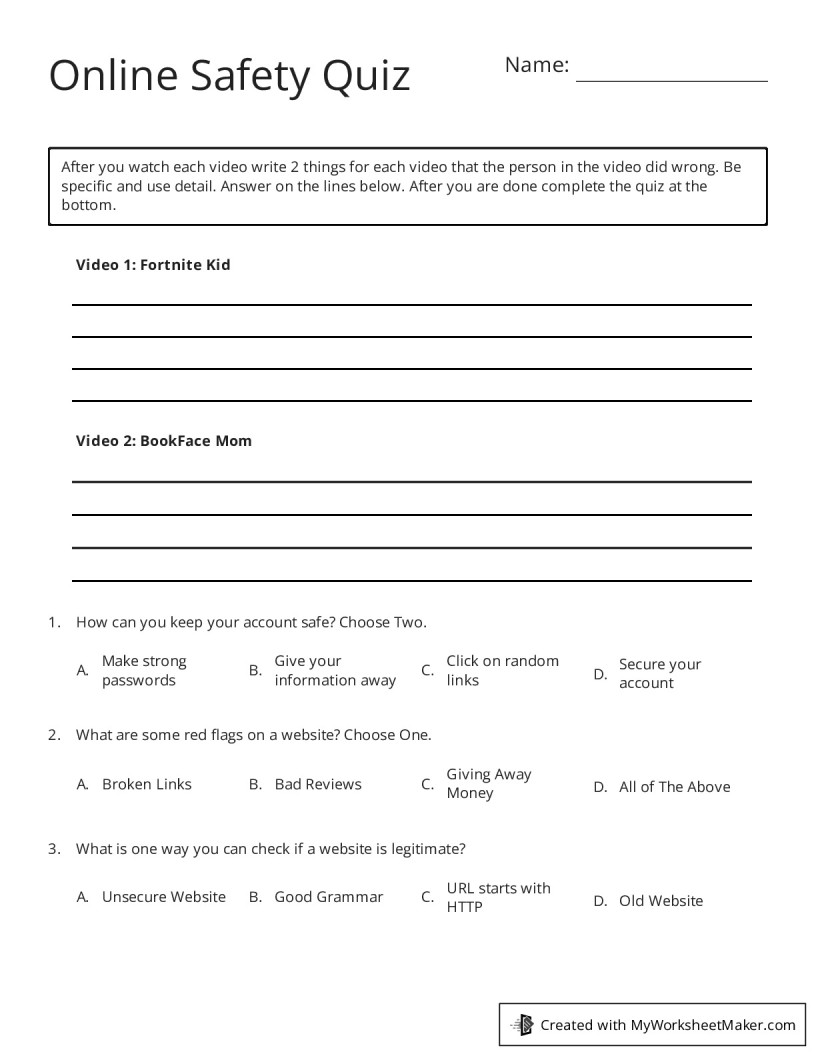
The “internet safety journal for students” addresses a comprehensive array of vital internet safety topics through guided prompts and interactive sections. It delves into concepts such as protecting personal information, understanding privacy settings, recognizing cyberbullying and its impact, and identifying trusted adults for reporting online concerns. The journal also guides students through scenarios involving safe online communication, responsible content sharing, and critical evaluation of information encountered online. Its content aligns with recognized digital citizenship and child safety education standards, ensuring coverage of essential areas like digital footprint awareness, media literacy, and the importance of ethical online interactions. The resource serves as a structured framework for exploring the complexities of digital life in an age-appropriate manner. Related guide: Internet Safety Worksheets Pdf.
Key Learning Outcomes
By engaging with the “internet safety journal for students,” learners will develop several critical skills and areas of knowledge:. Browse more guides on Safe Wired Schools.
- Personal Information Protection: Students will learn to identify sensitive personal information and understand why it must be kept private online.
- Safe Online Interactions: Children will practice recognizing and responding to potentially unsafe online situations and communicating respectfully.
- Trusted Adult Identification: Learners will be able to name and understand the role of trusted adults who can assist with online problems.
- Digital Footprint Awareness: Students will grasp the concept of a digital footprint and the lasting impact of online actions.
- Critical Media Literacy: Young people will begin to critically evaluate online content and distinguish between reliable and unreliable sources.
How to Use This Worksheet
The “internet safety journal for students” offers versatility for both classroom and home environments, making it an excellent addition to any digital safety curriculum or family discussion. This journal-style resource incorporates various activity types, including reflective writing prompts, scenario-based questions, drawing activities, and fill-in-the-blank sections, all designed to scaffold learning progressively. Its instructions are clear and concise, guiding learners through each concept step-by-step. The journal functions effectively as a standalone activity to introduce or reinforce specific safety topics, can be integrated into broader lesson plans focusing on digital citizenship, or assigned as a thought-provoking homework assignment. Its interactive nature encourages active participation and personalization of safety principles.
Practical Tips for Parents and Teachers
- Establish Context: Before starting, discuss why internet safety is important and how the journal helps navigate online experiences. Create a safe space for questions and open dialogue.
- Facilitate Discussion: Encourage students to share their thoughts and answers from the journal, fostering peer learning and deeper understanding. Pose open-ended questions related to the prompts.
- Connect to Real Life: Relate journal activities to students’ actual online experiences, discussing how they can apply the learned safety principles in their daily digital interactions.
- Extend Learning: Use the journal as a springboard for further exploration; consider watching short educational videos, discussing current events related to online safety, or creating family safety rules.
- Celebrate Completion: Acknowledge effort and progress upon completion of sections or the entire journal, reinforcing positive engagement with digital safety education.
Age-Appropriate Recommendations
The adaptability of the “internet safety journal for students” allows for tailored application across various age groups, ensuring maximum impact for every learner.
For Ages 58 (Early Elementary), the focus should be on guided interaction and visual engagement. Parents and teachers can read prompts aloud, provide vocabulary support, and encourage drawing or simple one-word answers. Activity pacing should be slow, focusing on one concept at a time, such as identifying trusted adults or understanding “private” versus “public” information. High levels of parental or teacher involvement are crucial to facilitate understanding and ensure the activities are not overwhelming.
For Ages 913 (Late Elementary & Middle School), students can engage more independently with the journal, though discussion remains vital. They can complete reflective writing prompts and scenario-based questions with moderate supervision. Vocabulary support might still be necessary for complex terms like “digital footprint” or “phishing.” The journal can be used to spark group discussions in classrooms or family conversations at home, allowing students to articulate their understanding and share perspectives. This age group benefits from exploring the nuances of online interactions and consequences.
For Ages 1418 (High School), the journal can serve as a foundation for deeper critical thinking and ethical discussions. While the primary content might be simpler for this age, it can be adapted to prompt reflection on advanced topics like digital reputation, online activism, discerning misinformation, and the legal implications of online actions. Educators can use the journal’s prompts as starting points for essays, debates, or projects, encouraging students to analyze complex digital dilemmas and develop informed opinions. Minimal direct involvement is needed, but opportunities for mentor-led discussions are highly beneficial.
Frequently Asked Questions
Q: What specific age group is the “internet safety journal for students” best suited for? A: This journal is primarily designed for Elementary (grades 1-5) and Middle School (grades 6-8) learners. However, its flexible format allows for adaptation and effective use with younger children (ages 5-8) and older students (ages 14-18) with appropriate guidance.
Q: How does this journal contribute to digital citizenship education? A: The journal promotes digital citizenship by teaching responsible online behavior, critical thinking about digital content, understanding privacy, and fostering empathy in online interactions. It helps students develop the skills to navigate the digital world safely and ethically.
Q: Where can educators and parents download the free printable “internet safety journal for students”? A: The “internet safety journal for students” is available for free download directly from SafeWiredSchools.org. Visit the website’s resources section to access and print this valuable educational tool for immediate use.
Explore More Free Printable Worksheets
The “internet safety journal for students” offers a powerful start to digital safety education, but consistent learning thrives within a comprehensive framework. A single worksheet works best when integrated into a broader, ongoing collection of printable resources. Educators and parents are invited to explore a full collection of free printable internet safety worksheets, activity sheets, checklists, quizzes, and more at SafeWiredSchools.org Worksheets. This extensive library covers every essential internet safety topic and is meticulously designed for every grade level and diverse learning environment, ensuring continuous support for developing digitally savvy and responsible young individuals.
Developmental Milestone & Activity Table
| Development Stage | Recommended Daily Duration | Primary Learning Objective |
|---|---|---|
| Preschool & Pre-K | 10 – 15 Minutes | Pencil grip development & basic pre-stroke lines |
| Kindergarten | 15 – 20 Minutes | Letter/number formation & spatial line awareness |
| Early Elementary (Grade 1–2) | 20 – 30 Minutes | Fluency, sentence construction & neatness |