Introduction
The term “free screen time agreement for kids” identifies a crucial educational resource as a noun, specifically an agreement document. This printable tool serves as a foundational component in digital safety education, applicable across Elementary (grades 1-5) and Middle/High School (grades 6-12) age groups. Its relevance lies in establishing clear, mutually understood boundaries for technology use, a vital skill in today’s interconnected world. Printable learning resources like this agreement are trusted instruments for educators and parents, offering tangible engagement that reinforces abstract internet safety concepts. The act of physically interacting with and signing an agreement elevates its importance, moving beyond mere instruction to active participation. Such worksheets foster critical thinking and responsible online behavior, providing a structured framework for discussions about digital wellness and accountability. Educators consistently rely on these practical, hands-on materials to build digital awareness, ensuring children develop essential habits for safe and balanced technology engagement from an early age.
💡 Educational Key Takeaways:
- Core Skill: Structured Free Screen Time Agreement For Kids focused on developing pencil grip, stroke control, and early literacy/math confidence.
- Target Scope: Suited for homeschoolers, preschool, kindergarten, and elementary learners.
- Best Recommendation: Practice 10–15 minutes daily with ergonomic writing tools to reinforce muscle memory without hand fatigue.
What This Worksheet Covers
This “free screen time agreement for kids” addresses the multifaceted topic of healthy screen time management and responsible digital citizenship. It outlines specific rules, expectations, and consequences related to device usage, fostering a proactive approach to online safety. The worksheet covers concepts such as designated screen-free times, appropriate content choices, communication etiquette, and the importance of balancing online activities with offline pursuits. It introduces children to the idea of shared responsibility in maintaining a safe digital environment, aligning directly with recognized digital citizenship standards that emphasize respect, education, and protection in the online realm. The content helps solidify an understanding of personal boundaries, privacy settings, and the implications of digital actions, preparing young users for an increasingly digital world with an authoritative yet accessible framework.
Key Learning Outcomes
By engaging with the “free screen time agreement for kids,” children develop several vital skills and knowledge areas:. Browse more guides on Safe Wired Schools.
- Understanding Digital Boundaries: Learners will grasp the concept of limits and expectations regarding screen use, distinguishing between appropriate and inappropriate online behaviors.
- Practicing Self-Regulation: The agreement encourages children to manage their own screen time, fostering independence and the ability to make responsible choices without constant supervision.
- Enhancing Communication Skills: Completing the agreement facilitates open dialogue between children and adults about technology rules, promoting effective communication regarding online habits.
- Developing Digital Accountability: Students will learn about the consequences of violating established rules, cultivating a sense of personal responsibility for their digital actions.
- Promoting Balanced Lifestyles: The resource reinforces the importance of integrating screen time with other activities, encouraging a healthy balance between digital and real-world engagement.
How to Use This Worksheet
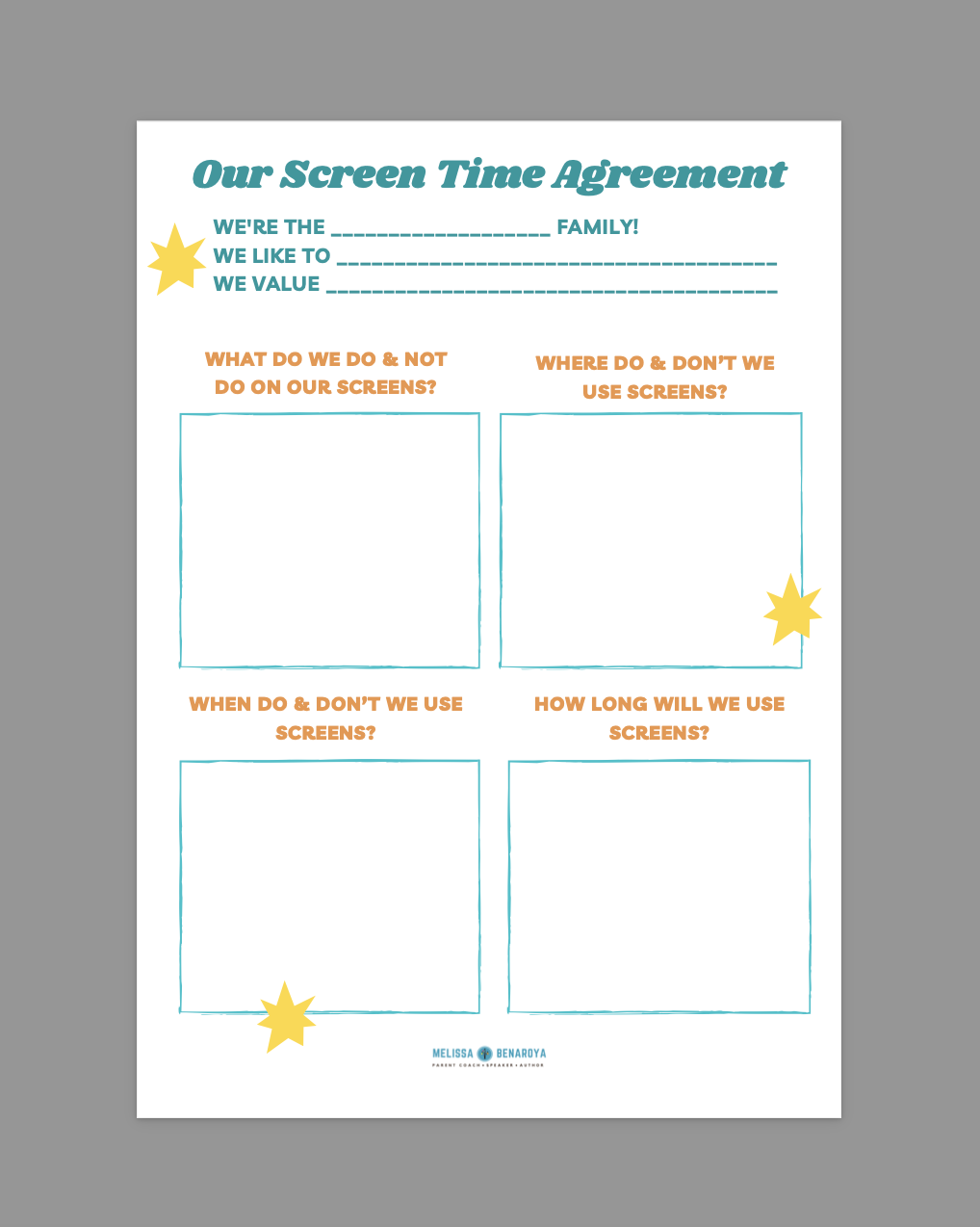
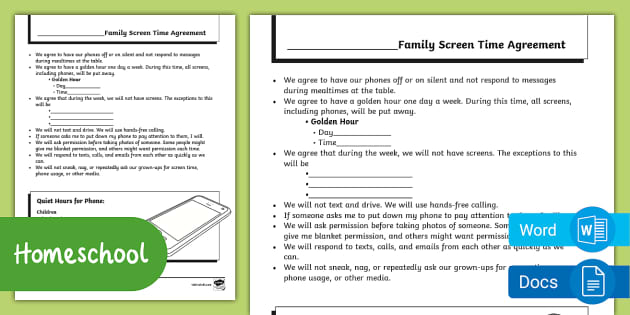
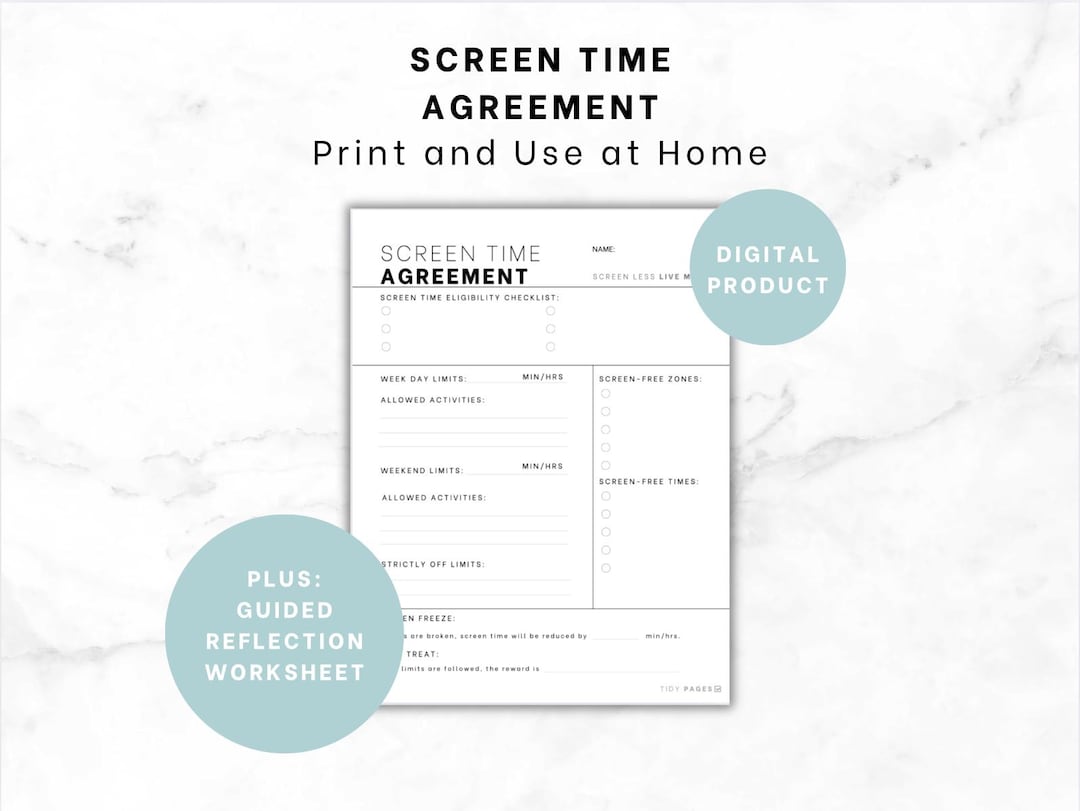
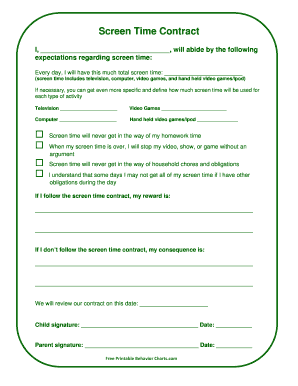
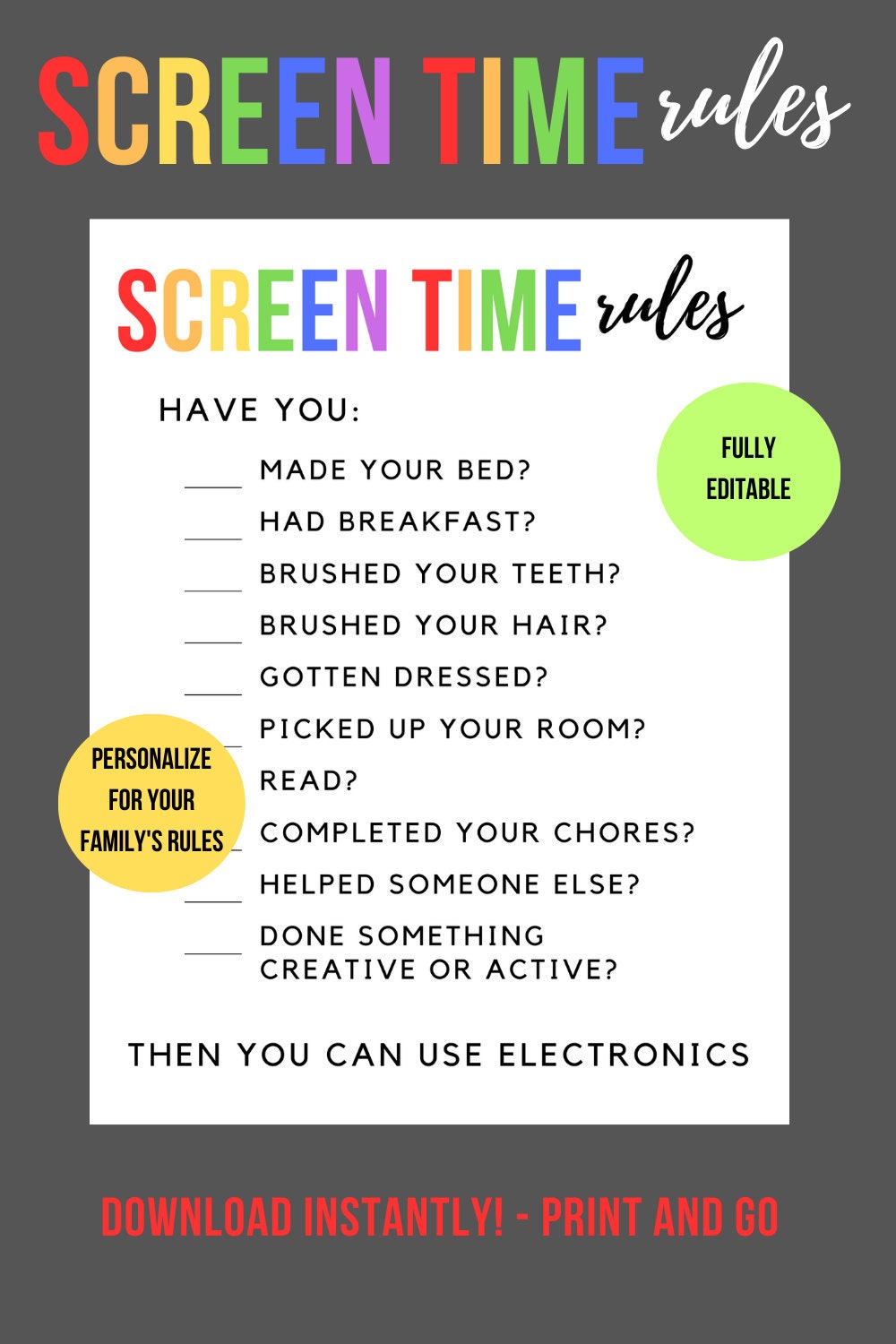
The “free screen time agreement for kids” worksheet is designed for flexible implementation in both educational settings and home environments. Its format typically includes sections for listing agreed-upon rules, designated screen times, acceptable content, and areas for signatures from both children and supervising adults. The activity types often involve fill-in-the-blank sections for personalization, checkboxes for agreement on specific conditions, and reflective prompts encouraging thoughtful consideration of digital habits. Instructions are scaffolded to guide learners progressively, starting with basic concepts and moving towards more nuanced discussions about digital responsibility. This resource functions effectively as a standalone activity to initiate discussions on screen time, can be integrated into a broader digital citizenship lesson plan, or assigned as homework to involve families directly in the learning process. Its adaptable design ensures it supports a variety of teaching and parenting styles.
Practical Tips for Parents and Teachers
- Prepare for Discussion: Before introducing the agreement, identify key areas of concern or existing challenges related to screen time. This preparation helps tailor the discussion to specific needs and makes the agreement more relevant.
- Facilitate Collaborative Rule-Setting: Instead of simply presenting rules, engage children in a discussion about why certain boundaries are necessary. Allowing input empowers children and increases their commitment to the agreement.
- Review and Reflect Regularly: The agreement should not be a one-time signing. Schedule periodic check-ins to review its effectiveness, discuss challenges, and make adjustments as technology use evolves or as children mature.
- Model Responsible Behavior: Adults demonstrate the importance of the agreement by consistently adhering to their own digital boundaries. Modeling balanced screen time and responsible online habits reinforces the agreement’s principles.
- Extend Learning Beyond the Worksheet: Use the agreement as a springboard for further education. Explore topics like digital footprints, online privacy, or the impact of excessive screen time on health, connecting the agreement to broader internet safety themes.
Age-Appropriate Recommendations
Implementing the “free screen time agreement for kids” effectively requires tailoring the approach to different developmental stages.
Ages 5-8 (Early Elementary): For younger children, simplify the language and focus on a few core rules. The emphasis should be on clear, positive statements, such as “We use devices for learning games” or “Screen time ends when the timer rings.” Use visual cues and involve drawing or coloring to make the agreement more engaging. Parental or teacher involvement will be high, guiding every step and offering frequent reminders. Discussions should be short and concrete, focusing on immediate actions and consequences.
Ages 9-12 (Upper Elementary/Middle School): Children in this age group can participate more actively in drafting the agreement. Introduce more complex concepts like content appropriateness, privacy considerations, and the importance of balancing online time with homework and outdoor activities. Vocabulary can be expanded to include terms like “digital footprint” and “responsible online interaction.” Encourage children to suggest rules and discuss the reasoning behind them. Adult guidance remains essential but shifts towards facilitation rather than direct instruction, allowing for greater independence in understanding and adhering to the agreement.
Ages 13-18 (Middle/High School): For adolescents, the agreement becomes a more sophisticated tool for self-management and critical thinking. Discussions should include topics such as cyberbullying, digital reputation, time management strategies for academic success, and the impact of social media. The agreement can address specific apps, online communication protocols, and consequences for misuse. This age group benefits from a collaborative approach, where the agreement is seen as a living document that empowers them to make informed decisions about their digital lives, with adult roles focusing on mentorship and support rather than strict enforcement.
Frequently Asked Questions
Q: What is the primary purpose of a screen time agreement? A: A screen time agreement primarily establishes clear, mutually understood boundaries for technology use. It helps children develop responsible digital habits and promotes open communication between children and adults regarding online activities.
Q: How does this worksheet support digital citizenship? A: This worksheet supports digital citizenship by fostering an understanding of online responsibilities, promoting respectful digital interactions, and encouraging balanced technology use. It lays the groundwork for safe, ethical, and productive online engagement.
Q: Where can educators and parents access this free printable resource? A: The “free screen time agreement for kids” and other valuable internet safety printables are available for download directly from the SafeWiredSchools.org website. Navigate to the worksheets section to find and print this resource instantly.
Explore More Free Printable Worksheets
A single resource, however impactful, functions best as part of a comprehensive learning journey. The “free screen time agreement for kids” contributes significantly to digital literacy, yet its full value is realized when integrated into a consistent routine of digital safety education. SafeWiredSchools.org offers an extensive collection of free printable internet safety worksheets, activity sheets, checklists, quizzes, and more, designed to cover every internet safety topic. These resources cater to all grade levels and diverse learning environments, providing educators and parents with a robust toolkit to build a generation of responsible digital citizens. Explore the full collection today at SafeWiredSchools.org Worksheets to enhance digital safety education and foster healthy online habits.
Developmental Milestone & Activity Table
| Development Stage | Recommended Daily Duration | Primary Learning Objective |
|---|---|---|
| Preschool & Pre-K | 10 – 15 Minutes | Pencil grip development & basic pre-stroke lines |
| Kindergarten | 15 – 20 Minutes | Letter/number formation & spatial line awareness |
| Early Elementary (Grade 1–2) | 20 – 30 Minutes | Fluency, sentence construction & neatness |
Images References