Introduction
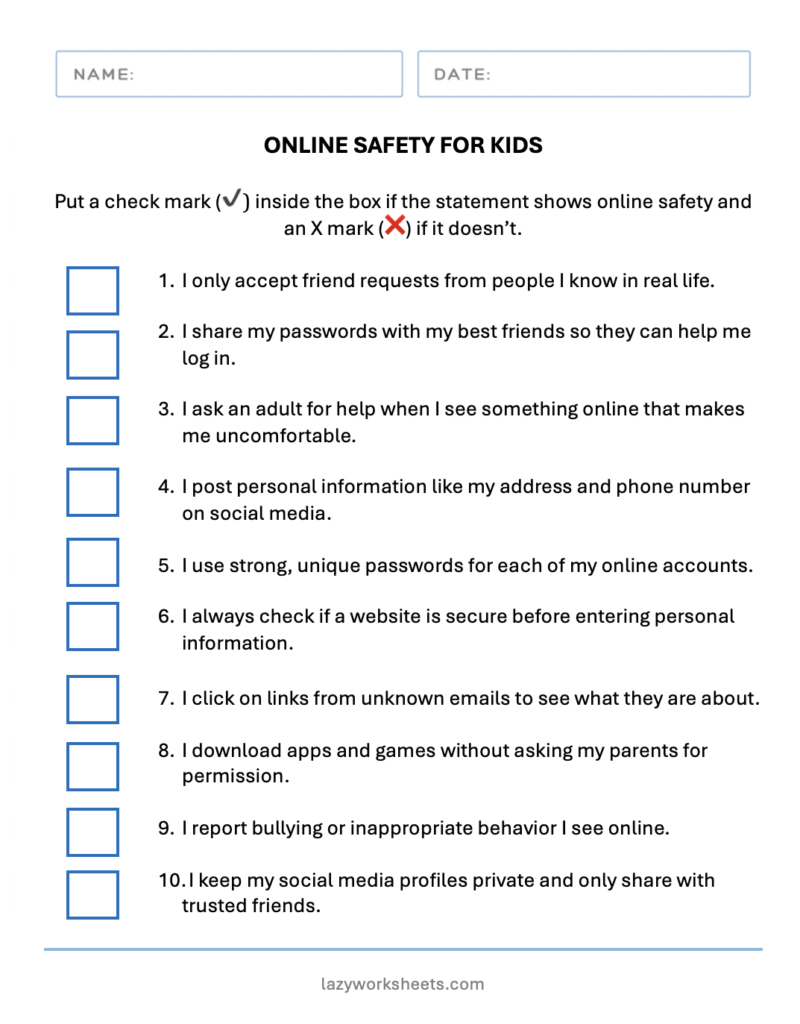
Establishing a strong foundation in digital citizenship is paramount for young learners. The “digital safety worksheet for kindergarten” serves as an invaluable resource, specifically designed for children in the preschool age range (approximately ages 35). This printable tool reinforces crucial internet safety concepts through engaging, hands-on activities. Educators and parents consistently trust printable worksheets for their effectiveness in building digital awareness and fostering responsible online behavior. These tangible resources offer a unique learning experience, allowing children to interact directly with content, promoting deeper understanding and retention of vital safety messages. The development of early digital literacy through such trusted methods prepares children for an increasingly connected world, ensuring their initial online interactions are informed and secure.
💡 Educational Key Takeaways:
- Core Skill: Structured Digital Safety Worksheet For Kindergarten focused on developing pencil grip, stroke control, and early literacy/math confidence.
- Target Scope: Suited for homeschoolers, preschool, kindergarten, and elementary learners.
- Best Recommendation: Practice 10–15 minutes daily with ergonomic writing tools to reinforce muscle memory without hand fatigue.
What This Worksheet Covers
The “digital safety worksheet for kindergarten” addresses fundamental internet safety topics tailored for very young children. It introduces core concepts such as identifying trusted adults who can assist with online concerns, understanding the importance of asking permission before clicking on links or visiting websites, and recognizing that personal information should never be shared online without adult consent. The worksheet also touches upon the basic distinction between safe and potentially unsafe online content through simple, visual cues. The content directly aligns with foundational digital citizenship principles and recognized child online protection standards, emphasizing the importance of adult guidance and safe exploration. Simple scenarios and clear instructions make complex ideas accessible to kindergarten-aged learners.
Key Learning Outcomes
Upon completion of the “digital safety worksheet for kindergarten,” young learners will develop several critical skills and areas of knowledge:. Browse more guides on Safe Wired Schools.
- Ability to identify and approach trusted adults for assistance with online questions or concerns.
- Understanding the essential “ask first” rule before engaging with new online content or websites.
- Basic awareness that personal details, such as names, addresses, or phone numbers, must not be shared online.
- Development of an initial sense of what constitutes appropriate and inappropriate online content through visual recognition.
- Cultivation of foundational digital responsibility, promoting safer initial online interactions.
How to Use This Worksheet
The “digital safety worksheet for kindergarten” is structured for ease of use by both educators and parents, facilitating effective learning in various environments. The worksheet incorporates activity types suitable for young children, including simple drawing tasks, matching exercises, and basic scenario recognition. Its difficulty level is entry-level, featuring large print, clear illustrations, and minimal text to ensure accessibility. Instructions are scaffolded progressively, guiding children through each activity with gentle prompts. This resource functions effectively as a standalone activity, providing a focused introduction to digital safety. It can also be seamlessly integrated into a broader lesson plan as a reinforcing exercise or assigned as a simple, engaging homework task to extend learning into the home environment. The hands-on nature encourages active participation and discussion.
Practical Tips for Parents and Teachers
- Preparation is Key: Prior to beginning the activity, ensure the worksheet is printed clearly and all necessary materials, such as crayons or pencils, are readily available. Review the worksheet content beforehand to anticipate any questions.
- Guided Facilitation: Sit with the child and read all instructions and prompts aloud. Offer gentle guidance and encouragement throughout each activity, ensuring the child understands the task without providing direct answers.
- Post-Activity Discussion: After the worksheet is completed, engage in a brief, open discussion about the topics covered. Ask questions like, “Who would you tell if you saw something scary online?” or “Why is it important to ask permission before clicking?”
- Extend the Learning: Reinforce concepts through real-world examples or simple role-playing. Practice asking permission before using a tablet or discuss trusted adults in the child’s life. Consider creating a simple “safe online rules” poster together.
- Consistency Matters: Integrate digital safety discussions into everyday conversations. Consistent reinforcement of these foundational rules helps children internalize the messages and apply them naturally in various online situations.
Age-Appropriate Recommendations
While the “digital safety worksheet for kindergarten” is specifically designed for very young learners, the principles it introduces are universally relevant, serving as a critical starting point for digital safety education across different age groups. For Ages 36 (Preschool/Kindergarten), direct and guided use of the worksheet is highly recommended. Adult involvement is crucial for reading instructions, explaining concepts in simple terms, and ensuring comprehension. The focus should be on visual recognition, repetition of key phrases, and making the learning experience fun and interactive. For Ages 710 (Early Elementary), this worksheet can serve as an excellent review tool for foundational concepts or an introductory resource for children who may not have received early digital safety education. Discussion can be expanded to connect the simple rules presented in the worksheet to more varied online experiences, encouraging critical thinking about online interactions. For Ages 1118 (Middle/High School), the worksheet itself is not directly applicable. However, educators and parents of older students can still appreciate the value of starting digital safety education early with such resources. The foundational concepts of identifying trusted adults, seeking permission, and protecting personal information are the bedrock upon which more complex topics like digital footprint, cyberbullying, and privacy settings are built. Understanding these early learning approaches informs a holistic strategy for ongoing digital citizenship education, emphasizing that basic safety principles remain relevant even as online environments evolve.
Frequently Asked Questions
Q: What specific topics does the “digital safety worksheet for kindergarten” cover?
A: The worksheet focuses on identifying trusted adults for online help, understanding the need to ask permission before clicking, and recognizing the importance of not sharing personal information online.
Q: How can this free printable worksheet be accessed?
A: The “digital safety worksheet for kindergarten” is available for complimentary download directly from the SafeWiredSchools.org website. It can be printed from any standard home or classroom printer.
Q: Is adult supervision required when a child completes this worksheet?
A: Yes, active adult guidance and supervision are highly recommended. This ensures young learners fully understand the concepts, can ask questions, and benefit from reinforced discussions.
Explore More Free Printable Worksheets
A single worksheet forms part of a comprehensive digital safety learning routine. The “digital safety worksheet for kindergarten” introduces essential concepts, but consistent engagement with varied resources deepens understanding. Educators and parents are invited to explore a full collection of free printable internet safety worksheets, activity sheets, checklists, quizzes, and more at SafeWiredSchools.org Worksheets. These resources cover every internet safety topic imaginable and are thoughtfully designed for every grade level and learning environment, ensuring a continuous and robust digital citizenship education.
Developmental Milestone & Activity Table
| Development Stage | Recommended Daily Duration | Primary Learning Objective |
|---|---|---|
| Preschool & Pre-K | 10 – 15 Minutes | Pencil grip development & basic pre-stroke lines |
| Kindergarten | 15 – 20 Minutes | Letter/number formation & spatial line awareness |
| Early Elementary (Grade 1–2) | 20 – 30 Minutes | Fluency, sentence construction & neatness |