Introduction
Children encounter digital environments long before reaching double digits, often starting on shared family tablets or through interactive gaming consoles in the living room. Modern classrooms and households face the shared task of guiding elementary students toward healthy digital habits without creating anxiety or fear. Safety is a skill set built through repetition, patience, and open communication rather than strict walls or constant surveillance. Physical handouts bridge the gap between abstract concepts and concrete understanding, giving young learners something tangible to hold and review. Finding budget-friendly educational materials that resonate with kids takes time, which makes the free printable cheap internet safety rules for kids will an invaluable addition to any lesson plan or family meeting. Related guide: Teachers Of Grades 9–12 Should Expand Internet Safety Instruction To Include Which Of The Following Topics?.
💡 Educational Key Takeaways:
- Core Skill: Structured Cheap Internet Safety Rules For Kids Will focused on developing pencil grip, stroke control, and early literacy/math confidence.
- Target Scope: Suited for homeschoolers, preschool, kindergarten, and elementary learners.
- Best Recommendation: Practice 10–15 minutes daily with ergonomic writing tools to reinforce muscle memory without hand fatigue.
What This Printable Covers
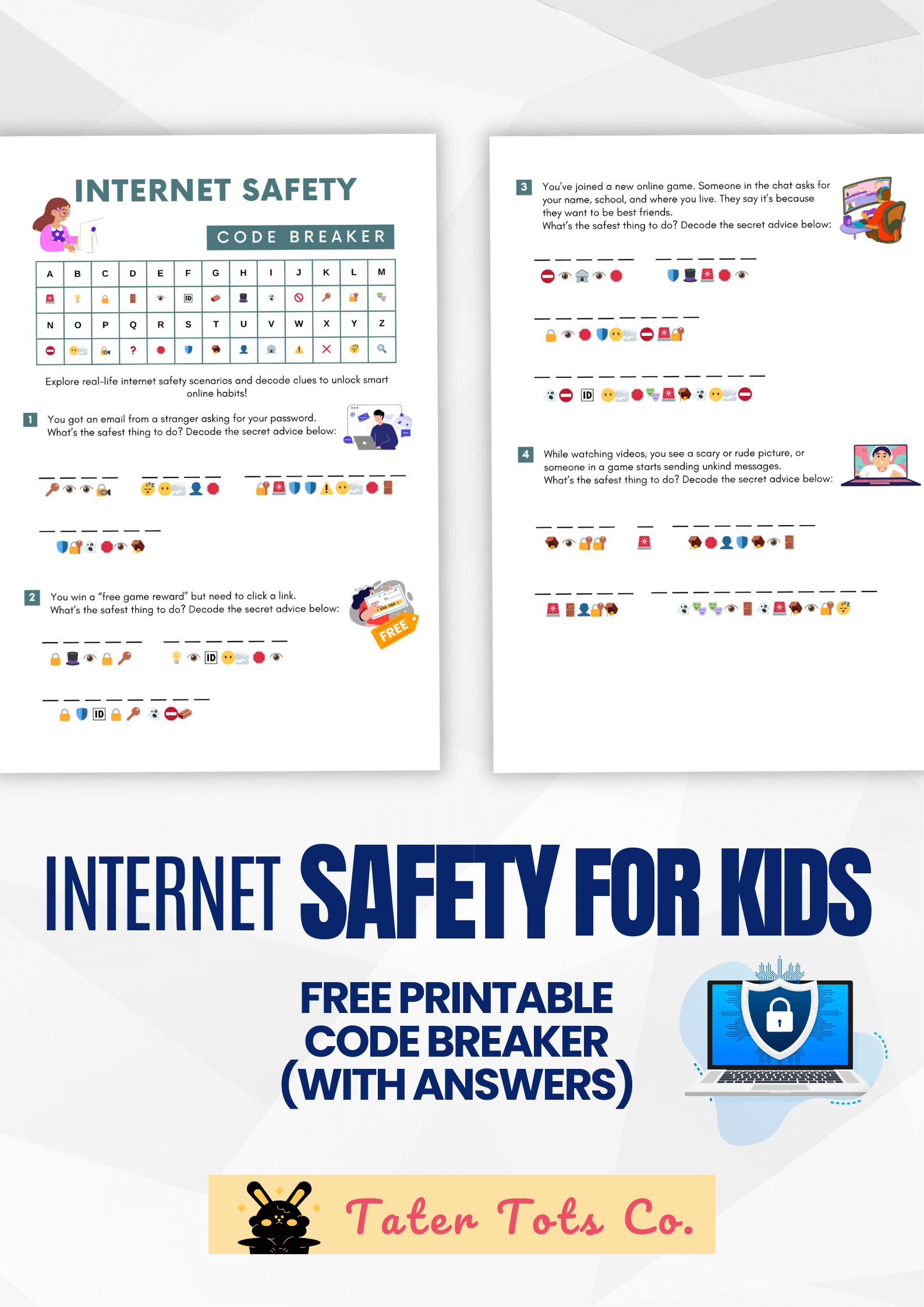
Foundational digital safety relies on memorable, straightforward guidelines that young minds can easily recall during unexpected online moments. This resource lays out essential digital citizenship concepts, focusing on protective habits such as keeping personal information private, creating strong passwords, and pausing before sharing content. It explicitly reinforces the crucial message that children are never in trouble for reporting something uncomfortable, confusing, or mean online. Rather than acting as a digital shield, this printable supports crucial conversations and habit-building between adults and children. Exploring related materials through Internet and Digital Safety resources helps expand these core lessons into daily routines.
Key Learning Outcomes
Working through these established rules helps students identify situations where they should immediately stop and find a trusted adult. According to the Pew Research Center, a substantial majority of parents express concern about their children’s screen time and digital interactions, highlighting the urgent need for proactive guidance. Children learn to recognize the value of personal privacy, understanding that full names, home addresses, and school names stay offline. Practice sessions using Worksheets allow students to apply these concepts through scenarios tailored to elementary comprehension levels, strengthening critical thinking before real-world digital dilemmas occur.
How to Use This Printable
Classrooms and living rooms transform into safe spaces for discussion when adults introduce the material through collaborative reading rather than lecturing. Educators can integrate the rules into morning meetings, while parents can review the page during weekend screen-time agreements. It sounds simple, and that’s the point. Repetition anchors these lessons so that when a child encounters a strange pop-up, an unexpected message in an in-game chat, or a request for personal details on a video platform, the correct response feels automatic.
Practical Tips for Parents and Teachers
Here’s what makes this resource different: it shifts the focus from what children cannot do to how they can navigate spaces safely and responsibly. Adults should invite children to point out specific rules that stand out, encouraging them to explain the reasoning in their own words. Establishing a judgment-free zone ensures that if a mistake happens, communication remains open. Additional creative approaches are available within the Coloring Pages collection, where visual art reinforces digital literacy through hands-on participation.
Age-Appropriate Recommendations
Kindergarteners and first graders benefit most from visual cues and basic rules about asking an adult before clicking anything new. Older elementary students in the upper grades can analyze deeper scenarios involving digital footprints and respectful online communication. Aligning these discussions with the International Society for Technology in Education (ISTE) Standards for Students ensures that digital citizenship education meets recognized benchmarks for empowered, responsible learners. Children grow into confident digital citizens when expectations match their developmental stage, keeping the focus entirely on skill acquisition and positive reinforcement.
According to Common Sense Media, children as young as eight frequently engage with digital media and online platforms, making early digital citizenship education essential for healthy development. — Common Sense Media
Frequently Asked Questions
Addressing common questions helps educators and families implement these safety practices smoothly and effectively. Reviewing these quick answers provides clarity on downloading, teaching strategies, and trusted organizational guidelines.
Explore More Free Kids Online Safety Printables
Expanding a digital citizenship curriculum requires a steady stream of fresh, reliable teaching tools that keep students engaged. Discovering additional resources through Online and Digital Safety libraries ensures that classrooms and homes stay equipped with up-to-date guidance for growing minds. Consistent reinforcement turns good digital habits into lifelong practices.
Developmental Milestone & Activity Table
| Development Stage | Recommended Daily Duration | Primary Learning Objective |
|---|---|---|
| Preschool & Pre-K | 10 – 15 Minutes | Pencil grip development & basic pre-stroke lines |
| Kindergarten | 15 – 20 Minutes | Letter/number formation & spatial line awareness |
| Early Elementary (Grade 1–2) | 20 – 30 Minutes | Fluency, sentence construction & neatness |
Images References