Introduction
The “cyberbullying worksheet for grade 8″ serves as a vital educational tool, specifically designed for students in middle school (grades 612). This resource addresses the critical and pervasive issue of cyberbullying, providing a structured approach to understanding, preventing, and responding to online harassment. It reinforces essential internet safety concepts through engaging, hands-on learning activities. Printable worksheets are long-trusted instruments for educators and parents alike, offering tangible benefits in building digital awareness and fostering responsible online behavior. Their tactile nature often enhances retention and provides a dedicated space for reflection, making complex topics more accessible and memorable for learners. This particular worksheet empowers young people with the knowledge and confidence required to navigate the digital landscape safely and ethically.
💡 Educational Key Takeaways:
- Core Skill: Structured Cyberbullying Worksheet For Grade 8 focused on developing pencil grip, stroke control, and early literacy/math confidence.
- Target Scope: Suited for homeschoolers, preschool, kindergarten, and elementary learners.
- Best Recommendation: Practice 10–15 minutes daily with ergonomic writing tools to reinforce muscle memory without hand fatigue.
What This Worksheet Covers
This “cyberbullying worksheet for grade 8″ directly addresses the multifaceted challenges of cyberbullying. It delves into defining cyberbullying in its various forms, including harassment, denigration, impersonation, exclusion, and trickery. The content explores the emotional, psychological, and social impacts on both victims and perpetrators, fostering a deeper understanding of consequences. The worksheet also covers practical strategies for students to protect themselves online, such as strong privacy settings and thoughtful sharing practices. Crucially, it outlines clear steps for reporting cyberbullying incidents to trusted adults, identifying reliable support systems, and understanding the role of an upstander. The material connects directly with established digital citizenship frameworks and child online safety education standards, promoting empathy, critical thinking, and responsible digital communication skills.
Key Learning Outcomes
Completing this worksheet helps students develop several crucial skills and knowledge areas:
- Students will accurately define cyberbullying and identify its various forms, including online harassment and exclusion.
- Students will understand the emotional, social, and academic impact of cyberbullying on individuals and school communities.
- Students will identify appropriate steps for reporting cyberbullying incidents to trusted adults and seeking support resources.
- Students will develop strategies for being an upstander, promoting positive online interactions, and intervening safely.
- Students will recognize the importance of responsible digital communication, empathy, and respect in all online environments.
How to Use This Worksheet
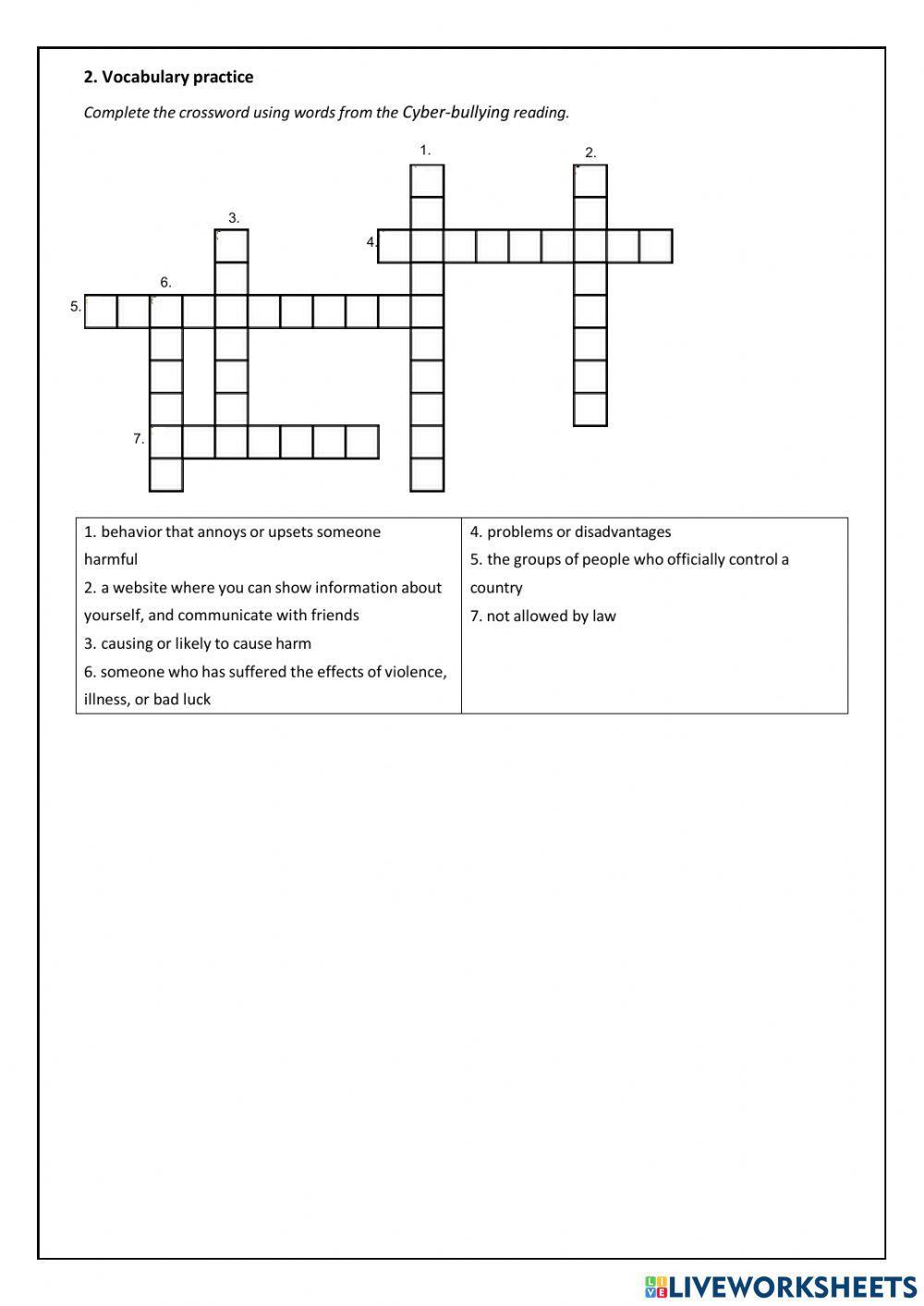
The “cyberbullying worksheet for grade 8” offers versatile application for both classroom instruction and home-based learning. The format typically includes a mix of activity types designed to engage middle schoolers: scenario analysis where students interpret situations and propose solutions, true/false questions to test foundational knowledge, fill-in-the-blank sections for key vocabulary, and short-answer reflection prompts encouraging critical thinking and personal connection. Instructions are clear and scaffold learning progressively, ensuring accessibility for diverse learners while maintaining an appropriate challenge level for grade 8. This resource functions effectively as a standalone activity to initiate discussions, as an integral component of a comprehensive lesson plan on digital citizenship, or as a thoughtful homework assignment to reinforce concepts introduced in class. Its design facilitates both individual work and collaborative discussion, making it adaptable to various educational settings. Browse more guides on Safe Wired Schools.
Practical Tips for Parents and Teachers
Maximizing the educational impact of the “cyberbullying worksheet for grade 8” involves thoughtful preparation and facilitation.
- Review Content First: Before presenting the worksheet, thoroughly review all questions and scenarios. This allows for anticipating potential discussion points and preparing additional context or examples.
- Create a Safe Environment: Encourage an open and non-judgmental atmosphere. Assure students that their experiences and questions are valued, fostering trust for honest discussions about sensitive topics.
- Facilitate Discussion: After completion, lead a debriefing session. Use prompts like, “What was the most challenging scenario?” or “What new strategy did you learn?” to deepen understanding and encourage peer learning.
- Connect to Real-World Examples: Discuss current events or hypothetical situations (without naming individuals) that relate to cyberbullying. This grounds the worksheet’s concepts in relevant, relatable contexts.
- Extend Learning Beyond the Worksheet: Consider role-playing scenarios, creating a class or family media agreement, or exploring additional resources on digital safety. Consistent reinforcement helps solidify responsible online habits over time.
Age-Appropriate Recommendations
The “cyberbullying worksheet for grade 8” is specifically tailored for students typically aged 13-14, placing it firmly within the 1118 age band. For this demographic, the approach should emphasize critical thinking and peer discussion. Learners at this stage benefit from analyzing complex scenarios, understanding nuanced social dynamics, and developing personal coping mechanisms. Vocabulary used in the worksheet is appropriate for grade 8, but facilitators should be prepared to clarify specific terms related to legal aspects or reporting procedures. Activity pacing can allow for independent work, followed by guided group discussions that encourage students to share perspectives and learn from one another. Parental or teacher involvement should shift from direct instruction to facilitation, guiding conversations, providing support, and acting as a trusted resource for questions and concerns. The goal is to empower these learners to make informed decisions and act responsibly online, building on their developing sense of autonomy.
Frequently Asked Questions
Q: How can one access the free “cyberbullying worksheet for grade 8”?
A: The “cyberbullying worksheet for grade 8” is available for free download directly from the SafeWiredSchools.org website. Navigate to the worksheets section, locate the specific resource, and click the download link for immediate access.
Q: What specific aspects of cyberbullying does this worksheet address?
A: This worksheet covers identifying various forms of cyberbullying, understanding its impact, learning how to report incidents effectively, and developing strategies for being an upstander. It fosters critical thinking about online interactions.
Q: Is this worksheet suitable for students in grades other than 8?
A: While primarily designed for grade 8, the concepts are relevant for students in grades 6-10. Teachers and parents may adapt discussions and provide additional context for slightly younger or older learners to maximize its utility.
Explore More Free Printable Worksheets
A single worksheet serves as an excellent starting point, but comprehensive digital safety education thrives within a broader collection of resources. Educators and parents are encouraged to explore a full array of free printable internet safety worksheets, activity sheets, checklists, quizzes, and more at SafeWiredSchools.org Worksheets. This extensive library covers every essential internet safety topic, meticulously designed for every grade level and adaptable to various learning environments, ensuring a consistent and robust approach to online safety education.
Developmental Milestone & Activity Table
| Development Stage | Recommended Daily Duration | Primary Learning Objective |
|---|---|---|
| Preschool & Pre-K | 10 – 15 Minutes | Pencil grip development & basic pre-stroke lines |
| Kindergarten | 15 – 20 Minutes | Letter/number formation & spatial line awareness |
| Early Elementary (Grade 1–2) | 20 – 30 Minutes | Fluency, sentence construction & neatness |
Images References