Introduction
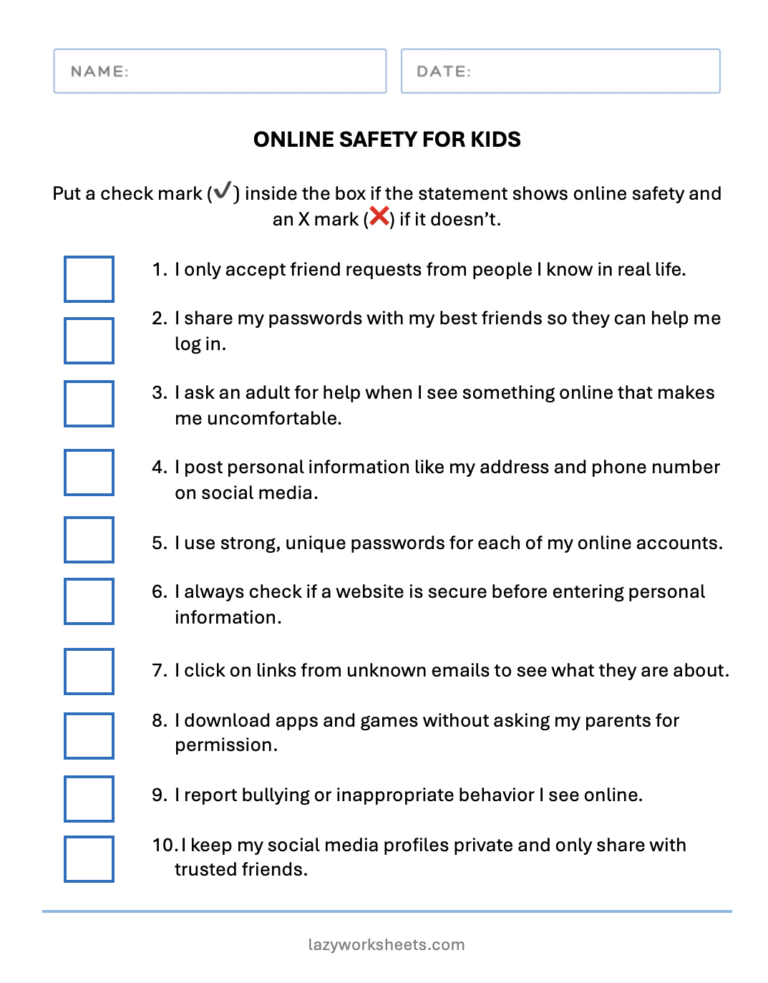
Navigating the digital landscape safely is a fundamental skill for young individuals today. Educational institutions and homes increasingly recognize the critical need for robust internet safety education. A practical and accessible resource for this endeavor is the “free internet safety checklist for kids,” a printable tool designed to reinforce essential digital hygiene principles. This checklist primarily targets Elementary grades 1-5 and Middle School grades 6-8, offering adaptable content for a wide range of developmental stages. Printable worksheets, such as this checklist, remain trusted staples in educational settings due to their tangible nature and capacity to engage learners directly. They provide a hands-on method for building digital awareness, fostering responsible online behavior, and initiating vital conversations about internet safety. Educators and parents consistently rely on such resources to solidify abstract concepts through concrete, repeatable actions, thereby empowering children with the knowledge required for a secure online experience.
💡 Educational Key Takeaways:
- Core Skill: Structured Free Internet Safety Checklist For Kids focused on developing pencil grip, stroke control, and early literacy/math confidence.
- Target Scope: Suited for homeschoolers, preschool, kindergarten, and elementary learners.
- Best Recommendation: Practice 10–15 minutes daily with ergonomic writing tools to reinforce muscle memory without hand fatigue.
What This Worksheet Covers
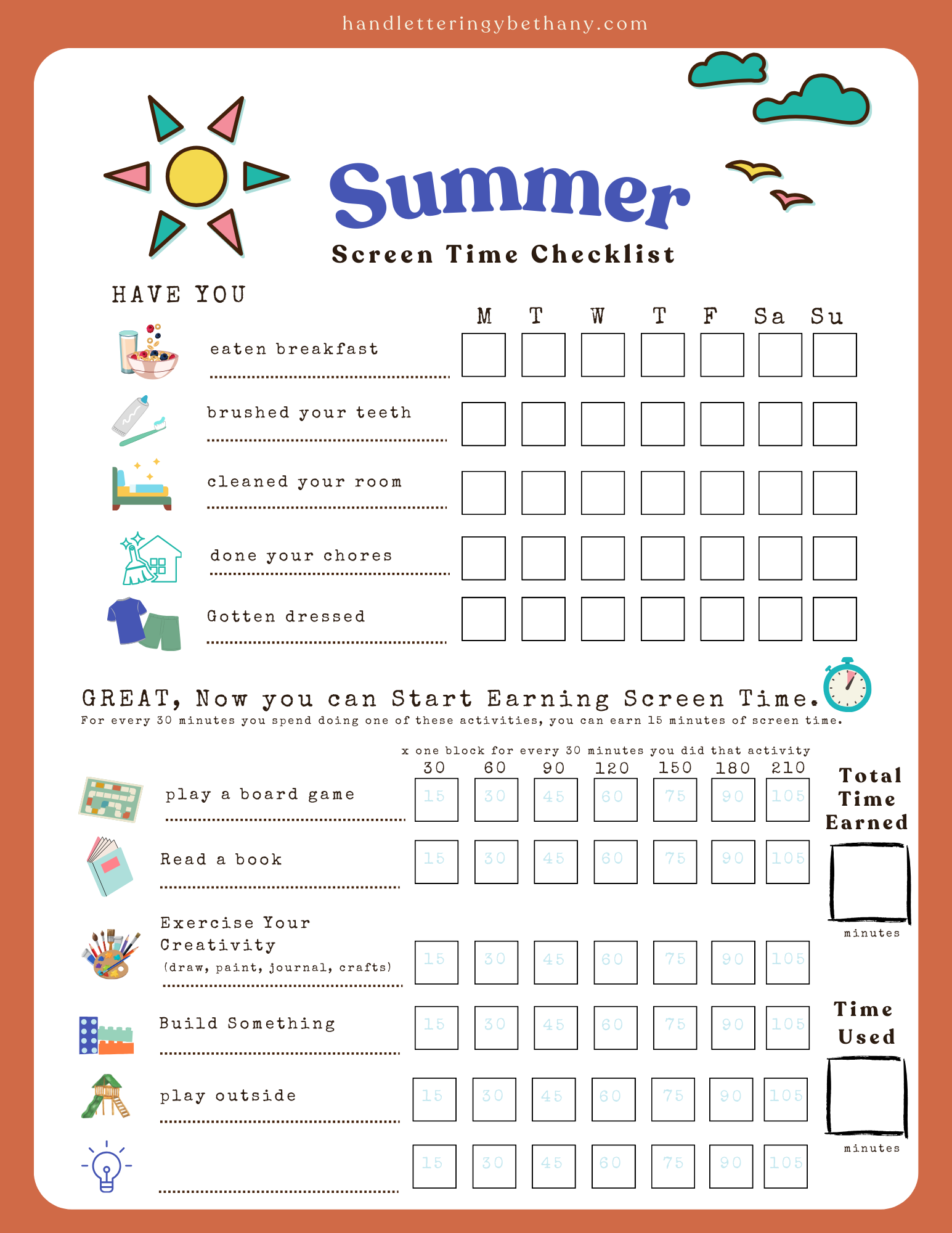
The “free internet safety checklist for kids” addresses several core internet safety topics crucial for young digital citizens. It outlines fundamental rules regarding personal information, emphasizing the importance of never sharing private details like full names, addresses, or school names with strangers online. The resource also covers concepts of safe online interactions, teaching children how to identify trustworthy sources and recognize potentially harmful content or requests. Basic principles of cyberbullying prevention are introduced, encouraging empathy and outlining steps for reporting unkind behavior. Furthermore, the checklist promotes healthy screen time habits, advocating for balanced digital engagement and physical activity. These topics align directly with recognized digital citizenship and child safety education standards, providing a comprehensive yet digestible overview of essential online conduct. The content aims to equip young users with a proactive mindset towards their digital well-being. Related guide: Water Safety Worksheets.
Key Learning Outcomes
Completing the “free internet safety checklist for kids” helps develop several crucial skills and knowledge areas for young users. First, children will enhance their ability to identify personal information that should never be shared online, distinguishing between public and private data. Second, they will cultivate an understanding of safe online interactions, learning to recognize and report suspicious communications or content. Third, the checklist fosters an awareness of cyberbullying behaviors and the importance of seeking help from a trusted adult when encountering or witnessing such incidents. Fourth, it encourages the development of healthy digital habits, promoting balanced screen time and responsible engagement with technology. Finally, learners gain a foundational grasp of critical thinking regarding online content, prompting them to question information and sources before accepting them as true. Browse more guides on Safe Wired Schools.
How to Use This Worksheet
The “free internet safety checklist for kids” offers versatile application for both classroom instruction and home learning environments. The worksheet typically features a mix of activity types, including true/false statements, fill-in-the-blank questions, simple scenarios requiring a choice, and checkboxes for confirming understanding of rules. Its difficulty level is designed to be accessible for elementary and middle school students, with instructions that scaffold learning progressively. Clear, concise language ensures comprehension without extensive adult intervention for older children. The checklist functions effectively as a standalone activity for individual reflection or as an integral component of a broader digital citizenship lesson plan. It can be assigned as homework to spark family discussions, used as a quick review tool before online activities, or incorporated into a classroom discussion as a prompt for group learning. The format encourages active participation and self-assessment, making abstract safety rules more concrete and memorable.
Practical Tips for Parents and Teachers
Maximizing the educational impact of the “free internet safety checklist for kids” involves thoughtful preparation and facilitation. First, before presenting the checklist, introduce the topic of internet safety with an engaging discussion, asking children about their online experiences. Second, guide learners through each item on the checklist, pausing to explain unfamiliar terms or concepts in simple, relatable language. Third, after completion, facilitate an open discussion about the checklist items, encouraging children to share their thoughts and ask questions without judgment. Fourth, extend the learning beyond the worksheet by discussing real-life scenarios relevant to the checklist points, such as what to do if a stranger messages them online. Fifth, display the completed checklist in a visible location at home or in the classroom as a constant reminder of important safety rules, reinforcing consistent practice.
Age-Appropriate Recommendations
Effective utilization of the “free internet safety checklist for kids” requires tailoring the approach to different age groups. For Ages 5-8 (Early Elementary), the checklist serves as a discussion guide rather than a solitary activity. An adult should read each item aloud, explaining vocabulary and providing concrete examples relevant to their limited online exposure, such as watching videos or playing simple games. The pacing should be slow, focusing on one or two key concepts per session. High levels of parental or teacher involvement are crucial to ensure understanding and engagement. For Ages 9-12 (Late Elementary/Early Middle School), students can complete the checklist more independently, with an adult available for clarification. Discussion should focus on “why” certain rules exist and “how” to apply them in more complex online environments like educational platforms or basic social games. Moderate involvement allows for independent thought while providing necessary support. For Ages 13-18 (Middle/High School), the checklist functions best as a quick review or a springboard for deeper conversations about digital footprints, online reputation, and critical evaluation of information. The vocabulary should be largely self-explanatory, and involvement shifts to facilitating peer discussions or exploring advanced safety topics inspired by the checklist points. This approach encourages self-directed learning and reinforces foundational knowledge.
Frequently Asked Questions
Q: What topics does the internet safety checklist cover? A: The checklist addresses crucial areas such as protecting personal information, identifying safe online interactions, recognizing and reporting cyberbullying, and promoting balanced screen time. It provides a foundational overview of responsible digital citizenship.
Q: How can this checklist be integrated into a school curriculum? A: This checklist can be used as a standalone lesson, a homework assignment to involve families, or as a pre-assessment or post-assessment tool within a broader digital literacy unit. It serves as an excellent discussion starter for classroom activities.
Q: Where can the free internet safety checklist for kids be downloaded? A: The “free internet safety checklist for kids” is readily available for download directly from the SafeWiredSchools.org website. Navigate to the resources section or search for printable checklists to access and print the document instantly.
Explore More Free Printable Worksheets
A single resource, while valuable, achieves its greatest impact when integrated into a consistent digital safety learning routine. The “free internet safety checklist for kids” is a powerful tool, but it works best as part of a broader collection of printable resources designed to cover the full spectrum of online safety topics. Educators and parents are invited to explore a comprehensive collection of free printable internet safety worksheets, activity sheets, quizzes, and more at SafeWiredSchools.org Worksheets. This extensive library offers resources designed for every grade level and learning environment, ensuring continuous engagement and reinforcement of essential digital citizenship skills. Consistent learning through varied, accessible materials builds confident, informed, and safe digital citizens.
Developmental Milestone & Activity Table
| Development Stage | Recommended Daily Duration | Primary Learning Objective |
|---|---|---|
| Preschool & Pre-K | 10 – 15 Minutes | Pencil grip development & basic pre-stroke lines |
| Kindergarten | 15 – 20 Minutes | Letter/number formation & spatial line awareness |
| Early Elementary (Grade 1–2) | 20 – 30 Minutes | Fluency, sentence construction & neatness |