Introduction
Ensuring children navigate the digital world safely stands as a paramount concern for parents and educators alike. The availability of reliable, engaging educational tools becomes essential in this endeavor. A valuable resource, the “free online safety worksheet for students,” provides a structured, hands-on approach to digital literacy. This particular worksheet is designed for Elementary grades 1-5, though its core principles are adaptable for younger and slightly older learners with appropriate guidance. Printable worksheets offer a time-tested method for reinforcing critical concepts, allowing children to actively engage with material away from screens. Their tangible nature makes abstract internet safety rules more concrete, fostering a deeper understanding and encouraging responsible online behavior through direct interaction. Educators and parents consistently trust these resources for their proven ability to build foundational digital awareness effectively.
💡 Educational Key Takeaways:
- Core Skill: Structured Free Online Safety Worksheet For Students focused on developing pencil grip, stroke control, and early literacy/math confidence.
- Target Scope: Suited for homeschoolers, preschool, kindergarten, and elementary learners.
- Best Recommendation: Practice 10–15 minutes daily with ergonomic writing tools to reinforce muscle memory without hand fatigue.
What This Worksheet Covers
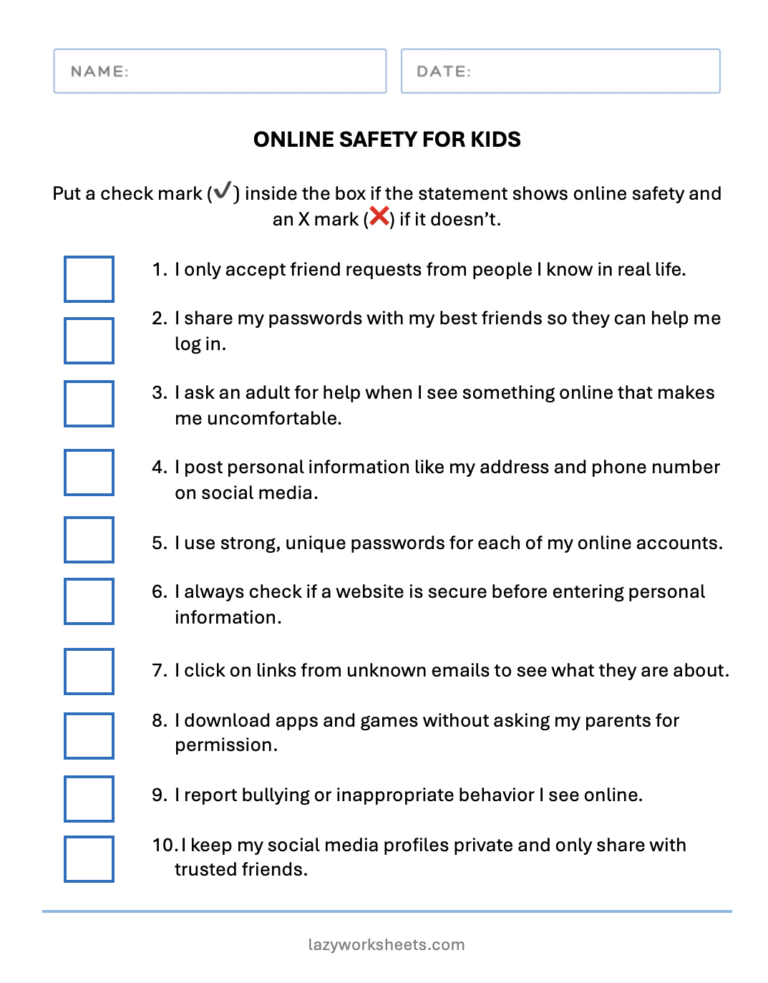
This “free online safety worksheet for students” focuses on the crucial topic of identifying trusted adults and safe online spaces. The content guides students through understanding who they can turn to when encountering uncomfortable or concerning situations online, emphasizing that not all individuals encountered digitally are trustworthy. It clarifies the concept of personal information and reinforces the importance of never sharing it without parental permission. Scenarios presented encourage critical thinking about common online interactions, helping students discern between appropriate and potentially risky situations. This worksheet aligns directly with digital citizenship standards that advocate for personal safety, privacy protection, and the responsible use of online communication tools, empowering children to make informed decisions in their digital lives.
Key Learning Outcomes
By completing the “free online safety worksheet for students,” learners will achieve several vital developmental and educational milestones:. Browse more guides on Safe Wired Schools.
- Students will be able to identify at least three trusted adults they can speak with about online concerns.
- Children will distinguish between personal and non-personal information, understanding what should not be shared online.
- Learners will recognize examples of safe online behaviors versus potentially risky ones.
- Students will develop an initial understanding of when and how to report something concerning seen online.
- Children will articulate the importance of asking for permission before engaging with new online platforms or games.
How to Use This Worksheet
The “free online safety worksheet for students” presents a variety of activity types designed to engage young minds effectively. Activities include fill-in-the-blank questions reinforcing key vocabulary, matching exercises connecting scenarios with appropriate actions, and simple drawing prompts that encourage creative expression of safe online practices. The difficulty level progresses gently, starting with basic identification and moving towards simple decision-making scenarios. Clear, concise instructions scaffold learning, making the worksheet accessible for independent work or guided sessions. This resource functions excellently as a standalone activity to introduce or review internet safety. It can also integrate seamlessly into a broader digital citizenship lesson plan, serving as a valuable reinforcement tool or as a thoughtful homework assignment that encourages family discussion.
Practical Tips for Parents and Teachers
- Preparation is Key: Before distribution, briefly review the worksheet content to anticipate potential questions or areas needing clarification. Gather pencils, crayons, or markers as needed.
- Facilitate Discussion: Encourage students to share their answers and reasoning after completing each section. This fosters deeper understanding and allows for correction of misconceptions.
- Personalize Trusted Adults: Prompt children to list specific names of trusted adults (parents, guardians, teachers, older siblings, etc.) on the worksheet or verbally, making the concept more concrete.
- Role-Playing Scenarios: Extend learning by role-playing some of the worksheet’s scenarios. This allows children to practice their responses in a safe environment.
- Display Completed Work: Showcase completed worksheets in the classroom or at home to celebrate learning and reinforce the importance of internet safety principles.
Age-Appropriate Recommendations
Adapting the “free online safety worksheet for students” for various age groups maximizes its educational impact. Thoughtful adjustments in approach and interaction enhance learning outcomes across developmental stages.
- Ages 5-7 (Grades K-2): For younger learners, a higher level of direct guidance is beneficial. Read instructions aloud and provide vocabulary support for new terms. Focus on the drawing and matching activities first, emphasizing the “who to tell” aspect. Keep sessions brief, perhaps completing one section at a time, to maintain engagement. Parental or teacher involvement should be hands-on, guiding each step.
- Ages 8-10 (Grades 3-5): Students in this age range can approach the worksheet with greater independence. Encourage them to read instructions themselves and attempt answers before discussion. Focus on the fill-in-the-blank and scenario-based questions, prompting them to explain their reasoning. Introduce group discussions where children can share ideas and learn from peers. Teacher or parent involvement can transition to facilitation and deeper questioning.
- Ages 11-12 (Grades 6-7, adaptable): While primarily designed for elementary, this worksheet’s foundational concepts remain relevant. For this age group, use the worksheet as a springboard for more nuanced discussions about online privacy settings, cyberbullying prevention, and digital footprints. Encourage critical analysis of the scenarios, asking “what if” questions to explore consequences. Allow for independent completion, followed by a robust class or family discussion.
Frequently Asked Questions
Q: What specific internet safety topics are covered in this worksheet? A: This worksheet primarily covers identifying trusted adults for online concerns, understanding what personal information is, and recognizing safe versus risky online behaviors. It provides foundational knowledge for young internet users.
Q: Is this worksheet suitable for students who are new to using the internet? A: Yes, the “free online safety worksheet for students” is designed with foundational concepts, making it ideal for beginners. It introduces essential safety principles in an accessible and engaging format, preparing them for responsible online interactions.
Q: How can I access and print the “free online safety worksheet for students”? A: The worksheet is available for immediate download directly from the SafeWiredSchools.org website. Navigate to the worksheets section, locate the resource, and click the download button to get your free printable copy.
Explore More Free Printable Worksheets
A single worksheet serves as an excellent starting point, but consistent learning reinforces lasting digital safety habits. This valuable “free online safety worksheet for students” is part of a comprehensive collection designed to support ongoing education. Educators and parents are encouraged to explore a full collection of free printable internet safety worksheets, activity sheets, checklists, quizzes, and more at SafeWiredSchools.org Worksheets. These resources cover every internet safety topic, crafted for every grade level and learning environment, ensuring children build a robust understanding of responsible online engagement.
Developmental Milestone & Activity Table
| Development Stage | Recommended Daily Duration | Primary Learning Objective |
|---|---|---|
| Preschool & Pre-K | 10 – 15 Minutes | Pencil grip development & basic pre-stroke lines |
| Kindergarten | 15 – 20 Minutes | Letter/number formation & spatial line awareness |
| Early Elementary (Grade 1–2) | 20 – 30 Minutes | Fluency, sentence construction & neatness |