Introduction
Navigating the digital world requires a foundational understanding of personal safety and responsible online conduct. For children in middle school, particularly those in grade 6, the concept of online privacy becomes increasingly critical. The “online privacy worksheet for grade 6″ serves as an essential educational resource, reinforcing vital internet safety concepts through engaging, hands-on learning. Printable worksheets remain trusted tools for educators and parents, offering a tangible, focused approach to building digital awareness and fostering responsible online behavior. These resources provide a structured framework for discussing complex topics, ensuring young learners grasp the significance of their digital actions. The consistent application of such materials in both classroom and home environments proves invaluable for developing informed digital citizens. This specific worksheet addresses the unique challenges and opportunities faced by grade 6 students as their online interactions grow in complexity and frequency.
💡 Educational Key Takeaways:
- Core Skill: Structured Online Privacy Worksheet For Grade 6 focused on developing pencil grip, stroke control, and early literacy/math confidence.
- Target Scope: Suited for homeschoolers, preschool, kindergarten, and elementary learners.
- Best Recommendation: Practice 10–15 minutes daily with ergonomic writing tools to reinforce muscle memory without hand fatigue.
What This Worksheet Covers
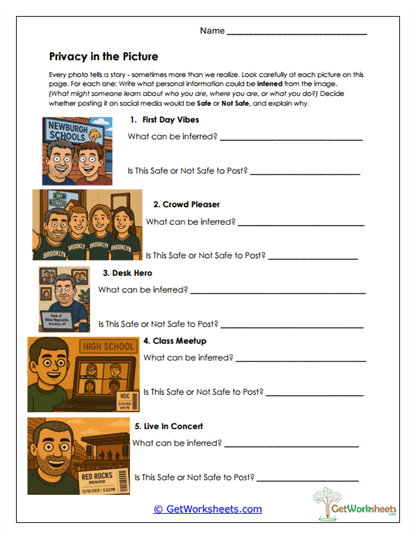
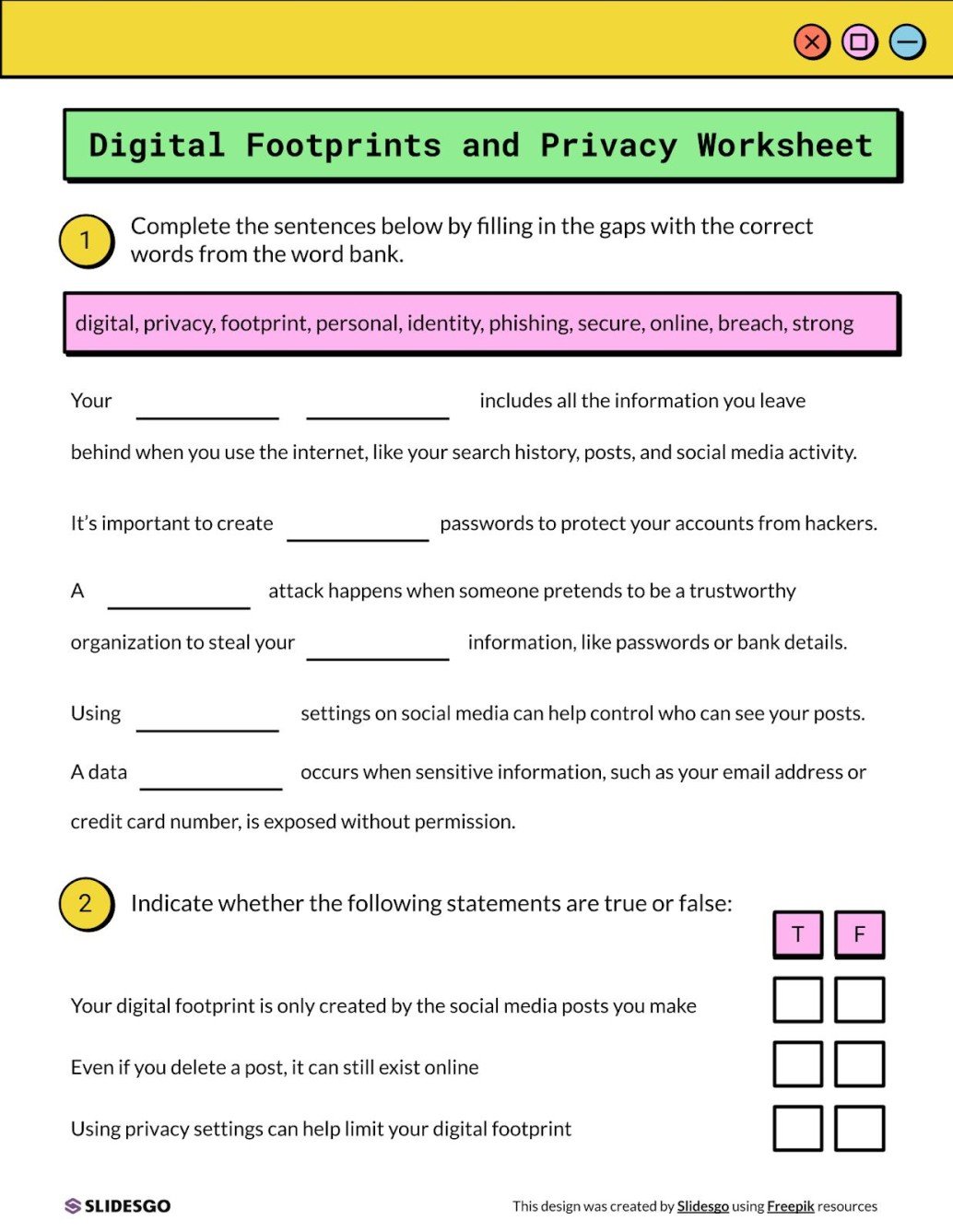
This “online privacy worksheet for grade 6″ specifically addresses the multifaceted topic of protecting personal information in digital spaces. It delves into crucial concepts such as identifying what constitutes personal information, understanding the lasting impact of a digital footprint, and the importance of exercising caution when sharing content online. The resource clarifies how privacy settings function across various platforms and guides students in discerning appropriate sharing behaviors. Scenarios are presented to help learners practice making informed decisions about their online presence, emphasizing the potential consequences of oversharing or engaging with untrustworthy sources. The worksheet content directly aligns with recognized digital citizenship and child online safety education standards, preparing students to navigate the internet with greater awareness and self-protection.
Key Learning Outcomes
Completing the “online privacy worksheet for grade 6” helps students develop several critical skills and knowledge areas, promoting safer online engagement:. Browse more guides on Safe Wired Schools.
- Identification of Personal Information: Students learn to recognize different categories of personal data, understanding why certain information should be kept private.
- Understanding the Digital Footprint: The concept of a permanent online record is grasped, highlighting how shared content can have long-term implications.
- Application of Privacy Settings: Learners gain awareness of privacy settings on social media and other platforms, understanding how to adjust them for greater security.
- Critical Evaluation of Online Sharing: Students develop the ability to think critically before sharing personal details or content, considering potential risks and audiences.
- Responsible Online Decision-Making: The worksheet encourages proactive decision-making regarding online interactions, fostering habits of caution and thoughtful engagement.
How to Use This Worksheet
The “online privacy worksheet for grade 6” offers flexibility for integration into various educational settings. Its format typically includes a mix of activity types designed to engage middle schoolers: fill-in-the-blank questions to reinforce vocabulary, matching exercises for key terms and definitions, true or false statements to test comprehension, and scenario-based questions that prompt critical thinking and reflection. Instructions within the worksheet progressively scaffold learning, starting with foundational concepts and moving towards more complex decision-making scenarios. This resource can function as a standalone activity to introduce or review online privacy, serve as an integral component of a broader internet safety lesson plan, or be assigned as homework to encourage family discussions about digital habits. Its printable nature allows for easy distribution and completion without requiring access to digital devices.
Practical Tips for Parents and Teachers
- Review and Prepare: Before presenting the worksheet, review its content to anticipate questions and identify areas for deeper discussion. Ensure necessary writing tools are available.
- Facilitate Discussion: Encourage students to verbalize their thoughts and reasoning behind their answers. This promotes active learning and allows for clarification of complex ideas.
- Connect to Real-World Scenarios: After completion, initiate conversations that link worksheet concepts to students’ personal online experiences or current events, making the learning more relevant.
- Extend the Learning: Consider follow-up activities such as creating a “privacy pledge” or role-playing different online sharing dilemmas to reinforce responsible behaviors.
- Praise Effort and Progress: Acknowledge students’ engagement and thoughtful contributions, fostering a positive attitude towards ongoing digital safety education.
Age-Appropriate Recommendations
The “online privacy worksheet for grade 6” is specifically tailored for students typically aged 11-12, an age where digital independence increases, alongside exposure to more complex online environments. For this core age group, the worksheet can be introduced as a primary learning activity, allowing for a balance of independent work and guided discussion. Vocabulary should be familiar, but a brief review of terms like “digital footprint” or “privacy settings” can be beneficial. The activity pacing can be moderate, allowing ample time for thoughtful responses to scenario-based questions. Teacher or parental involvement should focus on facilitating discussion, clarifying concepts, and connecting the material to real-world applications. For slightly younger learners, such as those in Grade 5 (ages 10-11), more direct guidance may be required, with emphasis on simpler concepts and perhaps group completion. For Grade 7 students (ages 12-13), the worksheet can serve as a strong foundation, leading into more advanced discussions on cyberbullying, online reputation management, and the ethical implications of data sharing, potentially incorporating additional research components.
Frequently Asked Questions
Q: What specific topics does the “online privacy worksheet for grade 6” cover?
A: This worksheet focuses on defining personal information, understanding the concept of a digital footprint, navigating privacy settings, and making responsible decisions about what to share online. It helps middle schoolers build foundational knowledge for safer digital interactions.
Q: How can this worksheet be downloaded for use?
A: The “online privacy worksheet for grade 6” is available for free download directly from the SafeWiredSchools.org website. Locating the resource within the “Worksheets” section provides immediate access to the printable PDF file, ready for classroom or home use.
Q: Is this worksheet suitable for home learning environments?
A: Absolutely. This worksheet is thoughtfully designed for both educational institutions and home settings. It offers parents a structured and engaging tool to initiate crucial conversations about online privacy with their grade 6 children, fostering shared understanding and safe habits.
Explore More Free Printable Worksheets
While the “online privacy worksheet for grade 6” provides a focused and valuable learning experience, a single resource works best as part of a comprehensive digital safety curriculum. Consistent exposure to various learning materials helps solidify understanding and build resilient online habits. Educators and parents are invited to explore a full collection of free printable internet safety worksheets, activity sheets, checklists, quizzes, and more at SafeWiredSchools.org Worksheets. These resources cover a wide array of internet safety topics, meticulously designed for every grade level and learning environment, ensuring a continuous and robust approach to digital citizenship education.
Developmental Milestone & Activity Table
| Development Stage | Recommended Daily Duration | Primary Learning Objective |
|---|---|---|
| Preschool & Pre-K | 10 – 15 Minutes | Pencil grip development & basic pre-stroke lines |
| Kindergarten | 15 – 20 Minutes | Letter/number formation & spatial line awareness |
| Early Elementary (Grade 1–2) | 20 – 30 Minutes | Fluency, sentence construction & neatness |
Images References