Introduction
Educators and caregivers frequently seek reliable resources to foster digital literacy and responsible online habits among young people. The “screen time quiz printable free” resource offers an invaluable tool, primarily designed for Elementary (grades 1-5) and Middle School (grades 6-8) students, yet adaptable for a broader age range from 5 to 18 years. This worksheet serves as an engaging entry point for discussions about digital well-being, reinforcing crucial internet safety concepts through a hands-on, accessible format. Printable learning materials have long been trusted by both teaching professionals and parents; they provide a tangible way for children to interact with information, process ideas away from screens, and build fundamental awareness of responsible online behavior. The act of completing a physical worksheet aids in information retention and encourages focused reflection, making it an effective component in any digital citizenship curriculum.
💡 Educational Key Takeaways:
- Core Skill: Structured Screen Time Quiz Printable Free focused on developing pencil grip, stroke control, and early literacy/math confidence.
- Target Scope: Suited for homeschoolers, preschool, kindergarten, and elementary learners.
- Best Recommendation: Practice 10–15 minutes daily with ergonomic writing tools to reinforce muscle memory without hand fatigue.
What This Worksheet Covers
The “screen time quiz printable free” resource specifically addresses the critical internet safety topic of healthy screen time management. It explores various aspects of digital engagement, helping young learners understand the balance between online activities and other essential daily routines. The worksheet introduces concepts such as identifying appropriate times for screen use, recognizing the benefits of limited screen exposure, and understanding the importance of offline pursuits. Scenarios presented within the quiz encourage critical thinking about personal habits and their potential impacts. This content directly aligns with recognized digital citizenship standards, which emphasize responsible use of technology, promoting health and well-being, and fostering balanced digital lifestyles. The language used is authoritative yet easily understood by its target audience, ensuring effective communication of vital safety principles.
Key Learning Outcomes
By engaging with the “screen time quiz printable free” worksheet, students and children will develop several crucial skills and knowledge areas:. Browse more guides on Safe Wired Schools.
- Learners will distinguish between healthy and unhealthy screen time habits.
- Students will identify a variety of alternative activities to screen-based entertainment.
- Participants will recognize the physical and mental impacts of excessive screen use.
- Children will begin to set personal, realistic goals for balanced digital engagement.
- Individuals will understand the importance of parental or guardian guidance in managing screen time.
How to Use This Worksheet
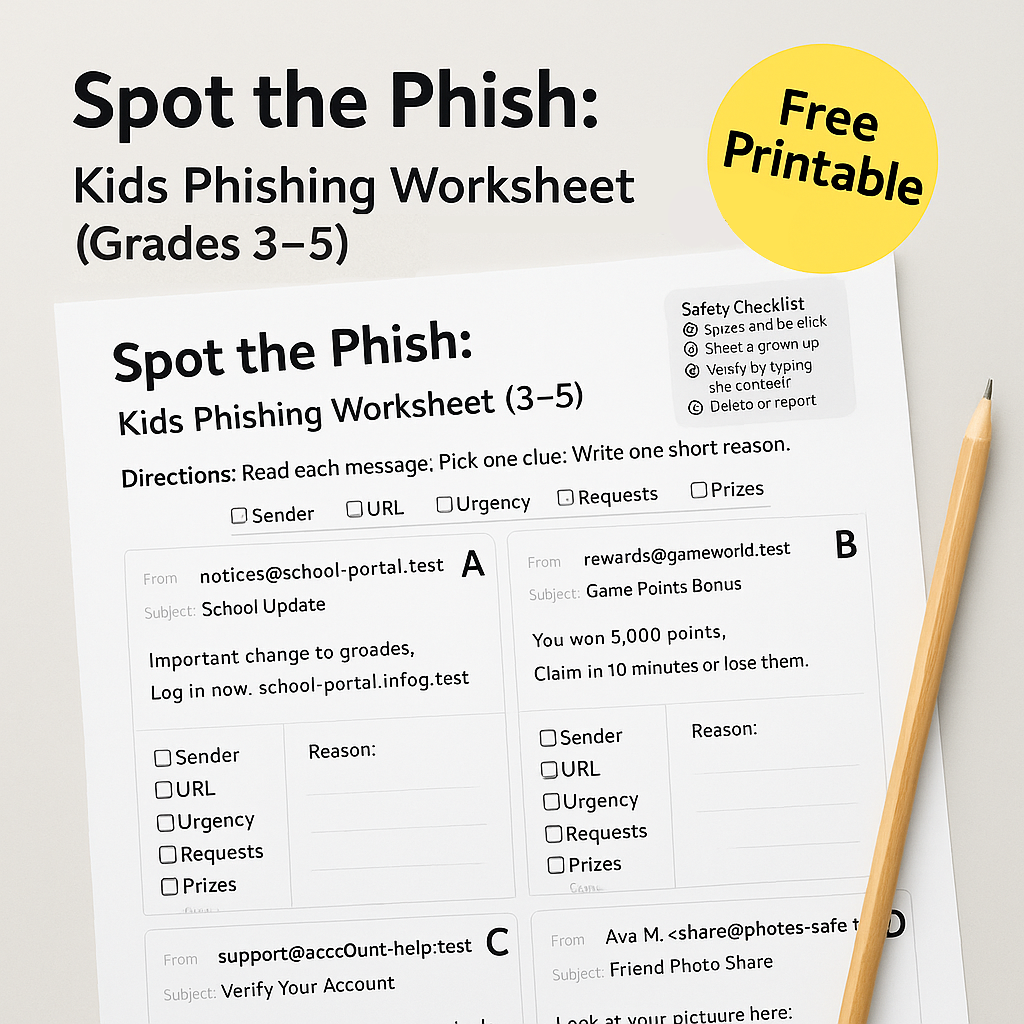
The “screen time quiz printable free” worksheet is structured to facilitate effective learning in diverse environments. It typically features a mix of activity types, including true or false questions, multiple-choice scenarios, matching exercises, and reflection prompts. The difficulty level is designed to be accessible for elementary and middle school students, with clear instructions that scaffold learning progressively. Each section builds upon previous concepts, guiding learners toward a comprehensive understanding of screen time management. This resource can be effectively integrated as a standalone activity to spark initial conversations, utilized as a foundational component within a broader lesson plan on digital citizenship, or assigned as a thoughtful homework exercise to encourage family discussion. Its versatility makes it suitable for classroom settings, homeschooling environments, or supplementary learning at home.
Practical Tips for Parents and Teachers
- Preparation is Key: Before distribution, review the worksheet content to anticipate questions and identify discussion points. Consider having examples of healthy screen habits ready for sharing.
- Facilitate Discussion: Encourage an open dialogue before, during, and after completing the quiz. Ask questions that prompt deeper thought, such as “Why do you think it’s important to take breaks from screens?” or “What are your favorite non-screen activities?”
- Personalize the Learning: Help children connect the quiz questions to their own experiences. This personalization makes the concepts more relevant and memorable.
- Extend the Activity: After completing the quiz, challenge learners to create a “digital detox” plan for a day or suggest a family activity that does not involve screens. This transforms passive learning into active application.
- Model Behavior: Adults can demonstrate healthy screen habits themselves, reinforcing the lessons learned from the quiz through consistent personal example.
Age-Appropriate Recommendations
Adapting the “screen time quiz printable free” resource ensures its effectiveness across various developmental stages. For Ages 5-8 (Early Elementary), direct adult involvement is crucial. The worksheet can be completed together, with the adult reading questions aloud and explaining vocabulary. Focus on basic concepts like “too much” vs. “just right” screen time and identifying simple alternative activities (e.g., playing outside, reading a book). The activity pacing should be flexible, allowing for breaks and short bursts of engagement. For Ages 9-12 (Late Elementary/Early Middle School), students can often complete the quiz more independently, but a follow-up discussion is essential. Encourage them to articulate their reasoning for answers and share personal experiences. Introduce more nuanced concepts, such as the impact of screen time on sleep or friendships. For Ages 13-18 (Middle/High School), the quiz serves as an excellent self-assessment and reflection tool. While the content may seem basic, the discussion that follows can delve into more complex topics like digital addiction, cyberbullying, or the role of social media. The focus shifts to critical self-analysis and developing personal strategies for digital well-being, with minimal direct intervention during completion, but robust discussion afterwards.
Frequently Asked Questions
Q: What age range is the “screen time quiz printable free” best suited for? A: This resource is primarily designed for students in Elementary (grades 1-5) and Middle School (grades 6-8), but its adaptable nature allows for meaningful use with children from ages 5 to 18, with appropriate adult guidance and discussion. Q: How does this quiz promote digital well-being? A: The quiz encourages self-reflection on screen habits, helps identify healthy alternatives, and fosters an understanding of balanced digital engagement, all contributing to a child’s overall digital well-being. Q: Where can the “screen time quiz printable free” be downloaded? A: The “screen time quiz printable free” and many other valuable resources are available for download directly from the SafeWiredSchools.org website, typically found in the dedicated worksheets section.
Explore More Free Printable Worksheets
A single worksheet, however impactful, functions best when integrated into a consistent routine of digital safety education. The “screen time quiz printable free” provides an excellent starting point, yet comprehensive digital literacy requires ongoing engagement with various topics. Educators and parents are encouraged to explore the extensive collection of free printable internet safety worksheets, activity sheets, checklists, quizzes, and more at SafeWiredSchools.org Worksheets. This vast repository covers every essential internet safety topic, designed thoughtfully for every grade level and learning environment, ensuring children develop into responsible, safe, and savvy digital citizens.
Developmental Milestone & Activity Table
| Development Stage | Recommended Daily Duration | Primary Learning Objective |
|---|---|---|
| Preschool & Pre-K | 10 – 15 Minutes | Pencil grip development & basic pre-stroke lines |
| Kindergarten | 15 – 20 Minutes | Letter/number formation & spatial line awareness |
| Early Elementary (Grade 1–2) | 20 – 30 Minutes | Fluency, sentence construction & neatness |