Introduction
The “screen time agreement for kids” worksheet is a vital resource for elementary (grades 1-5) and middle school (grades 6-8) students, though adaptable for younger and older learners. This printable tool plays a crucial role in establishing clear expectations for digital device use, reinforcing essential internet safety concepts through a tangible, hands-on approach. Educators and parents consistently trust printable worksheets for their effectiveness in building foundational digital awareness and promoting responsible online behavior. Worksheets facilitate active learning, allowing children to engage directly with content, internalize rules, and develop a sense of ownership over their digital habits. The physical act of writing or checking boxes on a printed document enhances comprehension and retention, making abstract safety principles concrete and actionable within both home and classroom environments.
💡 Educational Key Takeaways:
- Core Skill: Structured Screen Time Agreement For Kids focused on developing pencil grip, stroke control, and early literacy/math confidence.
- Target Scope: Suited for homeschoolers, preschool, kindergarten, and elementary learners.
- Best Recommendation: Practice 10–15 minutes daily with ergonomic writing tools to reinforce muscle memory without hand fatigue.
What This Worksheet Covers
This worksheet specifically addresses the critical internet safety topic of managing screen time and establishing healthy digital boundaries. It guides children and their caregivers through the process of outlining specific rules, time limits, appropriate content, and consequences related to device usage. Concepts covered include identifying designated screen-free times, understanding the importance of a balanced lifestyle, recognizing safe online activities, and learning about responsible communication. The worksheet’s content aligns directly with recognized digital citizenship and child safety education standards, which emphasize self-regulation, media literacy, and the development of healthy habits for a connected world. Its structured format encourages a proactive approach to digital well-being, fostering an environment where children can thrive safely online.
Key Learning Outcomes
Completing the “screen time agreement for kids” worksheet yields several important developmental and educational benefits:
- Understanding Personal Screen Time Limits: Children learn to recognize and adhere to agreed-upon daily or weekly limits for device usage.
- Identifying Safe vs. Risky Online Activities: Learners distinguish between beneficial and potentially harmful content or interactions.
- Communicating Digital Boundaries: Students develop the ability to articulate their needs and understand the expectations set by adults regarding device use.
- Developing Self-Regulation for Device Use: Children cultivate internal control over impulses to use devices, promoting healthier habits.
- Recognizing the Importance of a Balanced Lifestyle: The worksheet reinforces the value of integrating offline activities with digital engagement.
How to Use This Worksheet
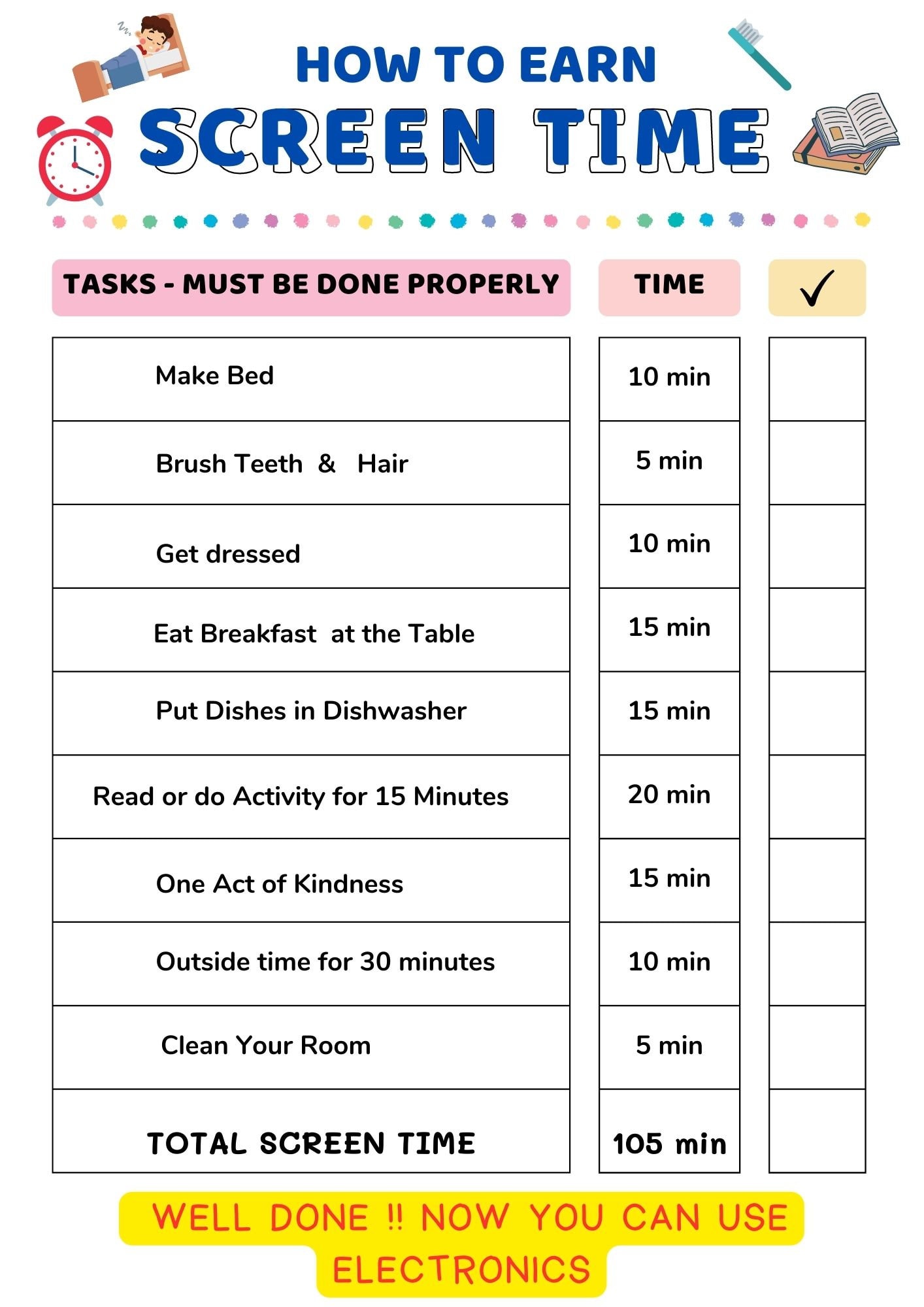
Educators and parents can effectively utilize the “screen time agreement for kids” worksheet as a foundational tool for digital literacy. The worksheet typically features sections for outlining daily time limits, specifying acceptable apps or websites, listing screen-free zones or times, and detailing consequences for non-compliance. It often includes spaces for signatures from both children and adults, symbolizing a mutual commitment to the agreement. The difficulty level is designed to be adaptable, with clear instructions scaffolding learning progressively. This resource serves as an excellent standalone activity to initiate discussions about device rules, can be integrated seamlessly into a broader digital citizenship lesson plan, or assigned as a practical homework activity to involve families directly in the learning process. Browse more guides on Safe Wired Schools.
Practical Tips for Parents and Teachers
Maximizing the educational impact of the “screen time agreement for kids” requires thoughtful implementation:
- Collaborative Creation: Complete the agreement together, encouraging children to contribute ideas and understand the rationale behind each rule. This fosters ownership and buy-in.
- Prominent Display: Once completed, display the signed agreement in a visible location, such as a refrigerator or classroom wall, for easy reference and consistent reinforcement.
- Regular Review and Revision: Revisit the agreement periodically (e.g., quarterly or at the start of a new school year) to discuss its effectiveness and make necessary adjustments as children mature or technology changes.
- Model Desired Behavior: Adults should demonstrate responsible screen time habits, reinforcing the importance of the agreement through personal example.
- Connect to Real-World Scenarios: Use hypothetical situations or past experiences to discuss how the agreement applies, helping children internalize the rules for future decision-making.
Age-Appropriate Recommendations
Implementing the “screen time agreement for kids” worksheet effectively requires tailoring the approach to different age groups, ensuring maximum engagement and comprehension.
For Ages 5-8 (Early Elementary), the focus should be on simplicity and direct instruction. Use straightforward language and visuals, emphasizing basic rules like “no screens at dinner” or “stop when asked.” Adult involvement is crucial, guiding children through each section and explaining concepts clearly. Activity pacing should be brief, perhaps completing one section at a time over several sessions, to maintain attention. Vocabulary support is essential, defining terms like “agreement” or “consequence” in child-friendly ways.
For Ages 9-13 (Late Elementary/Middle School), the worksheet can be approached with greater discussion and negotiation. Encourage children to articulate their own screen time needs and contribute to setting realistic boundaries. This age group can understand more complex concepts, such as the impact of excessive screen time on sleep or schoolwork. The agreement can include details about specific apps, online games, and appropriate communication. Less direct adult supervision is needed during completion, but thorough discussion afterwards is vital to ensure understanding and commitment. This age group benefits from understanding the “why” behind the rules.
For Ages 14-18 (High School), the “screen time agreement for kids” transforms into a tool for self-management and digital well-being. While formal agreements might seem less appealing, the underlying principles are highly relevant. Discussions can center on digital citizenship, balancing online presence with real-world responsibilities, and preventing digital burnout. Older learners can take the lead in drafting their own screen time guidelines, considering personal goals, academic demands, and social media use. The worksheet can serve as a template for reflection and a commitment to personal digital health, emphasizing autonomy and responsible decision-making for long-term habits.
Frequently Asked Questions
Q: What is a screen time agreement and why is it important?
A: A screen time agreement is a set of mutually agreed-upon rules and expectations for device usage between children and adults. It is important because it establishes clear boundaries, promotes healthy digital habits, and helps prevent conflicts over screen time.
Q: How does this worksheet support broader digital citizenship education?
A: This worksheet supports digital citizenship by encouraging self-regulation, media literacy, and responsible online behavior. It helps children understand their role in maintaining a balanced digital life and respecting established family or classroom rules.
Q: Where can this free printable “screen time agreement for kids” worksheet be downloaded?
A: This free printable resource, along with many other valuable internet safety materials, can be accessed and downloaded directly from the SafeWiredSchools.org website. Navigate to the worksheets section to find and print it.
Explore More Free Printable Worksheets
A single worksheet, while valuable, works best as part of a consistent digital safety learning routine. SafeWiredSchools.org is dedicated to providing comprehensive resources for fostering responsible digital citizens. Educators and parents are invited to explore a full collection of free printable internet safety worksheets, activity sheets, checklists, quizzes, and more at SafeWiredSchools.org Worksheets. These resources cover every internet safety topic imaginable and are carefully designed for every grade level and learning environment, ensuring a continuous and robust approach to digital education.
Developmental Milestone & Activity Table
| Development Stage | Recommended Daily Duration | Primary Learning Objective |
|---|---|---|
| Preschool & Pre-K | 10 – 15 Minutes | Pencil grip development & basic pre-stroke lines |
| Kindergarten | 15 – 20 Minutes | Letter/number formation & spatial line awareness |
| Early Elementary (Grade 1–2) | 20 – 30 Minutes | Fluency, sentence construction & neatness |
Images References