Introduction
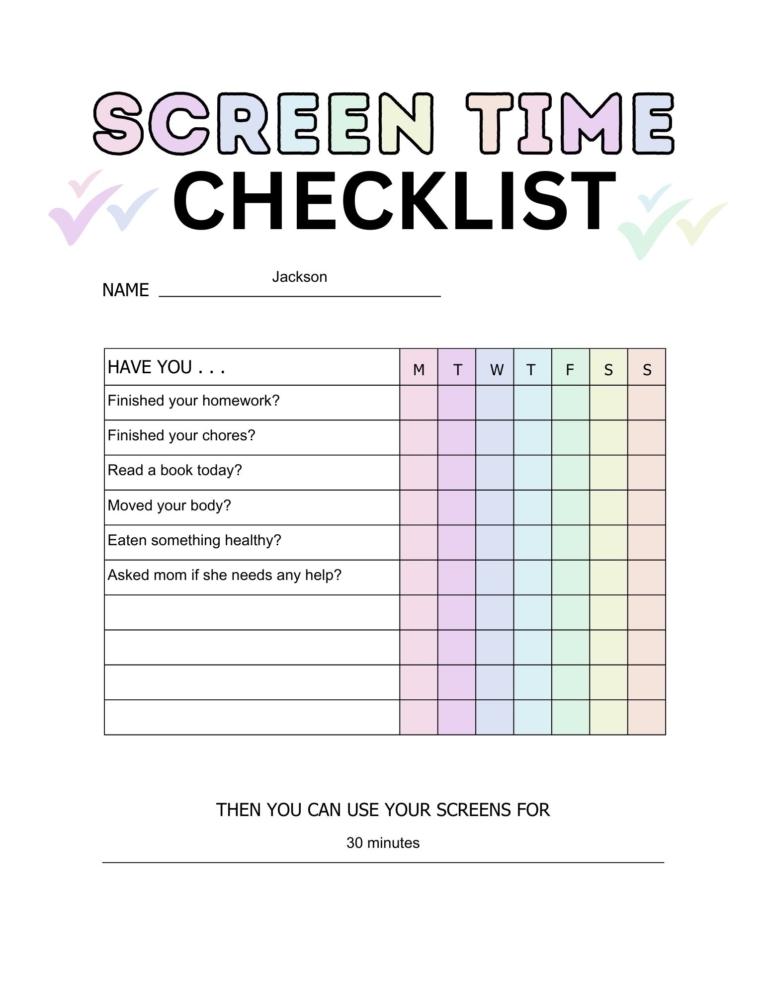
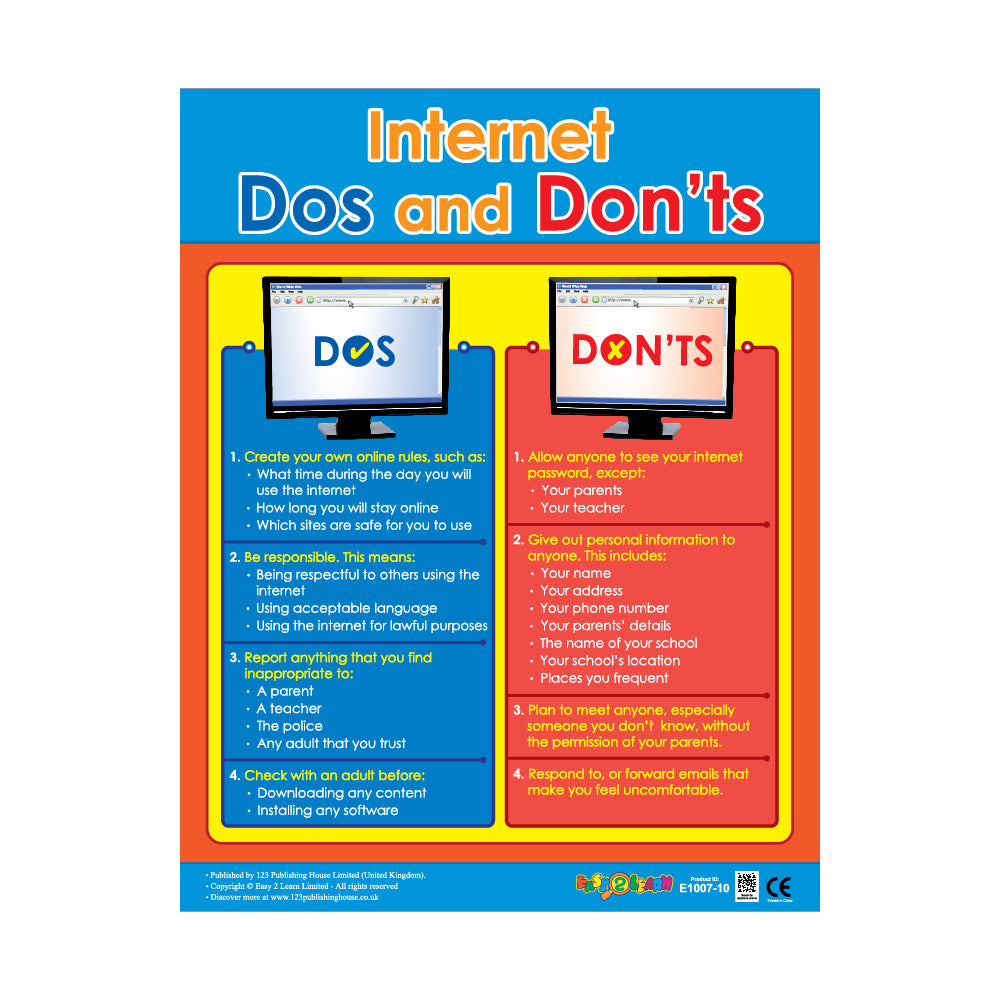
Educators and parents often seek reliable tools to guide children through the complexities of the digital world. The “free printable daily screen time checklist” offers a practical resource, primarily suitable for Elementary grades (1-5) and Middle School (6-8), with adaptable uses for younger and older learners. This resource reinforces fundamental internet safety concepts through a hands-on, engaging format. Printable learning tools are consistently trusted by educators and parents for their efficacy in building digital awareness and fostering responsible online behavior. These tangible resources provide a concrete framework for discussing abstract digital concepts, ensuring active participation and deeper understanding. The checklist format encourages consistency and self-reflection, crucial elements for developing lasting healthy digital habits.
💡 Educational Key Takeaways:
- Core Skill: Structured Free Printable Daily Screen Time Checklist focused on developing pencil grip, stroke control, and early literacy/math confidence.
- Target Scope: Suited for homeschoolers, preschool, kindergarten, and elementary learners.
- Best Recommendation: Practice 10–15 minutes daily with ergonomic writing tools to reinforce muscle memory without hand fatigue.
What This Worksheet Covers
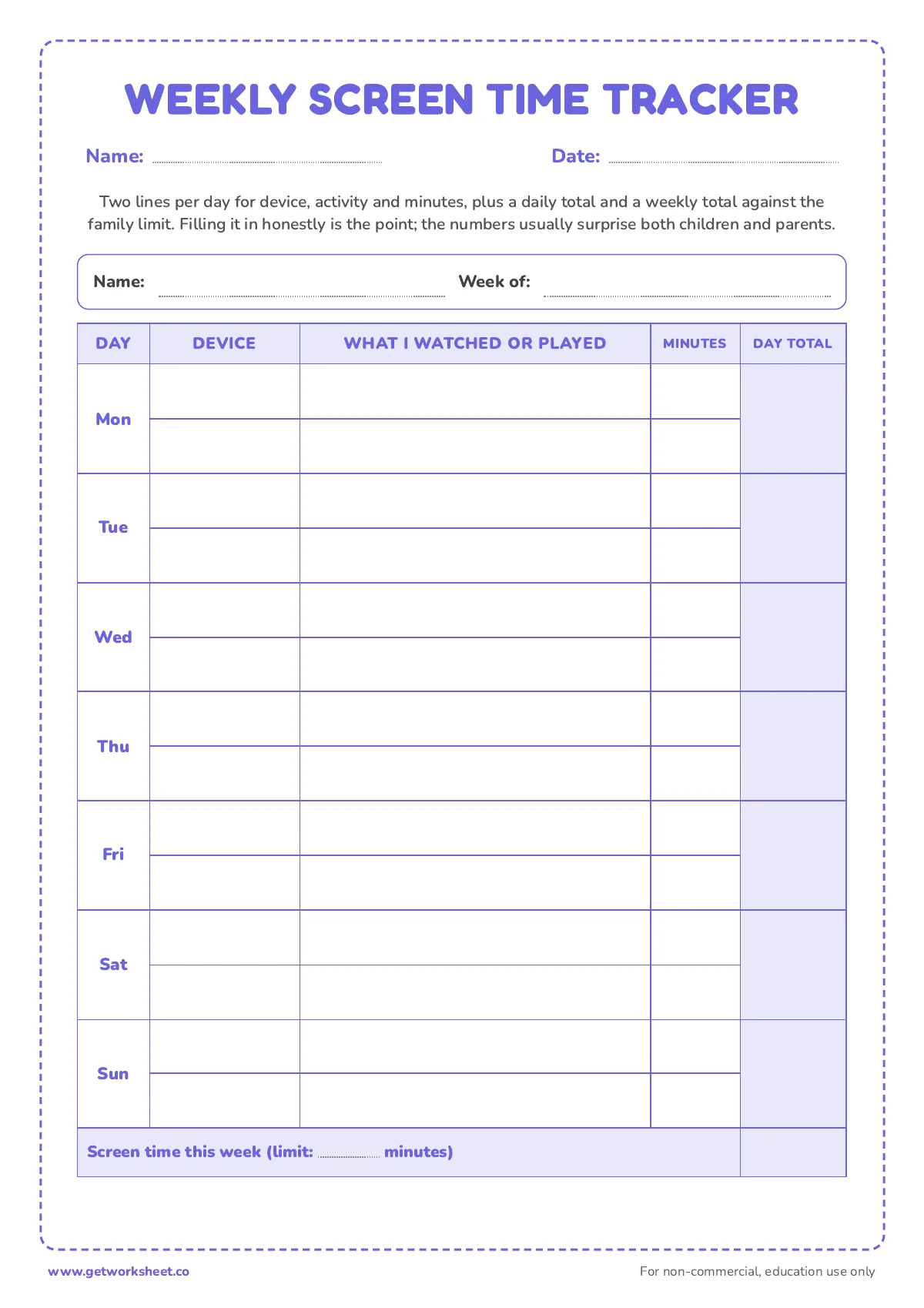
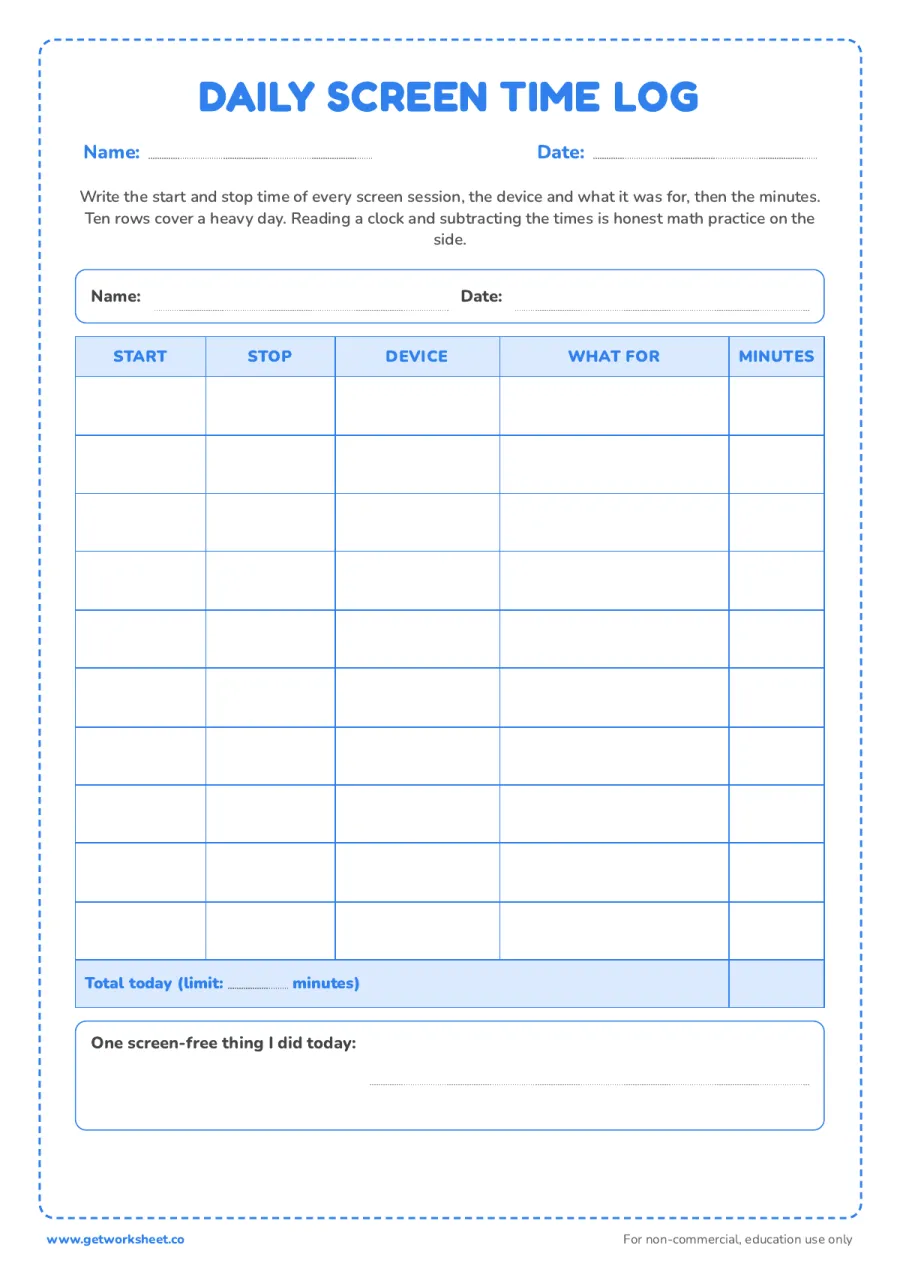
This worksheet addresses the critical internet safety topic of balanced screen time and digital wellness. It focuses on developing an awareness of daily digital engagement and encouraging mindful use of devices. The checklist guides individuals in tracking their screen time across various activities and prompts reflection on alternative, offline pursuits. Key concepts include setting personal limits, understanding the importance of breaks from screens, and recognizing the value of physical activity, creative play, and social interaction. The content directly connects to recognized digital citizenship standards emphasizing personal responsibility, well-being, and self-regulation in online environments. It serves as a foundational tool for understanding that digital access comes with the responsibility of managing one’s own engagement.
Key Learning Outcomes
Completing the “free printable daily screen time checklist” helps students and children achieve several important developmental milestones:
- Develops self-awareness regarding individual screen habits and patterns.
- Practices self-regulation by encouraging adherence to predetermined screen time limits.
- Understands the importance of balancing digital activities with real-world experiences.
- Learns to identify and prioritize alternative, enriching offline activities.
- Fosters open communication within families and classrooms about healthy digital boundaries.
How to Use This Worksheet
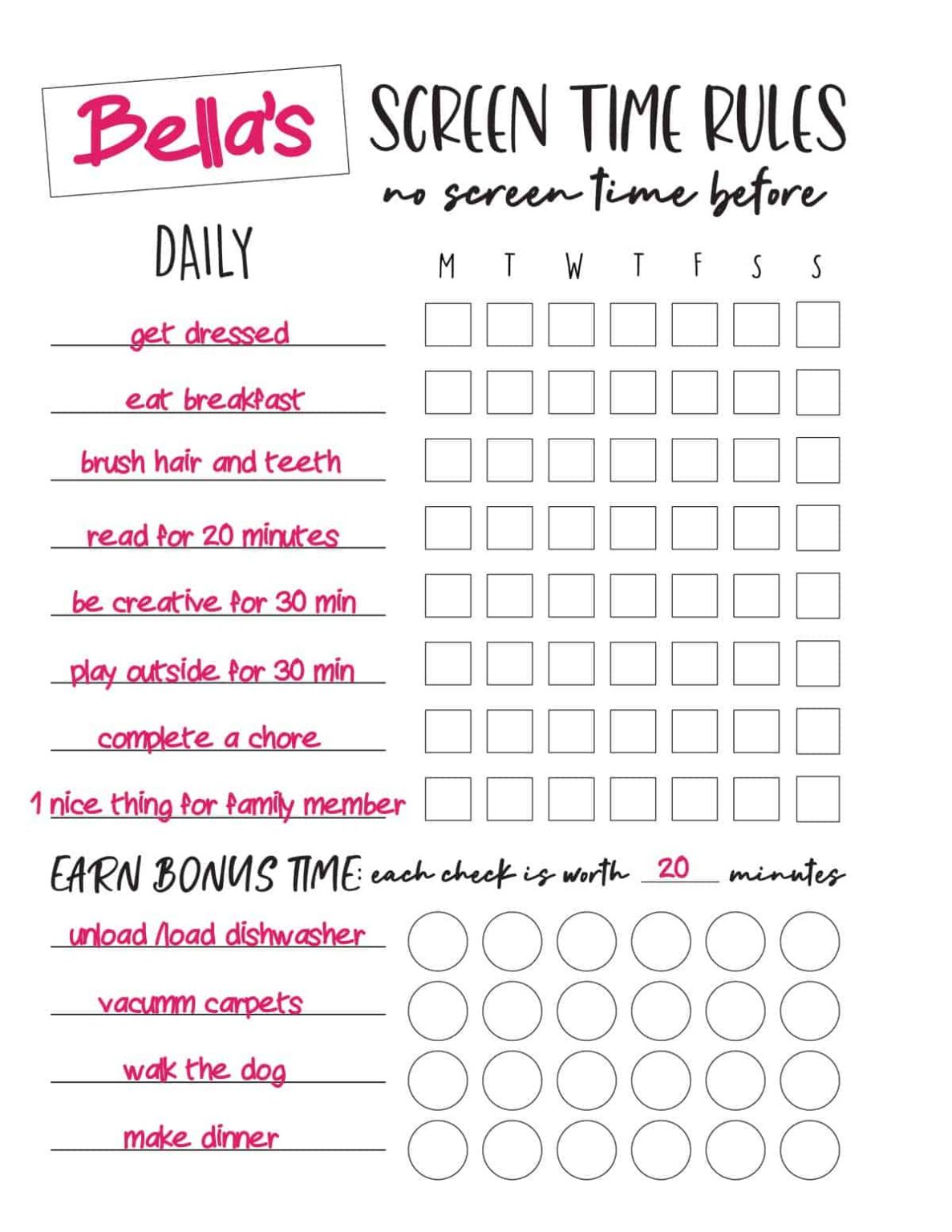
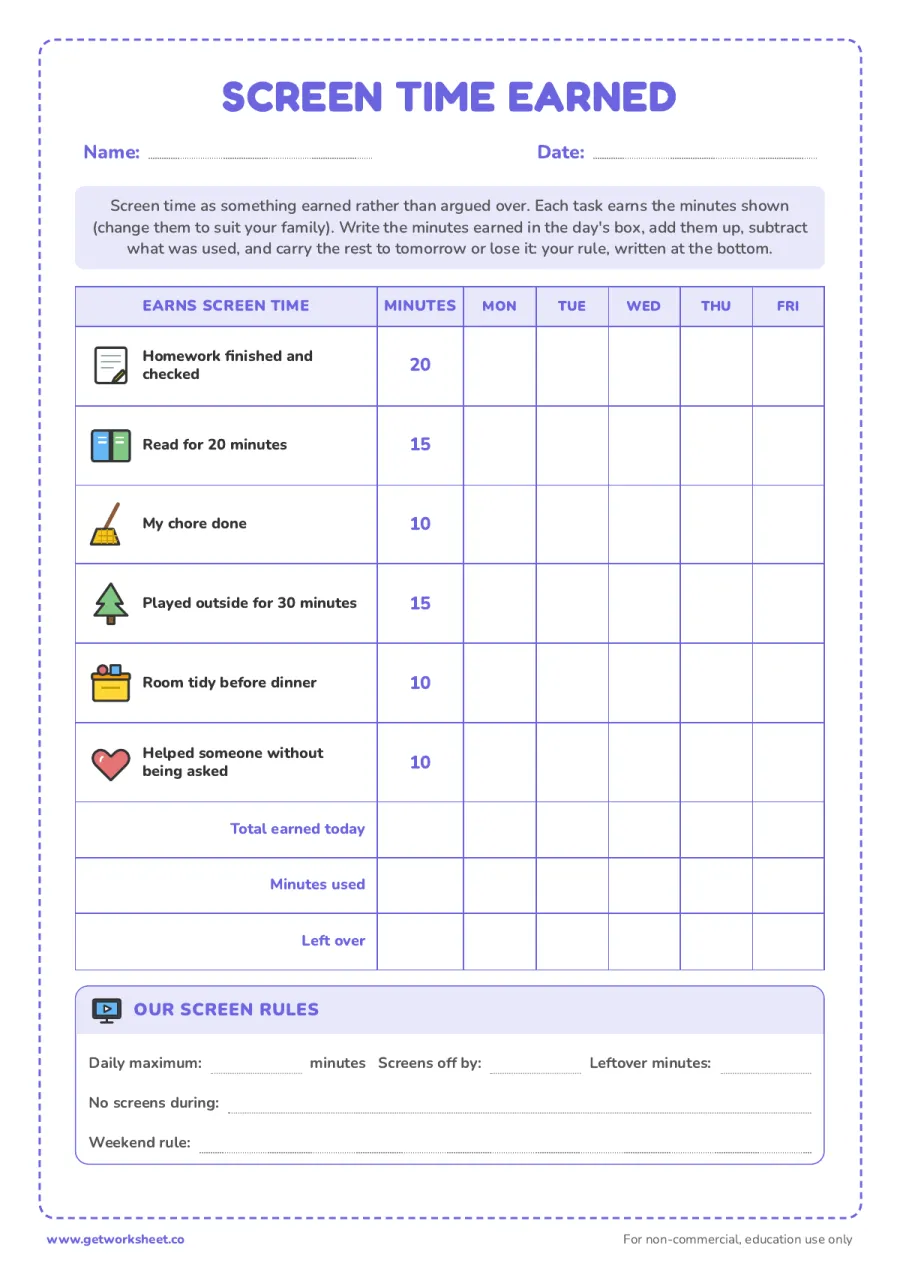
Educators and parents can effectively integrate the “free printable daily screen time checklist” into daily routines. This worksheet features a straightforward checklist format, prompting users to record screen time usage for various activities and check off non-screen activities completed throughout the day. The difficulty level is adaptable, with clear instructions that scaffold learning progressively, making it accessible for a wide age range. It functions exceptionally well as a standalone activity to initiate discussions about digital habits, can be incorporated as a key component of a digital citizenship lesson plan, or assigned as homework to encourage family participation and consistent tracking. Its design promotes daily engagement, moving beyond a one-time discussion to cultivate ongoing mindful screen use. Browse more guides on Safe Wired Schools.
Practical Tips for Parents and Teachers
- Introduce the Purpose Clearly: Explain why tracking screen time is beneficial, focusing on health, well-being, and discovering new activities, rather than simply enforcing rules.
- Model Completion and Discussion: Demonstrate how to fill out the checklist and regularly discuss entries, asking open-ended questions like, “What did you enjoy most today that wasn’t on a screen?” or “How did limiting screen time make you feel?”
- Set Realistic Goals: Encourage setting achievable daily or weekly screen time goals, allowing for flexibility and learning from challenges rather than striving for immediate perfection.
- Offer Alternative Activities: Brainstorm and prepare a list of engaging, screen-free activities that can be easily accessed when screen time is limited, providing positive alternatives.
- Celebrate Progress and Adapt: Acknowledge efforts and improvements, no matter how small. Regularly review the checklist’s effectiveness and adapt its use or associated goals as children grow and their needs change.
Age-Appropriate Recommendations
Adapting the “free printable daily screen time checklist” ensures its effectiveness across various age groups, leveraging expert guidance for optimal learning outcomes.
- Ages 5-8 (Early Elementary): For younger children, the checklist should be completed collaboratively with a parent or teacher. Focus on basic tracking of major screen activities and celebrating completion of simple offline tasks like “played outside” or “read a book.” Visual cues and stickers can enhance engagement. Vocabulary support involves clearly explaining terms and actions. Activity pacing should be brief, perhaps a quick check-in at the end of the day. Heavy parental or teacher involvement is essential for guidance and discussion.
- Ages 9-13 (Late Elementary/Middle School): Children in this age range can begin to complete the checklist more independently, with periodic adult check-ins. Encourage self-reflection on how different screen activities make them feel and the benefits of their chosen offline pursuits. Vocabulary can expand to include terms like “digital balance” and “well-being.” The activity can be integrated into a weekly digital citizenship lesson, fostering deeper discussions about personal responsibility. Moderate adult involvement provides support, mentorship, and opportunities for shared goal-setting.
- Ages 14-18 (High School): For older learners, the checklist serves as a self-assessment and habit-formation tool. Its use should be driven by personal motivation to understand and manage digital habits, linking screen time to academic performance, sleep quality, and social interactions. Discussions should focus on critical thinking about media consumption and the long-term impacts of digital choices. Adult involvement shifts from direct supervision to offering resources, facilitating thoughtful conversations, and acting as a sounding board for their reflections and strategies.
Frequently Asked Questions
Q: How does this checklist promote responsible screen time?
A: The checklist encourages daily tracking and self-awareness of digital habits. It helps individuals balance screen use with engaging offline activities, fostering a healthier relationship with technology through consistent self-monitoring.
Q: Is this suitable for all age groups?
A: Yes, the “free printable daily screen time checklist” is highly adaptable for ages 5-18. Its application can be modified with varying levels of adult guidance and discussion depth, making it relevant for different developmental stages.
Q: Where can the “free printable daily screen time checklist” be downloaded?
A: This valuable resource is available for free download directly from the SafeWiredSchools.org Worksheets page. Access is straightforward, allowing immediate use in educational and home settings.
Explore More Free Printable Worksheets
Integrating a single worksheet like the “free printable daily screen time checklist” into a consistent digital safety learning routine maximizes its impact. Effective digital education flourishes when supported by a comprehensive suite of resources. Educators and parents are invited to explore a full collection of free printable internet safety worksheets, activity sheets, checklists, quizzes, and more at SafeWiredSchools.org Worksheets. This extensive library covers every essential internet safety topic and is meticulously designed for every grade level and diverse learning environment, ensuring a continuous and robust learning experience.
Developmental Milestone & Activity Table
| Development Stage | Recommended Daily Duration | Primary Learning Objective |
|---|---|---|
| Preschool & Pre-K | 10 – 15 Minutes | Pencil grip development & basic pre-stroke lines |
| Kindergarten | 15 – 20 Minutes | Letter/number formation & spatial line awareness |
| Early Elementary (Grade 1–2) | 20 – 30 Minutes | Fluency, sentence construction & neatness |
Images References