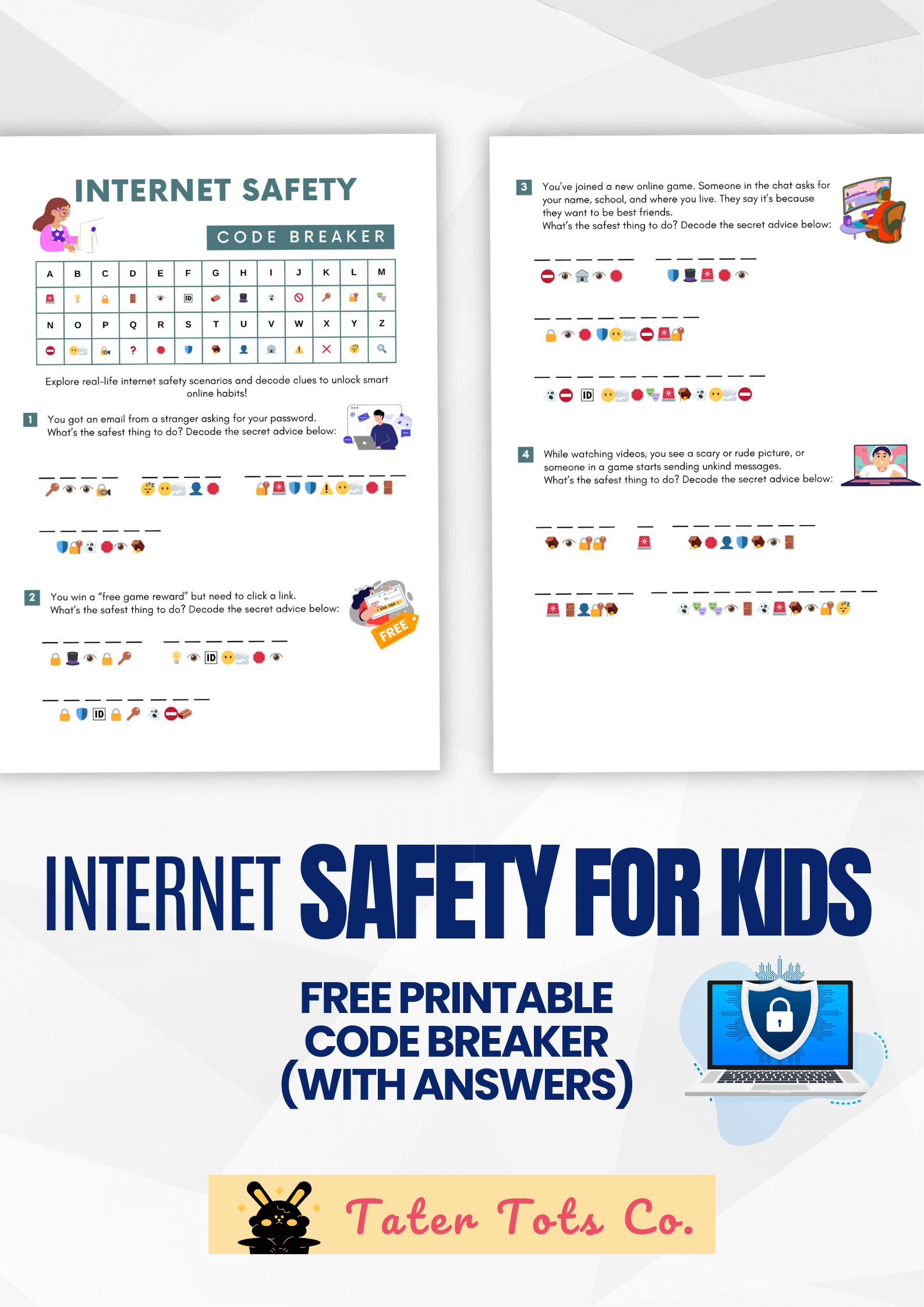
Why Paper and Digital Exercises Anchor Modern Student Protection
Navigating the digital world requires more than passive lecture sessions; it demands active critical thinking from students. Integrating an internet safety worksheet into your routine bridges the gap between abstract tech rules and daily online behavior. According to guidance from organizations like ConnectSafely and CISA, proactive digital literacy reduces adolescent vulnerability to phishing, oversharing, and cyberbullying. When educators and parents use structured writing exercises and scenario prompts, children process safety concepts deeply, retaining crucial online boundaries much longer than they would through a simple verbal warning.
💡 Educational Key Takeaways:
- Core Skill: Structured Internet Safety Worksheet focused on developing pencil grip, stroke control, and early literacy/math confidence.
- Target Scope: Suited for homeschoolers, preschool, kindergarten, and elementary learners.
- Best Recommendation: Practice 10–15 minutes daily with ergonomic writing tools to reinforce muscle memory without hand fatigue.
Mapping Digital Risks to Practical Home and School Guardrails
To keep students safe across diverse environments, adults must understand where technical vulnerabilities intersect with behavioral choices. Whether managing shared classroom laptops or personal smartphones at home, recognizing specific risk signals allows you to implement targeted technical and behavioral safeguards. The breakdown below highlights common vulnerabilities across typical student touchpoints and offers immediate remedies.
| Setting / Context | Common Vulnerability | Practical Safeguard |
|---|---|---|
| Home Devices & Tablets | Unmonitored late-night browsing and access to age-inappropriate search results. | Establish a centralized overnight charging station outside bedrooms and enable strict DNS-level safe search filters. |
| School Chromebooks | Bypassing extension-based classroom monitoring tools or sharing login credentials with peers. | Reinforce clear classroom policies regarding device ownership, require unique PINs, and audit browser extensions weekly. |
| Chat & Social Platforms | Interacting with unknown peer accounts, falling for social engineering, or sharing personal data. | Review privacy settings together, restrict direct messaging to approved contacts, and practice analyzing suspicious direct messages using an internet safety worksheet activity. |
Actionable Steps for Building Consistent Digital Routines
Transforming safety concepts into second nature requires consistent reinforcement across both school and home environments. Educators can incorporate a printable internet safety worksheet into baseline digital citizenship units, challenging students to map out what constitutes private information versus public data. At home, pair these academic exercises with open communication loops. Establish a family tech agreement that outlines how to handle unexpected pop-ups, mean-spirited messages, or accidental exposure to upsetting content. When children know they can report an online mistake without facing immediate device confiscation, they are far more likely to seek help right away, minimizing potential harm.
Overcoming Student Workarounds and Handling Pushback
Overly restrictive technical bans often backfire by driving tech-savvy students to seek clever workarounds, such as using proxy sites or deleting browser history. Instead of relying purely on lock-down filters, pair your technical controls with transparent conversations about why specific rules exist. If a student attempts to bypass a school network restriction, treat it as a teachable moment rather than a purely disciplinary crisis. Walk through the reasoning behind network security protocols and utilize an interactive internet safety worksheet to let students explore the real-world consequences of malware, data harvesting, and identity compromise firsthand.
Frequently Asked Questions About Digital Safety Exercises
What age group benefits most from structured digital safety worksheets?
Children from kindergarten through high school benefit, provided the complexity scales appropriately. Younger students engage well with visual sorting tasks found in resources like Worksheets, while teens tackle complex scenario analysis covering digital footprints and privacy laws.
How can teachers seamlessly integrate these activities into tight instructional schedules?
You do not need a dedicated tech class. Digital citizenship prompts can serve as morning bell-ringers, writing warm-ups, or discussion starters within broader lessons found in Internet and Digital Safety modules.
Are printable exercises enough to stop cyberbullying and risky behavior?
No single worksheet stops bad behavior entirely. Worksheets act as cognitive anchors; they must be paired with active device monitoring, open parent-child dialogues, and supportive reporting pathways outlined by groups like the FTC and FOSI.
Explore More Digital Citizenship Resources
Equipping students for a connected future takes a village of informed educators and proactive parents. Discover more activity packets, lesson plans, and guidance by visiting SafeWiredSchools.org to ensure every child builds lasting, positive online habits.
Worksheet Previews & Reference Materials