Introduction
Establishing healthy digital habits is a cornerstone of comprehensive internet safety education. The “free printable screen time schedule for families” resource is an invaluable tool designed to support this crucial endeavor. This printable worksheet offers a structured yet flexible framework for managing technology use within the home and serves as a practical reinforcement of digital well-being concepts for children across elementary (grades 1-5) and middle/high school (grades 6-12) age ranges, with adaptations for preschool (ages 3-5). Printable worksheets are trusted by educators and parents alike because they provide a tangible, low-tech approach to complex topics. Their hands-on nature encourages active participation and facilitates meaningful discussions, ultimately building a stronger foundation for responsible online behavior and digital awareness. The act of physically engaging with a schedule promotes a deeper understanding and commitment to agreed-upon boundaries, making it an essential component in any family’s digital safety toolkit.
💡 Educational Key Takeaways:
- Core Skill: Structured Free Printable Screen Time Schedule For Families focused on developing pencil grip, stroke control, and early literacy/math confidence.
- Target Scope: Suited for homeschoolers, preschool, kindergarten, and elementary learners.
- Best Recommendation: Practice 10–15 minutes daily with ergonomic writing tools to reinforce muscle memory without hand fatigue.
What This Worksheet Covers
This “free printable screen time schedule for families” specifically addresses the vital topic of balanced screen time management. It guides families in creating a visual representation of their daily and weekly technology use, integrating screen time with essential offline activities. Concepts covered include setting clear time limits, identifying appropriate content, planning for device-free zones, and balancing digital engagement with physical activity, creative play, academic work, and family time. The worksheet encourages a proactive approach to digital consumption rather than a reactive one, fostering an understanding of moderation and purpose-driven screen use. Its content aligns directly with established digital citizenship and child safety education standards, which emphasize the development of self-regulation, media literacy, and the ability to make informed choices about technology use for overall well-being.
Key Learning Outcomes
By utilizing the “free printable screen time schedule for families,” children and families will develop several important skills and areas of knowledge:. Browse more guides on Safe Wired Schools.
- Ability to collaboratively establish and adhere to reasonable screen time boundaries.
- Understanding the critical importance of balancing digital activities with real-world interactions and responsibilities.
- Development of self-regulation and time management skills related to technology use.
- Enhanced family communication regarding digital habits and expectations.
- Recognition of the positive impact of a balanced approach to technology on overall physical and mental health.
How to Use This Worksheet
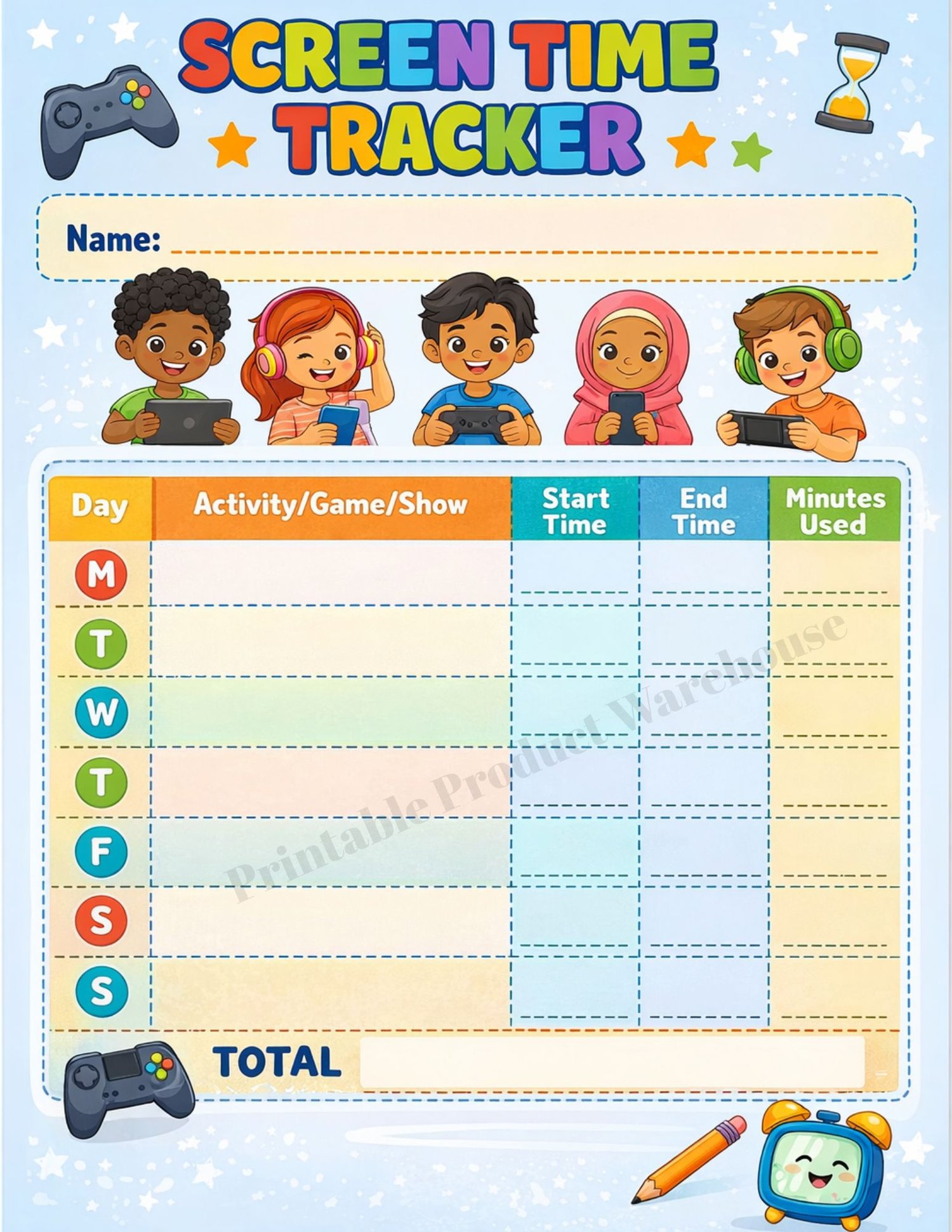
The “free printable screen time schedule for families” is designed for versatile use in both classroom settings and home environments. Its format typically includes sections for daily time slots, categories for different activities (e.g., schoolwork, chores, free play, screen time), and areas for setting family rules or goals. The activity involves filling in the blank sections with agreed-upon times and activities, making it a highly customizable tool. Instructions are straightforward, guiding users through a progressive learning process that starts with identifying current habits and moves towards planning desired routines. This worksheet functions effectively as a standalone activity to initiate discussions about digital boundaries, as an integral part of a broader lesson plan on digital citizenship, or as a practical homework assignment for families to complete together, encouraging collective responsibility for digital well-being.
Practical Tips for Parents and Teachers
Maximizing the benefits of the “free printable screen time schedule for families” involves thoughtful implementation. Here are several actionable tips:
- Collaborative Creation: Involve children in the scheduling process. Their input fosters a sense of ownership and increases adherence to the agreed-upon plan.
- Visual Placement: Post the completed schedule in a prominent, accessible location, such as the refrigerator or a family bulletin board, for constant reference.
- Model Behavior: Adults should demonstrate healthy screen time habits, reinforcing the values promoted by the schedule through personal example.
- Regular Review: Periodically revisit the schedule (e.g., weekly or monthly) to discuss its effectiveness, make necessary adjustments, and accommodate changing needs or activities.
- Beyond the Schedule: Use the schedule as a springboard for deeper conversations about online content, cyberbullying prevention, and the value of offline pursuits.
Age-Appropriate Recommendations
Implementing the “free printable screen time schedule for families” requires an understanding of developmental stages to ensure its effectiveness across different age groups.
For Ages 5-8 (Early Elementary), the focus should remain highly collaborative and visually oriented. Use simple language and clear, concise instructions. Involve children in drawing or coloring the schedule elements. Keep screen time blocks short and clearly defined, emphasizing device-free times for meals, outdoor play, and bedtime routines. Parental involvement is crucial for guiding the process, helping children understand the concept of time limits, and reinforcing adherence through positive encouragement.
For Ages 9-12 (Late Elementary/Middle School), the approach can introduce more autonomy and negotiation. Encourage children to take a more active role in proposing their own schedule ideas, discussing the reasons behind their choices, and understanding the impact of excessive screen use. Vocabulary can become more sophisticated, addressing concepts like digital citizenship, online safety rules, and the balance between entertainment and educational content. This age group benefits from understanding the “why” behind the rules, promoting greater self-regulation.
For Ages 13-18 (Middle/High School), the schedule becomes a tool for self-management and critical thinking. Discussions should center on responsible digital citizenship, managing online presence, time management for academic responsibilities versus social media, and the potential mental health impacts of constant connectivity. The schedule can facilitate conversations about personal accountability, digital footprint, and setting healthy boundaries for themselves. The role of parents and teachers shifts to guidance and mentorship, supporting teens in developing lifelong habits for digital wellness.
Frequently Asked Questions
Q: What makes this screen time schedule effective for families? A: Its effectiveness stems from encouraging collaborative creation, which fosters ownership and adherence. It provides a visual, tangible plan that promotes consistency and clear boundaries around digital device use within the family.
Q: Can this schedule be customized for different family needs and routines? A: Absolutely. The “free printable screen time schedule for families” is designed with flexibility in mind. Blank spaces and adaptable sections allow for complete personalization to suit unique family dynamics, daily routines, and individual child needs.
Q: How can one access this free printable resource? A: The “free printable screen time schedule for families” is readily available for download. It can be found directly on the SafeWiredSchools.org website under the resources or worksheets section, providing immediate access to this valuable tool.
Explore More Free Printable Worksheets
While the “free printable screen time schedule for families” offers significant value, it functions best as part of a comprehensive and consistent digital safety learning routine. A single worksheet serves as an excellent starting point, but sustained digital literacy requires ongoing engagement with various educational resources. Educators and parents are invited to explore a full collection of free printable internet safety worksheets, activity sheets, checklists, quizzes, and more at SafeWiredSchools.org Worksheets. These resources cover every internet safety topic imaginable and are specifically designed for every grade level and learning environment, ensuring a robust and well-rounded approach to digital education.
Developmental Milestone & Activity Table
| Development Stage | Recommended Daily Duration | Primary Learning Objective |
|---|---|---|
| Preschool & Pre-K | 10 – 15 Minutes | Pencil grip development & basic pre-stroke lines |
| Kindergarten | 15 – 20 Minutes | Letter/number formation & spatial line awareness |
| Early Elementary (Grade 1–2) | 20 – 30 Minutes | Fluency, sentence construction & neatness |