Introduction
Navigating the digital landscape safely represents a critical skill for today’s youth. Equipping young learners with foundational knowledge about online safety early in their educational journey is paramount. The resource, titled “free internet safety worksheet for grade 3,” addresses this vital need, providing a structured, hands-on learning experience for elementary-aged children. Specifically designed for students in grades 15, with a particular focus on grade 3, this printable material reinforces essential internet safety concepts through engaging activities. Printable worksheets remain trusted pedagogical tools for educators and parents alike, offering a tangible, screen-free method to build digital awareness and foster responsible online behavior. Their format allows for focused attention, active participation, and direct discussion, making them invaluable for instilling core digital citizenship principles in a developmentally appropriate manner.
💡 Educational Key Takeaways:
- Core Skill: Structured Free Internet Safety Worksheet For Grade 3 focused on developing pencil grip, stroke control, and early literacy/math confidence.
- Target Scope: Suited for homeschoolers, preschool, kindergarten, and elementary learners.
- Best Recommendation: Practice 10–15 minutes daily with ergonomic writing tools to reinforce muscle memory without hand fatigue.
What This Worksheet Covers
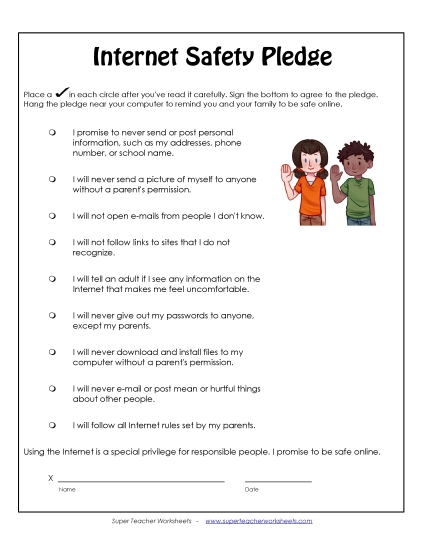
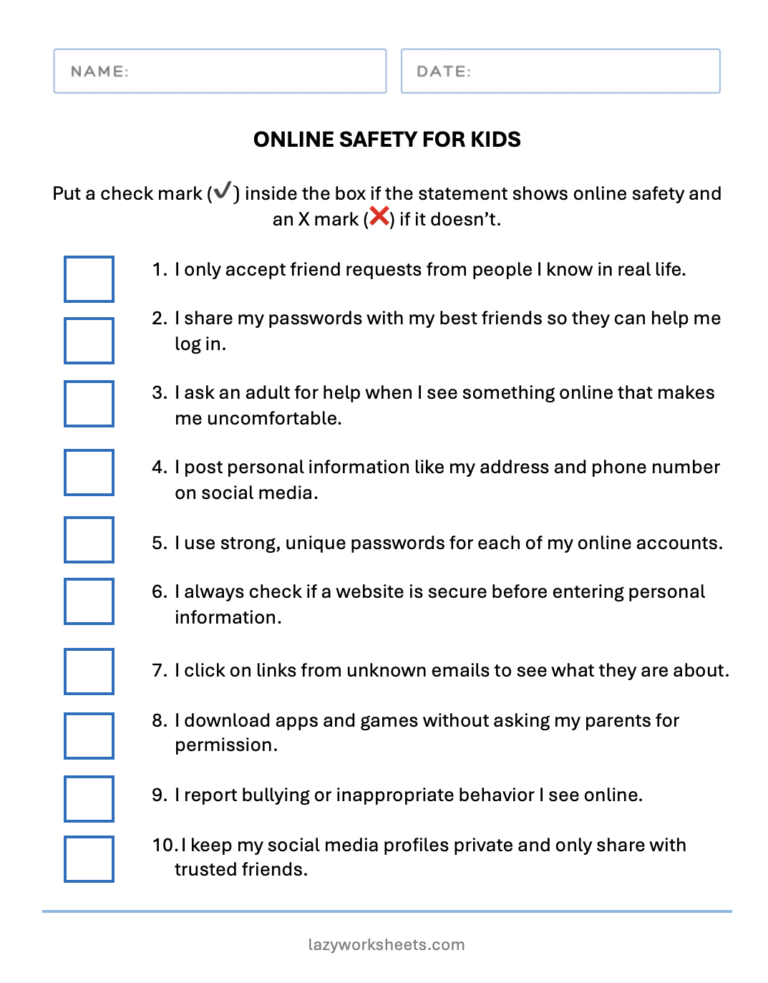
The “free internet safety worksheet for grade 3″ addresses several fundamental internet safety topics, crucial for developing a child’s understanding of safe online practices. Content within the worksheet covers recognizing trusted adults for reporting online concerns, understanding the importance of keeping personal information private, and identifying basic indicators of safe versus potentially unsafe websites or online interactions. Concepts such as “Ask a Trusted Adult Before You Click” are introduced, emphasizing the role of parents, teachers, and guardians in guiding online exploration. Furthermore, the worksheet introduces scenarios that encourage critical thinking about sharing information online and interacting with unknown individuals. This content aligns with recognized digital citizenship and child online protection standards, ensuring that the material supports a comprehensive approach to digital literacy education.
Key Learning Outcomes
Completion of the “free internet safety worksheet for grade 3” facilitates several important learning outcomes for young students:. Browse more guides on Safe Wired Schools.
- Distinguishing between appropriate and inappropriate online sharing of personal information.
- Identifying at least three trusted adults to contact if an uncomfortable online situation arises.
- Understanding the importance of seeking permission before downloading files or visiting new websites.
- Developing an initial awareness of critical thinking when encountering unfamiliar online content.
- Practicing proactive decision-making regarding online interactions and content engagement.
How to Use This Worksheet
The “free internet safety worksheet for grade 3” offers versatile application within both classroom and home environments. Its format typically includes a variety of activity types, such as fill-in-the-blank questions, matching exercises, true or false statements, and simple drawing or reflection prompts related to online scenarios. The difficulty level is carefully calibrated for third-grade students, featuring clear instructions that progressively scaffold learning, ensuring accessibility for diverse learning styles. This resource can function as a standalone activity to introduce or review key concepts, be integrated as a component of a broader internet safety lesson plan, or be assigned as homework to extend learning beyond the immediate instructional setting. Its printable nature encourages active engagement away from screens, promoting focused learning and deeper comprehension of critical safety messages.
Practical Tips for Parents and Teachers
Maximizing the educational impact of the “free internet safety worksheet for grade 3” involves thoughtful preparation and facilitation. First, educators and parents should review the worksheet content themselves, familiarizing themselves with the topics and potential discussion points. Secondly, completing the worksheet alongside the child or student, rather than merely assigning it, can foster a collaborative learning environment. Thirdly, after completion, engage in open-ended discussion using prompts like, “Why is it important not to share your address online?” or “What would you do if a stranger sent you a message?” Fourthly, extend the learning by role-playing various online scenarios or creating a family internet safety agreement. Finally, positive reinforcement and recognition for effort and understanding encourage continued engagement with digital safety principles.
Age-Appropriate Recommendations
While the “free internet safety worksheet for grade 3” is specifically tailored for its namesake, its concepts can be adapted for slightly younger or older elementary students with appropriate guidance. For Ages 68 (Grades 1-2), the worksheet can be introduced with significant adult support. Vocabulary may require simplification, and activities might need to be completed verbally, with an adult scribing responses. The focus should remain on very basic rules, such as identifying trusted adults and understanding the concept of asking permission. For Ages 810 (Grades 3-4), the worksheet is ideally suited. Students at this stage possess developing reading comprehension and critical thinking skills, allowing for more independent work, though discussion remains crucial for reinforcing understanding. They can engage with the scenarios more deeply, relating them to their burgeoning online experiences. For Ages 1012 (Grade 5), the worksheet can serve as an excellent review or a springboard for more advanced discussions. Students in this age band might analyze the scenarios with greater nuance, connect the concepts to emerging issues like cyberbullying or digital footprints, and even propose their own solutions to hypothetical online safety dilemmas. Each age band benefits from active adult involvement to ensure comprehension and application of the safety principles.
Frequently Asked Questions
Q: How can the “free internet safety worksheet for grade 3” be accessed? A: This valuable resource is available for immediate download and printing directly from SafeWiredSchools.org. Simply navigate to the worksheets section of the website to locate the specific material.
Q: What specific internet safety topics does this worksheet cover for third graders? A: The worksheet focuses on foundational elements of online safety, including identifying trusted adults, understanding the importance of personal information privacy, and recognizing safe online behaviors versus risky ones. It introduces basic critical thinking skills for navigating digital content.
Q: Is this internet safety worksheet truly free to use? A: Yes, the “free internet safety worksheet for grade 3” is provided as a complimentary resource by SafeWiredSchools.org. It is freely available for educators and parents to download, print, and utilize for educational purposes without any cost.
Explore More Free Printable Worksheets
A single worksheet represents an excellent starting point, but consistent reinforcement is key to developing robust digital safety habits. Effective internet safety education thrives within a broader framework of learning, where concepts are revisited and expanded upon over time. Educators and parents are invited to explore a comprehensive collection of free printable internet safety worksheets, activity sheets, checklists, quizzes, and additional resources available at SafeWiredSchools.org Worksheets. This extensive library covers every essential internet safety topic and is thoughtfully designed for every grade level and diverse learning environments, ensuring ongoing support for building a safer online experience for all young learners.
Developmental Milestone & Activity Table
| Development Stage | Recommended Daily Duration | Primary Learning Objective |
|---|---|---|
| Preschool & Pre-K | 10 – 15 Minutes | Pencil grip development & basic pre-stroke lines |
| Kindergarten | 15 – 20 Minutes | Letter/number formation & spatial line awareness |
| Early Elementary (Grade 1–2) | 20 – 30 Minutes | Fluency, sentence construction & neatness |
Images References