Introduction
The keyword term “internet safety worksheet for grade 7″ identifies a crucial educational resource tailored for the middle school academic level, specifically targeting grades 612. This resource plays a vital role in reinforcing essential internet safety concepts through engaging, hands-on, and printable learning experiences. Printable worksheets, a long-standing and trusted tool among educators and parents, effectively build digital awareness and cultivate responsible online behavior. These materials offer a structured approach to learning, allowing students to process information at their own pace and apply critical thinking skills to real-world online scenarios. The tangible nature of a physical worksheet often enhances retention and provides a clear record of learning progress, making it an invaluable component of a comprehensive digital citizenship curriculum.
💡 Educational Key Takeaways:
- Core Skill: Structured Internet Safety Worksheet For Grade 7 focused on developing pencil grip, stroke control, and early literacy/math confidence.
- Target Scope: Suited for homeschoolers, preschool, kindergarten, and elementary learners.
- Best Recommendation: Practice 10–15 minutes daily with ergonomic writing tools to reinforce muscle memory without hand fatigue.
What This Worksheet Covers
This “internet safety worksheet for grade 7″ addresses several critical internet safety topics pertinent to young adolescents. The content encompasses understanding the permanence of a digital footprint, recognizing and responding to cyberbullying, identifying phishing attempts and online scams, and the importance of privacy settings on social media and other platforms. It also delves into responsible online communication, evaluating information credibility, and managing screen time effectively. The worksheet’s content directly aligns with recognized digital citizenship and child safety education standards, ensuring that students develop practical skills for navigating the complexities of the online world securely and ethically. Through varied activities, students are prompted to consider the consequences of their online actions and make informed decisions.
Key Learning Outcomes
Completing this worksheet helps students develop several essential skills and knowledge areas:
- Students will be able to identify common online risks and threats, such as phishing, scams, and misinformation.
- Students will understand the concept of a digital footprint and the long-term implications of their online activity.
- Students will learn strategies for responding to and reporting cyberbullying, fostering a safer online environment.
- Students will develop the ability to critically evaluate online content for credibility and bias.
- Students will recognize the importance of privacy settings and personal information protection across various digital platforms.
How to Use This Worksheet
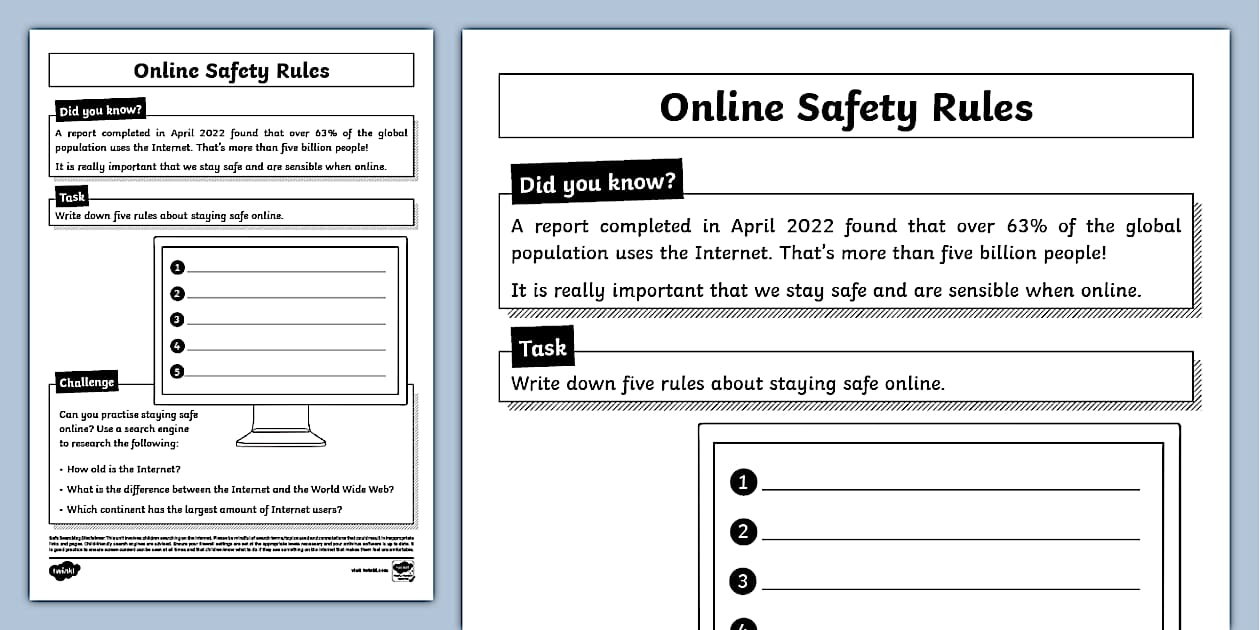
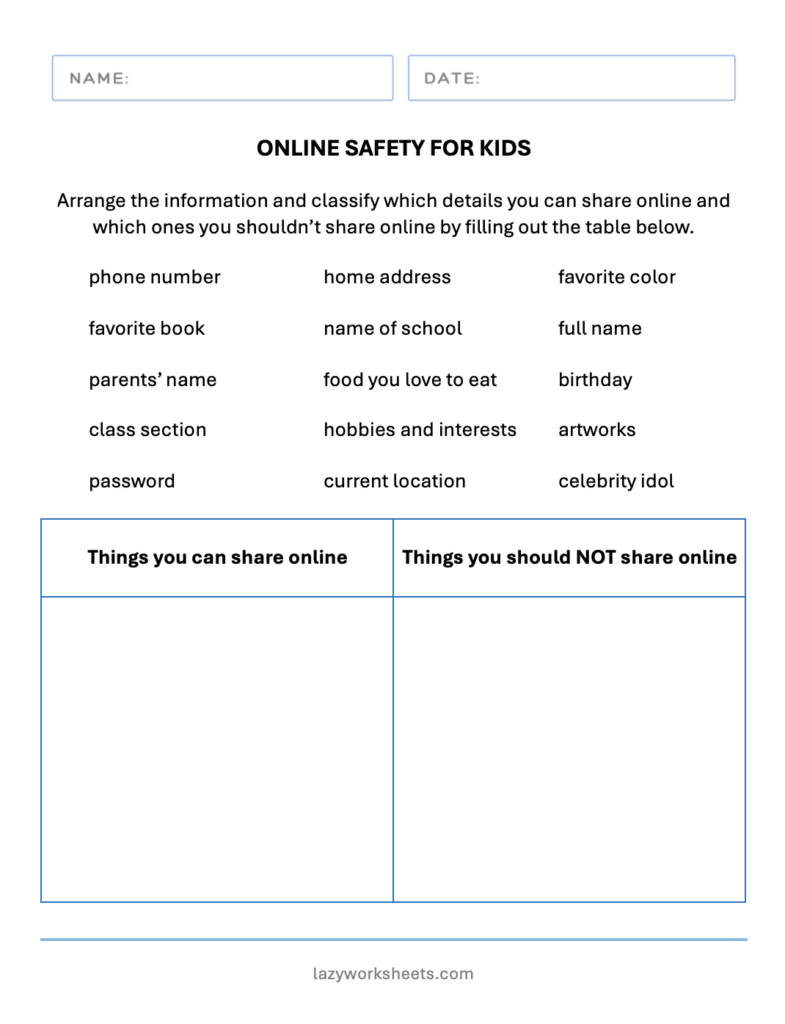
Educators and parents can effectively integrate the “internet safety worksheet for grade 7” into various learning environments. The worksheet typically features a blend of activity types designed to engage middle school students, including fill-in-the-blank questions, matching exercises, true or false statements, short-answer scenario analyses, and reflective prompts. Instructions are clearly presented, often scaffolding learning progressively from foundational concepts to more complex applications. This resource functions exceptionally well as a standalone activity for individual learning, a supplementary component within a broader internet safety lesson plan, or a thought-provoking homework assignment. Its adaptable format allows for use in classroom discussions, group activities, or independent study, reinforcing key concepts in a flexible manner. Browse more guides on Safe Wired Schools.
Practical Tips for Parents and Teachers
- Preparation: Review the worksheet beforehand to familiarize oneself with the topics and potential discussion points. Ensure students have access to pencils or pens and a quiet space for focused work.
- Facilitation: Introduce the worksheet by briefly outlining the learning objectives. Encourage students to read instructions carefully and ask questions before beginning the activities.
- Discussion Prompts: After completion, facilitate a group or one-on-one discussion about the answers. Ask open-ended questions like, “What was the most surprising thing you learned?” or “How might this information change your online habits?”
- Real-World Connections: Connect the worksheet’s scenarios to real-life examples students might encounter. This helps solidify understanding and demonstrates the practical relevance of internet safety principles.
- Extend Learning: Encourage students to research a specific topic from the worksheet further, perhaps by exploring privacy settings on their own devices (with supervision) or finding additional credible resources on digital citizenship.
Age-Appropriate Recommendations
The “internet safety worksheet for grade 7” is specifically designed for students in the middle school age band, typically ages 1113. For this group, the worksheet’s vocabulary, complexity of scenarios, and depth of discussion topics are perfectly suited. Students in this age range are developing abstract reasoning skills and becoming more independent online, making this resource highly relevant for fostering critical digital literacy. Minimal direct parental or teacher involvement is needed during completion, though post-activity discussion is highly recommended to clarify concepts and address individual concerns. For younger children (Ages 35 or Ages 610), this particular worksheet’s content and format would be too advanced; alternative resources focusing on basic rules like asking permission to go online, not sharing personal information, and identifying trusted adults are more appropriate. SafeWiredSchools.org offers a diverse collection of resources tailored for every age group, ensuring appropriate learning experiences for all early learners, from foundational concepts for preschoolers to advanced digital ethics for high school students.
Frequently Asked Questions
Q: What specific digital safety topics are covered in the “internet safety worksheet for grade 7”?
A: The worksheet covers essential topics such as digital footprint, cyberbullying prevention, online privacy settings, identifying online scams, and responsible social media use. It aims to equip Grade 7 students with practical skills for navigating the internet safely.
Q: Is this worksheet suitable for students outside of Grade 7?
A: While specifically designed for Grade 7, the content can be adapted for Grade 6 or early Grade 8 students. For significantly younger or older students, SafeWiredSchools.org offers other age-appropriate resources tailored to their developmental stages and learning needs.
Q: How can educators or parents access and print the “internet safety worksheet for grade 7” for free?
A: This free printable resource can be easily accessed and downloaded directly from the SafeWiredSchools.org website. Simply navigate to the worksheets section, locate the “internet safety worksheet for grade 7,” and click the download or print button.
Explore More Free Printable Worksheets
A single worksheet serves as an excellent starting point, but consistent digital safety learning benefits greatly from a broader collection of resources. The “internet safety worksheet for grade 7” is part of a comprehensive suite of materials designed to support ongoing education. Educators and parents are encouraged to explore the full collection of free printable internet safety worksheets, activity sheets, checklists, quizzes, and more available at SafeWiredSchools.org Worksheets. These resources cover every internet safety topic imaginable and are meticulously designed for every grade level and learning environment, ensuring a continuous and effective approach to digital citizenship education.
Developmental Milestone & Activity Table
| Development Stage | Recommended Daily Duration | Primary Learning Objective |
|---|---|---|
| Preschool & Pre-K | 10 – 15 Minutes | Pencil grip development & basic pre-stroke lines |
| Kindergarten | 15 – 20 Minutes | Letter/number formation & spatial line awareness |
| Early Elementary (Grade 1–2) | 20 – 30 Minutes | Fluency, sentence construction & neatness |
Images References