Introduction
Establishing healthy digital habits for children is a cornerstone of comprehensive internet safety education. The resource, “weekly screen time schedule for kids,” addresses this vital area, serving as an invaluable tool for parents and educators. This printable worksheet is specifically designed for Elementary grades 15, though its principles are adaptable for early middle school learners. It offers a structured approach to fostering responsible screen time management, reinforcing critical internet safety concepts through engaging, hands-on learning. Printable worksheets remain trusted instruments for educators and parents due to their tangible nature, enabling active engagement without contributing to digital fatigue. They provide a physical space for reflection, planning, and discussion, directly contributing to the development of digital awareness and responsible online behavior. This resource empowers children to participate actively in shaping their digital lives, moving beyond mere restriction towards thoughtful self-management.
💡 Educational Key Takeaways:
- Core Skill: Structured Weekly Screen Time Schedule For Kids focused on developing pencil grip, stroke control, and early literacy/math confidence.
- Target Scope: Suited for homeschoolers, preschool, kindergarten, and elementary learners.
- Best Recommendation: Practice 10–15 minutes daily with ergonomic writing tools to reinforce muscle memory without hand fatigue.
What This Worksheet Covers
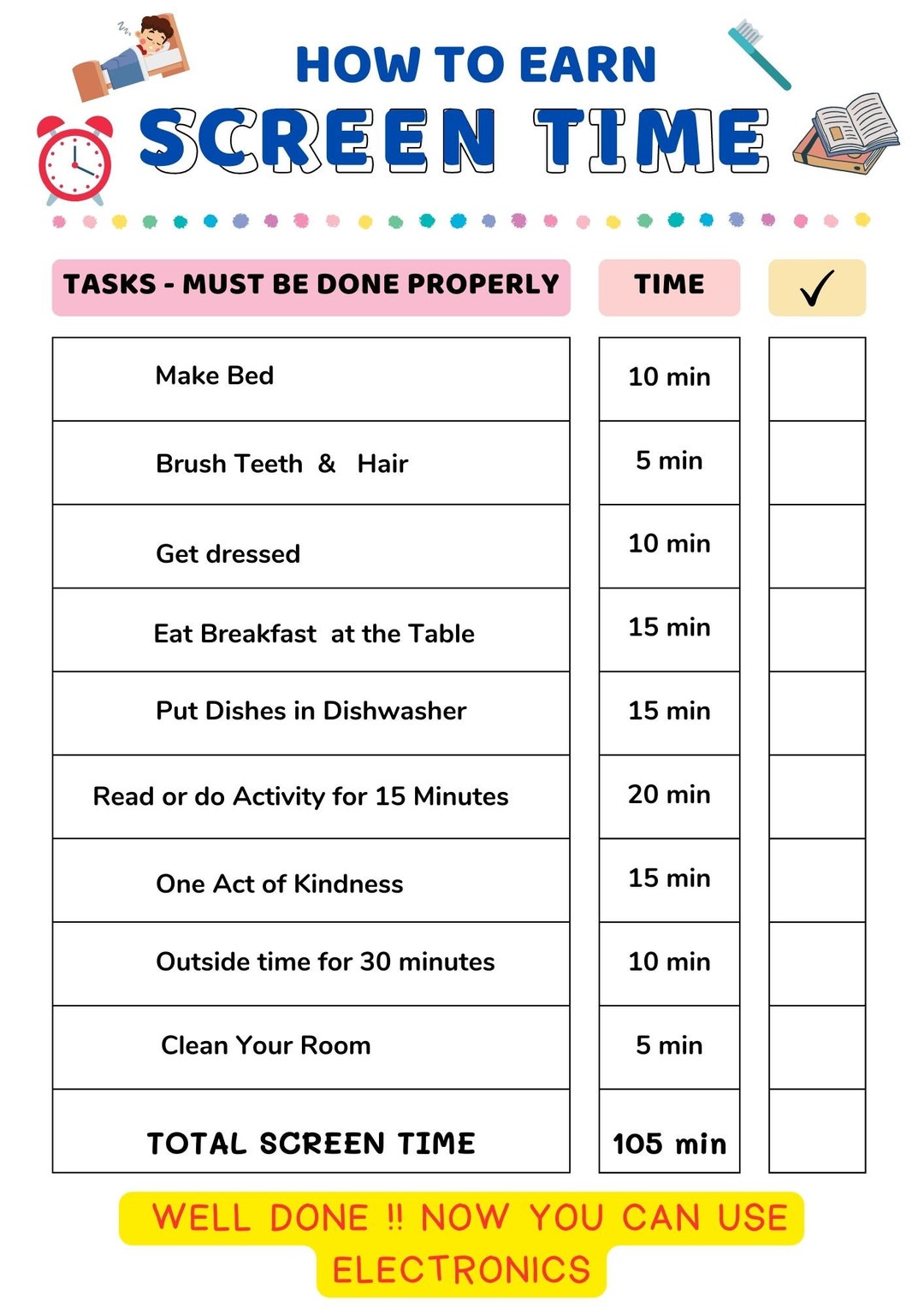
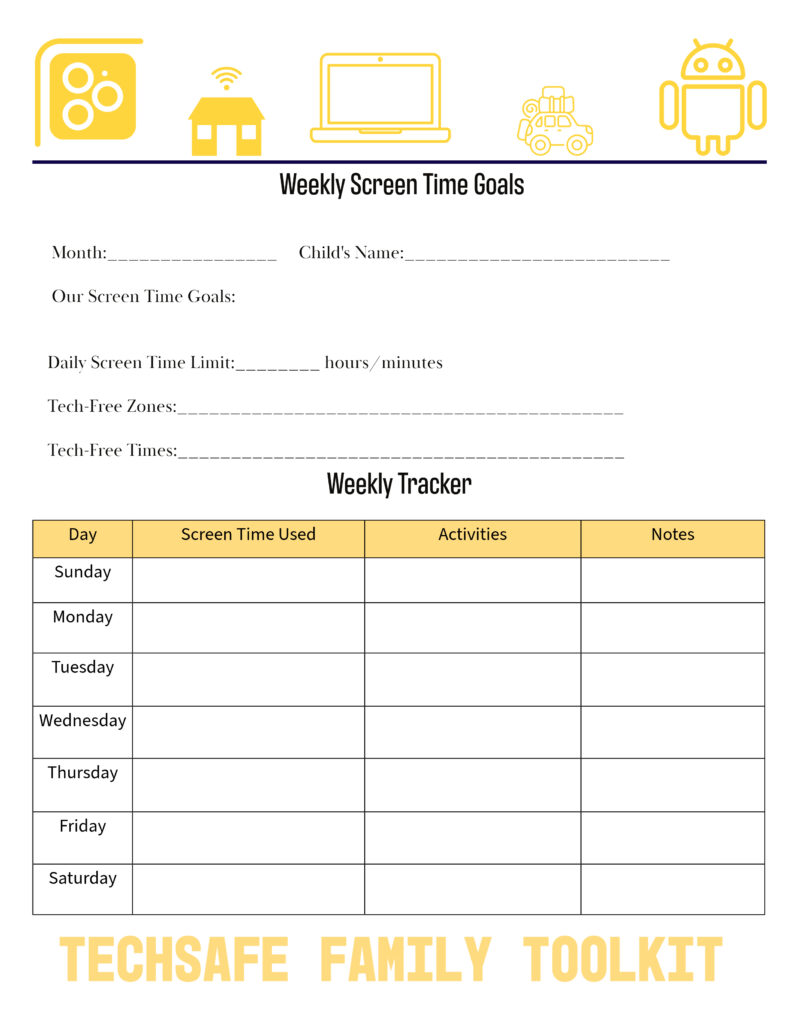
The “weekly screen time schedule for kids” worksheet directly addresses the crucial topic of balanced screen time and responsible digital device use. It guides children through the process of planning their week, allocating specific times for educational screen use, recreational screen activities, and, crucially, a wide array of offline engagements. Concepts covered include differentiating between various types of screen time, understanding the importance of breaks, and recognizing the value of physical activity, creative play, and social interaction away from screens. The worksheet facilitates the establishment of clear, consistent boundaries, helping children internalize healthy tech habits. Its content aligns directly with recognized digital citizenship and child safety education standards, particularly those focusing on the “Health and Wellness” dimension, which emphasizes understanding the physical, mental, and emotional impacts of technology use and promoting balance in digital lives.
Key Learning Outcomes
By engaging with the “weekly screen time schedule for kids” worksheet, children will develop several essential skills and knowledge areas:. Browse more guides on Safe Wired Schools.
- Ability to differentiate between various types of screen time, such as learning-focused versus entertainment-focused activities.
- Skill in planning and adhering to a balanced daily and weekly schedule that integrates both online and offline pursuits.
- Understanding the importance of setting screen time boundaries for overall well-being and academic success.
- Capacity to identify and propose alternative offline activities, fostering creativity and diverse interests.
- Development of self-regulation skills related to digital device use, promoting mindful engagement rather than passive consumption.
How to Use This Worksheet
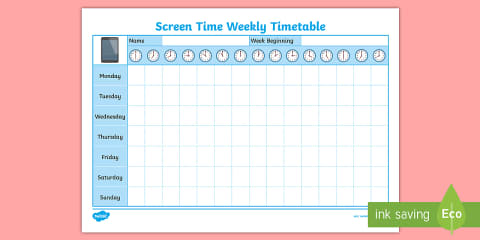
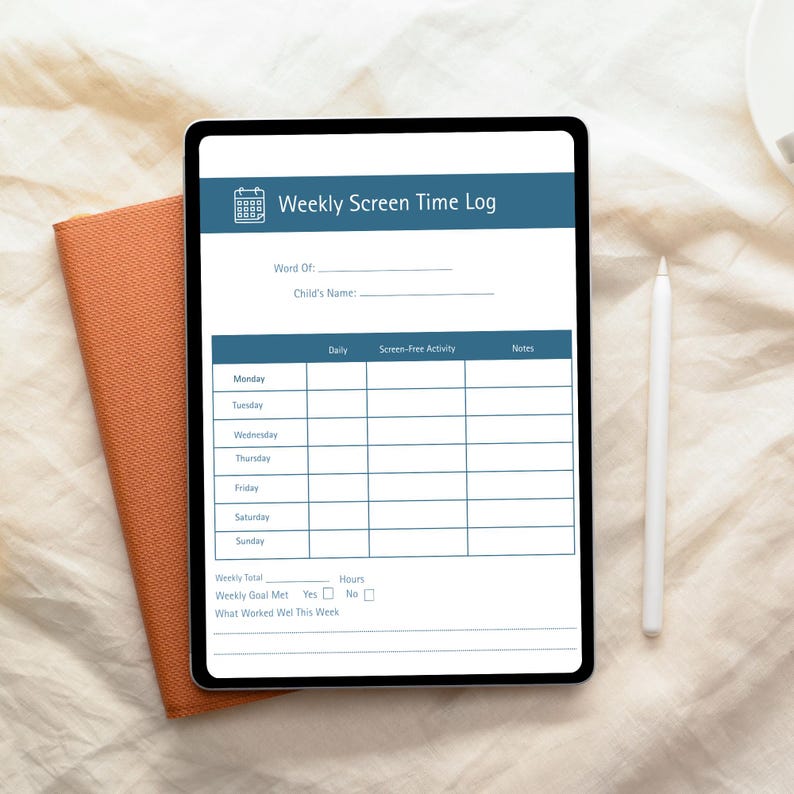
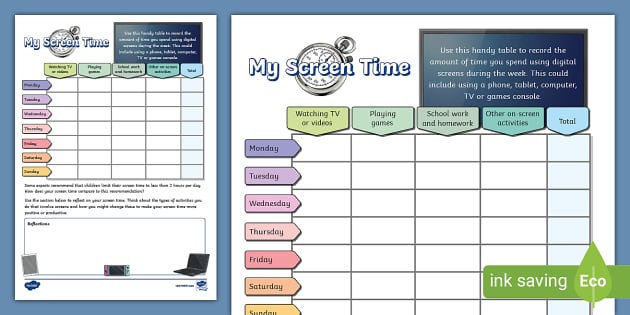
Educators and parents can effectively integrate “weekly screen time schedule for kids” into their digital safety curriculum or home routines. The worksheet features a clear, grid-based format, allowing children to visualize their week and designate time slots for various activities. Activity types include guided fill-in-the-blank sections for identifying preferred offline activities, structured areas for planning daily screen time allocations, and reflective prompts about the benefits of balance. The difficulty level is appropriate for elementary students, with instructions designed to scaffold learning progressively. Visual cues and simple language ensure accessibility for younger learners. This resource functions excellently as a standalone activity to initiate discussions about screen time, as an integral component of a broader digital citizenship lesson plan, or as a practical homework assignment that encourages family collaboration in setting household tech expectations.
Practical Tips for Parents and Teachers
- Collaborative Planning: Encourage children to complete the schedule alongside an adult. This fosters a sense of ownership and makes the planning process a shared responsibility rather than a unilateral imposition.
- Review and Discuss: Before beginning, discuss existing screen time habits and the concept of balance. After completion, review the proposed schedule, asking questions like, “What are your favorite non-screen activities?” or “How will this schedule help you achieve your goals?”
- Visibility and Reminders: Once completed, display the schedule in a prominent location, such as on the refrigerator or a classroom bulletin board. This visual reminder helps reinforce commitments and provides a tangible reference point for the entire week.
- Flexibility and Adaptation: Emphasize that the schedule is a living document. Encourage periodic review and adjustment as children’s needs, interests, and school commitments evolve, teaching adaptability and self-assessment.
- Celebrate Successes: Acknowledge and celebrate instances where the child successfully adheres to their planned schedule or makes conscious choices to engage in offline activities. Positive reinforcement strengthens desired behaviors.
Age-Appropriate Recommendations
Adapting the “weekly screen time schedule for kids” to different age bands ensures maximum impact and relevance for every learner.
For Ages 57 (Early Elementary), the focus should remain on foundational concepts. Vocabulary support is crucial, explaining terms like “screen time” and “offline activities” in simple language. The activity should be highly guided, with an adult working collaboratively with the child to fill in the schedule. Emphasis should be placed on visual cues, drawing, and identifying a few key non-screen activities. Activity pacing should be brief, perhaps focusing on just one or two days at a time to avoid overwhelming the child. Parental involvement is essential for introducing the idea of balance.
For Ages 810 (Mid-Elementary), children can engage more independently with the worksheet, though adult guidance remains beneficial. Discussions can delve deeper into the reasons behind screen time limits, linking them to sleep, homework, and social interaction. Children can start to differentiate between educational apps and purely entertainment-based content. The activity pacing can cover the full week, encouraging them to think ahead and allocate time for various responsibilities. Moderate parental or teacher involvement helps solidify understanding and problem-solve potential scheduling conflicts.
For Ages 1113 (Late Elementary/Early Middle School), the worksheet becomes a tool for greater self-reflection and negotiation. Learners at this stage can critically evaluate their own screen habits and propose realistic adjustments. Discussions can explore the long-term impact of excessive screen time and the benefits of digital detox periods. Less direct adult involvement is needed for completion, but guided discussions after the worksheet is done are paramount. This allows for open dialogue about personal responsibility, peer influence, and the development of self-monitoring strategies, empowering them to become proactive digital citizens.
Frequently Asked Questions
Q: What age group is this “weekly screen time schedule for kids” worksheet best suited for?
A: This worksheet is primarily designed for Elementary grades 1-5 (ages 5-10). Its adaptable structure also allows for effective use with early Middle School learners, with appropriate adult guidance and discussion.
Q: How does this worksheet support broader digital citizenship education?
A: The “weekly screen time schedule for kids” directly promotes responsible digital citizenship by focusing on the “Health and Wellness” dimension. It encourages balanced media consumption, self-regulation, and an understanding of the impact of technology on overall well-being.
Q: Where can educators and parents access this free printable resource?
A: The “weekly screen time schedule for kids” worksheet, along with many other valuable internet safety resources, is available for free download directly from the SafeWiredSchools.org website. Simply navigate to the resources section.
Explore More Free Printable Worksheets
A single resource, however effective, works best as part of a consistent and comprehensive learning routine. The “weekly screen time schedule for kids” worksheet is a valuable addition to any digital safety toolkit, but its impact multiplies when integrated into a broader educational framework. Educators and parents are invited to explore a full collection of free printable internet safety worksheets, activity sheets, checklists, quizzes, and more at SafeWiredSchools.org Worksheets. These resources cover every internet safety topic imaginable and are thoughtfully designed for every grade level and learning environment, ensuring that children develop the knowledge and skills necessary to navigate the digital world safely and confidently.
Developmental Milestone & Activity Table
| Development Stage | Recommended Daily Duration | Primary Learning Objective |
|---|---|---|
| Preschool & Pre-K | 10 – 15 Minutes | Pencil grip development & basic pre-stroke lines |
| Kindergarten | 15 – 20 Minutes | Letter/number formation & spatial line awareness |
| Early Elementary (Grade 1–2) | 20 – 30 Minutes | Fluency, sentence construction & neatness |
Images References