Introduction
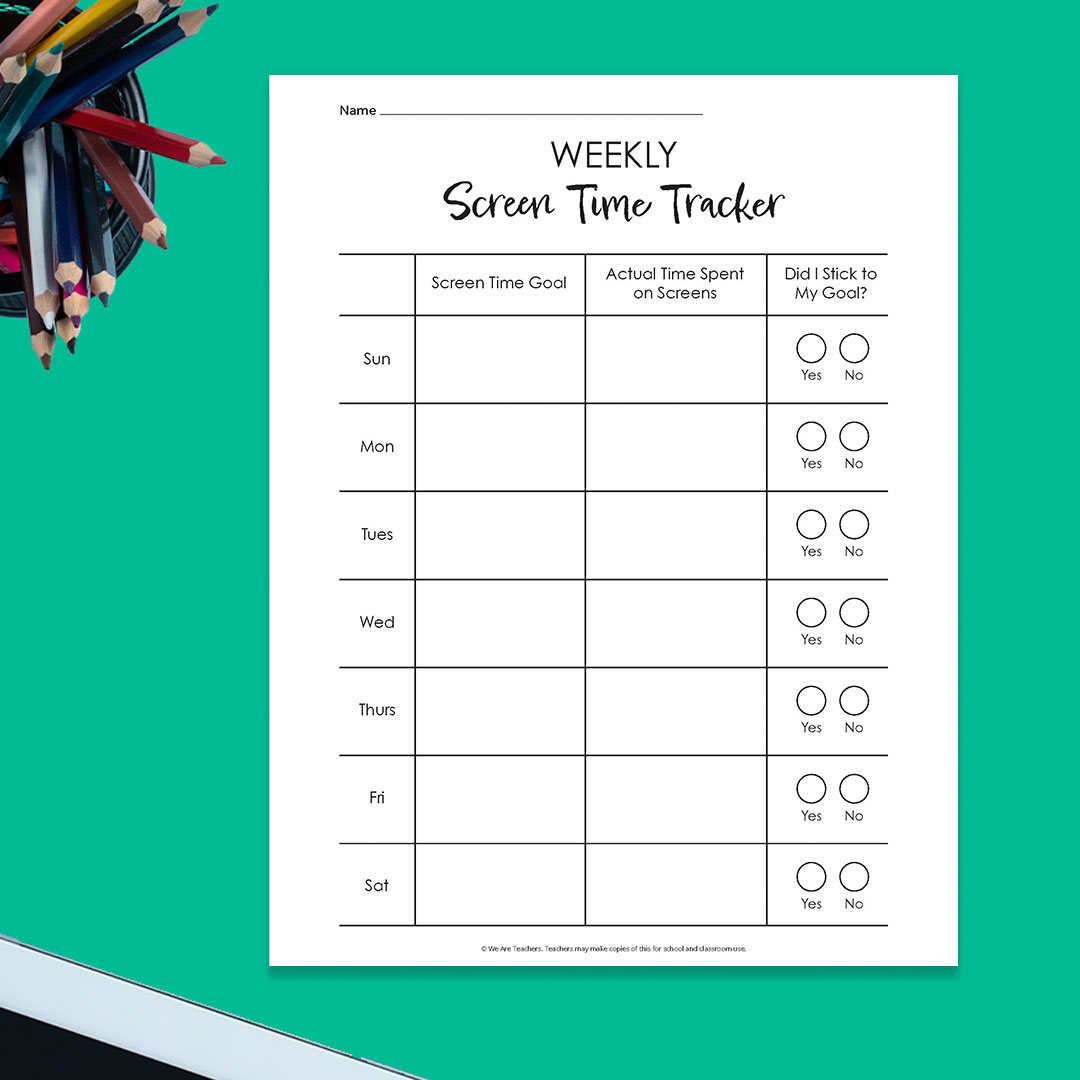
The “weekly screen time checklist for children” is a practical, printable resource designed primarily for elementary and middle school learners, with adaptable applications for high school students. This engaging worksheet serves as a foundational tool for reinforcing essential internet safety concepts, particularly those related to balanced digital habits and responsible online engagement. It provides a tangible, hands-on approach to building digital awareness, moving abstract ideas into concrete actions. Educators and parents consistently trust printable worksheets as effective instruments for fostering critical thinking and promoting healthy behaviors. The act of physically interacting with a checklist helps young individuals internalize lessons about screen time management, making the learning experience more impactful and memorable. Such resources are invaluable in guiding children toward developing mindful digital citizenship and establishing responsible online practices from an early age.
💡 Educational Key Takeaways:
- Core Skill: Structured Weekly Screen Time Checklist For Children focused on developing pencil grip, stroke control, and early literacy/math confidence.
- Target Scope: Suited for homeschoolers, preschool, kindergarten, and elementary learners.
- Best Recommendation: Practice 10–15 minutes daily with ergonomic writing tools to reinforce muscle memory without hand fatigue.
What This Worksheet Covers
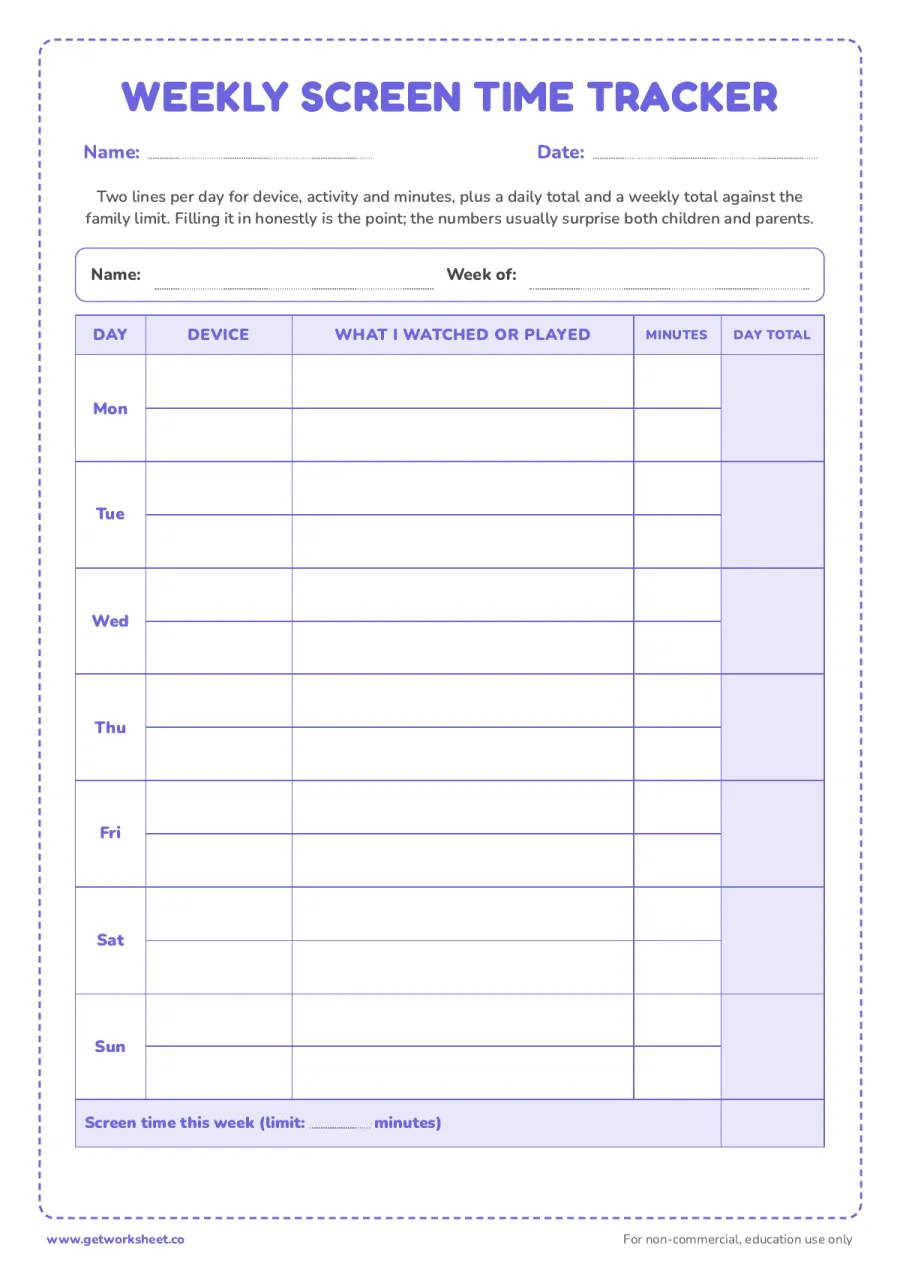
The “weekly screen time checklist for children” directly addresses the crucial internet safety topic of digital well-being and balanced screen usage. This resource focuses on helping children and young adults understand and monitor their own screen habits across various devices and activities. It covers concepts such as identifying different types of screen time (e.g., educational, creative, social, entertainment), recognizing healthy limits, and understanding the importance of offline activities. The checklist encourages self-assessment of daily and weekly screen engagement, prompting reflection on how screen time impacts sleep, physical activity, and social interactions. Its content aligns with recognized digital citizenship standards that emphasize media balance and self-regulation in the digital realm, providing a structured framework for developing responsible technology use. Related guide: Free Screen Time Balance Checklist For Kids.
Key Learning Outcomes
By engaging with the “weekly screen time checklist for children,” learners will develop several critical skills and knowledge areas:. Browse more guides on Safe Wired Schools.
- Enhanced self-awareness regarding personal screen time habits across different platforms and activities.
- Improved ability to set and track personal goals for balanced digital engagement and offline activities.
- Increased understanding of the positive and negative impacts of screen time on overall well-being, including sleep and physical health.
- Developed capacity for self-regulation and making conscious choices about digital consumption.
- Fostered communication skills through discussions about digital habits with parents or teachers.
How to Use This Worksheet
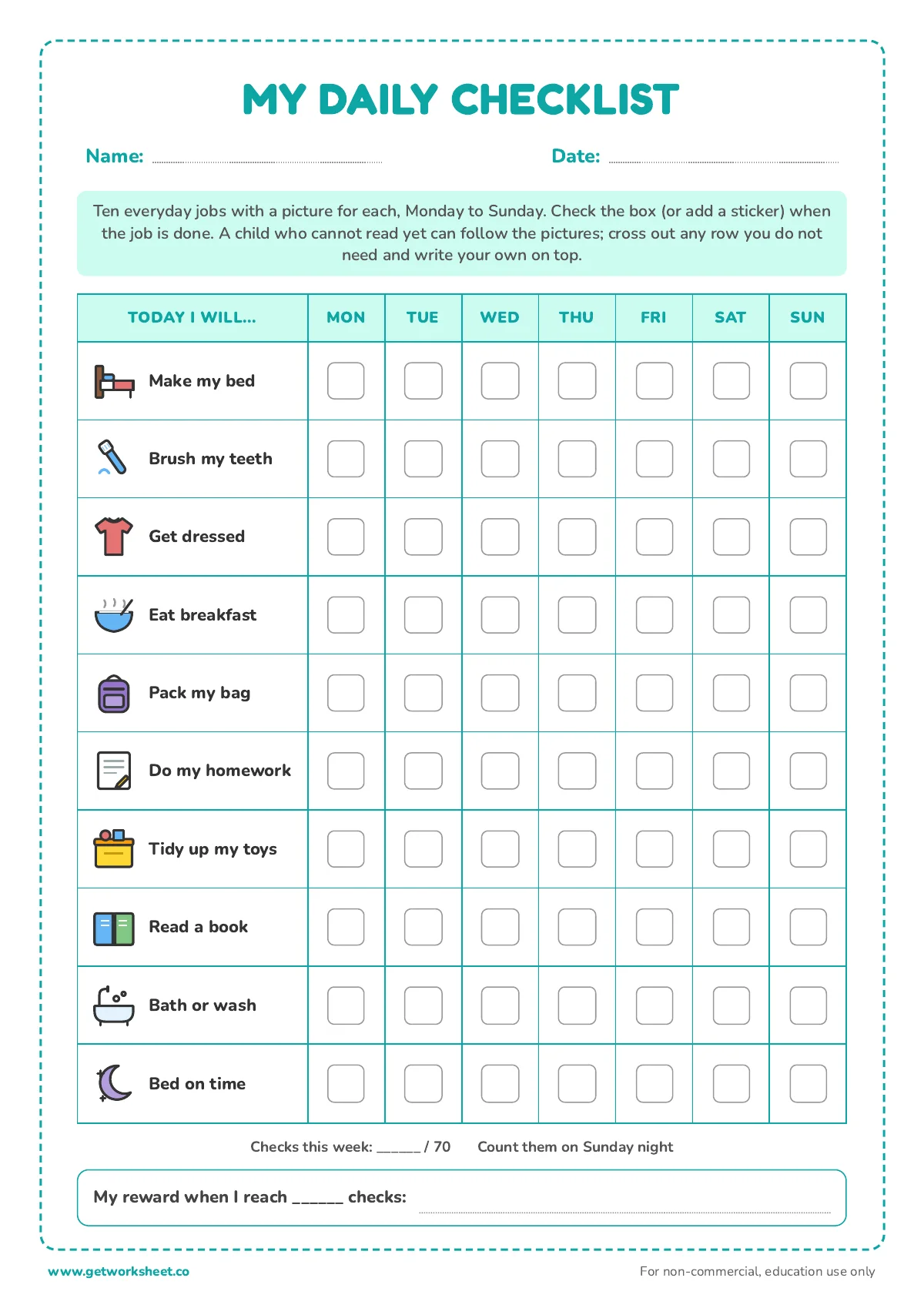
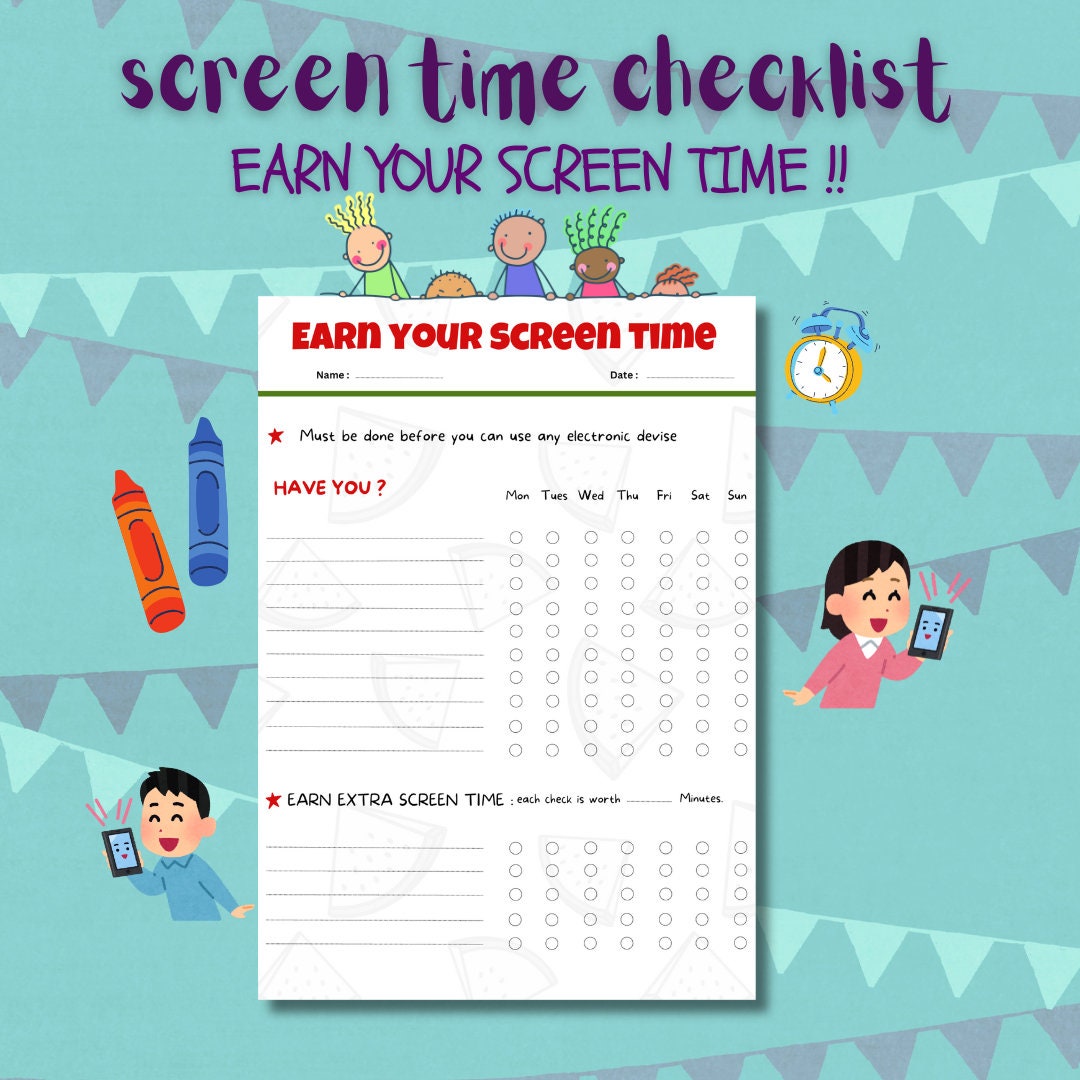
Educators and parents can effectively integrate the “weekly screen time checklist for children” into daily routines and lesson plans. The worksheet typically features a simple, intuitive format, allowing for easy tracking of screen time across specific categories or by device. Activities often include simple checkboxes for daily or weekly logging, alongside prompts for brief reflection or goal setting. Its difficulty level is designed to be accessible for elementary and middle schoolers, with clear instructions that scaffold learning progressively. This resource functions excellently as a standalone activity to initiate discussions about digital habits, can be incorporated as a recurring element within a broader digital citizenship curriculum, or assigned as a practical homework exercise to encourage consistent self-monitoring and accountability at home. The structured nature of the checklist promotes a routine of self-assessment, making screen time management a regular, rather than sporadic, consideration.
Practical Tips for Parents and Teachers
- Introduce with Purpose: Begin by explaining why tracking screen time is beneficial, focusing on health, balance, and other activities, rather than simply imposing rules. Frame it as a tool for personal empowerment.
- Model Healthy Habits: Adults demonstrating their own balanced screen use provides a powerful example. Discussing personal strategies for managing digital engagement reinforces the importance of the checklist’s principles.
- Regular Review and Discussion: Schedule a weekly check-in to review the completed checklist. Use this time for open, non-judgmental dialogue about patterns, challenges, and successes. Avoid punitive tones; instead, focus on problem-solving and encouragement.
- Connect to Real-World Activities: Encourage children to identify alternative activities they enjoy away from screens. Link successful screen time management to more time for hobbies, outdoor play, or family interactions, highlighting the positive trade-offs.
- Customize and Adapt: The checklist can be adapted to suit individual needs or family rules. Allow children some input in setting their own achievable goals, fostering a sense of ownership and increasing engagement with the process.
Age-Appropriate Recommendations
Effective implementation of the “weekly screen time checklist for children” requires tailoring the approach to suit developmental stages.
For Ages 6-10 (Elementary School), direct parental or teacher involvement is crucial. The checklist should be introduced as a simple tracking tool, focusing on basic awareness of time spent on screens. Vocabulary support may be needed to explain terms like “educational screen time” or “creative apps.” Activity pacing should be brief, perhaps a quick daily check-in, leading to a weekly review. The emphasis remains on developing initial awareness and establishing a routine of observation rather than strict self-management. Discussion should center on what other fun activities children engaged in away from screens.
For Ages 11-14 (Middle School), the checklist can transition towards fostering greater independence and self-reflection. Learners at this stage are capable of setting their own screen time goals and reflecting on the impact of their digital choices. The approach should encourage critical thinking about how screen time affects sleep, homework, and social interactions. Pacing can involve a more independent daily logging with a more in-depth weekly discussion. Parental or teacher involvement shifts from direct supervision to guidance and mentorship, helping children analyze their patterns and adjust their goals autonomously. This age group benefits from understanding the “why” behind balanced usage.
For Ages 15-18 (High School), the “weekly screen time checklist for children” serves as a sophisticated tool for advanced self-monitoring and digital wellness. High school students can use the checklist to analyze complex patterns of digital consumption, including the impact of social media and online gaming on mental health, productivity, and future aspirations. The approach should be entirely student-led, with the checklist acting as a personal data collection instrument for informed decision-making. Discussions can explore long-term habit formation, digital detox strategies, and the integration of screen time management into overall well-being. Teacher or parent involvement becomes a resource for support and deeper philosophical conversations about digital citizenship and responsible autonomy.
Frequently Asked Questions
Q: How often should the “weekly screen time checklist for children” be used?
A: The checklist is designed for weekly use, encouraging consistent tracking and reflection on digital habits. Regular engagement helps build routine and makes screen time management a natural part of a child’s week.
Q: What if a child struggles to meet their screen time goals?
A: Struggles are opportunities for learning. The checklist’s purpose is not punishment but self-awareness and goal-setting. Use unmet goals as discussion points to understand challenges, adjust expectations, and collaboratively develop new strategies for balance.
Q: Where can this free printable “weekly screen time checklist for children” be downloaded?
A: This valuable resource, along with many other internet safety materials, is available for free download directly from the SafeWiredSchools.org website. Simply navigate to the resources section to access and print it.
Explore More Free Printable Worksheets
The “weekly screen time checklist for children” offers a powerful step towards fostering responsible digital habits, yet its impact is significantly amplified when integrated into a consistent digital safety learning routine. A single worksheet functions best as part of a comprehensive collection of printable resources that address the multifaceted aspects of internet safety. Educators and parents are encouraged to explore a full collection of free printable internet safety worksheets, activity sheets, checklists, quizzes, and more at SafeWiredSchools.org Worksheets. This extensive library covers every essential internet safety topic and is meticulously designed for every grade level and diverse learning environments, ensuring a holistic approach to digital citizenship education.
Developmental Milestone & Activity Table
| Development Stage | Recommended Daily Duration | Primary Learning Objective |
|---|---|---|
| Preschool & Pre-K | 10 – 15 Minutes | Pencil grip development & basic pre-stroke lines |
| Kindergarten | 15 – 20 Minutes | Letter/number formation & spatial line awareness |
| Early Elementary (Grade 1–2) | 20 – 30 Minutes | Fluency, sentence construction & neatness |
Images References