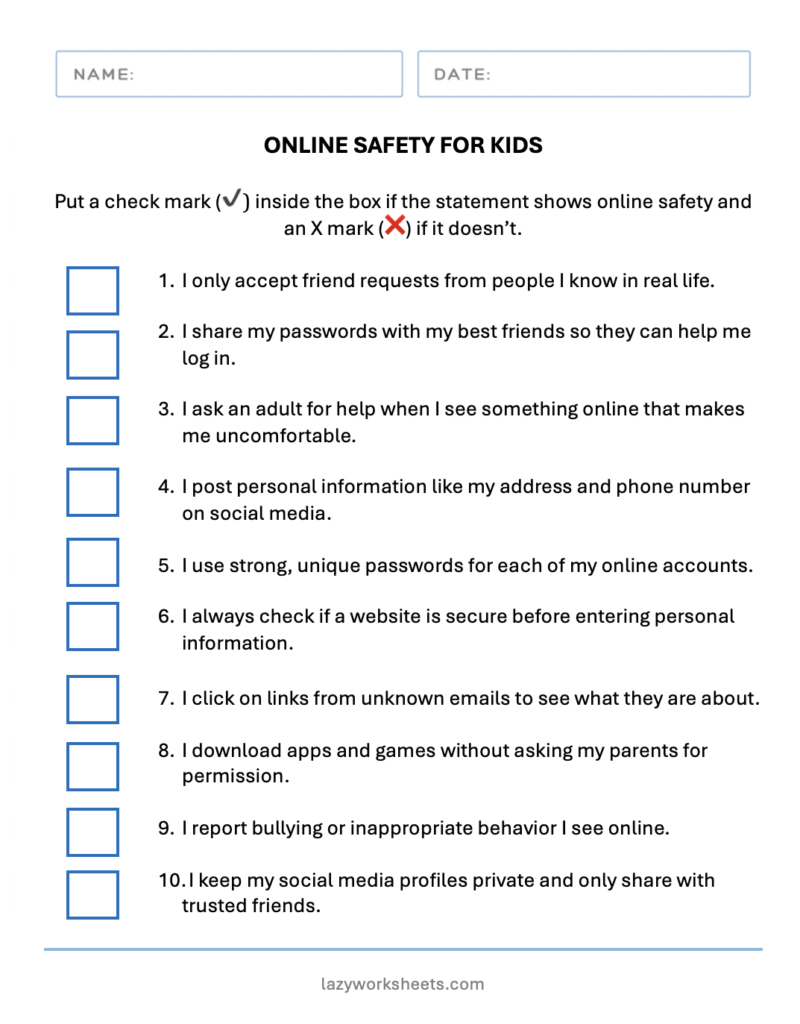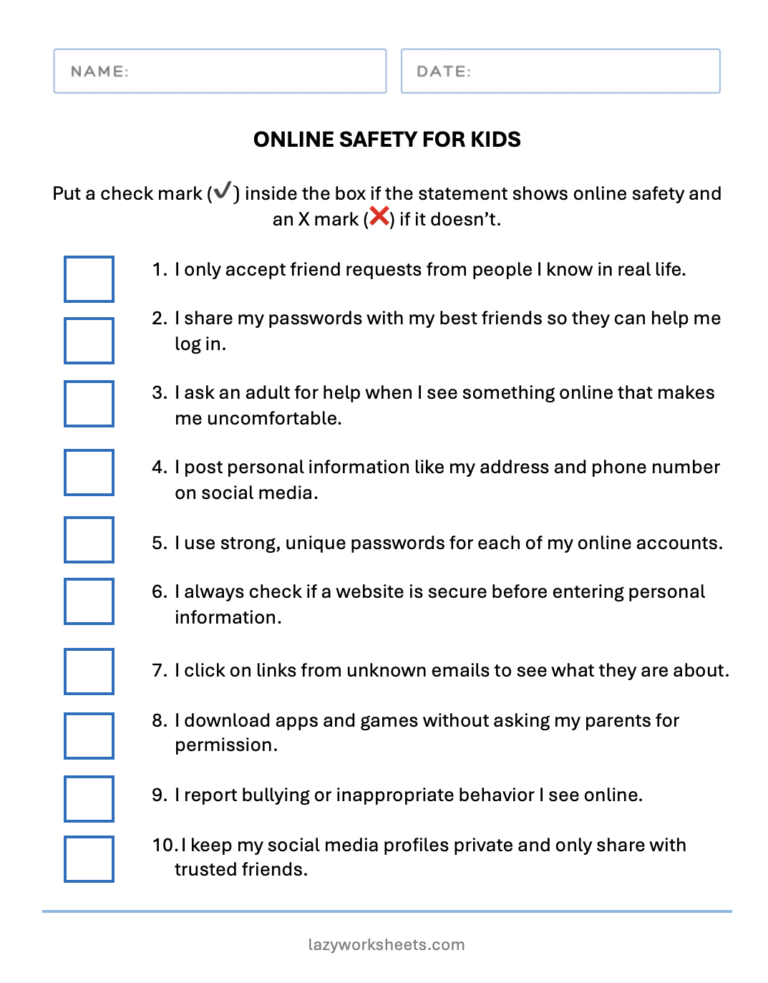
Introduction
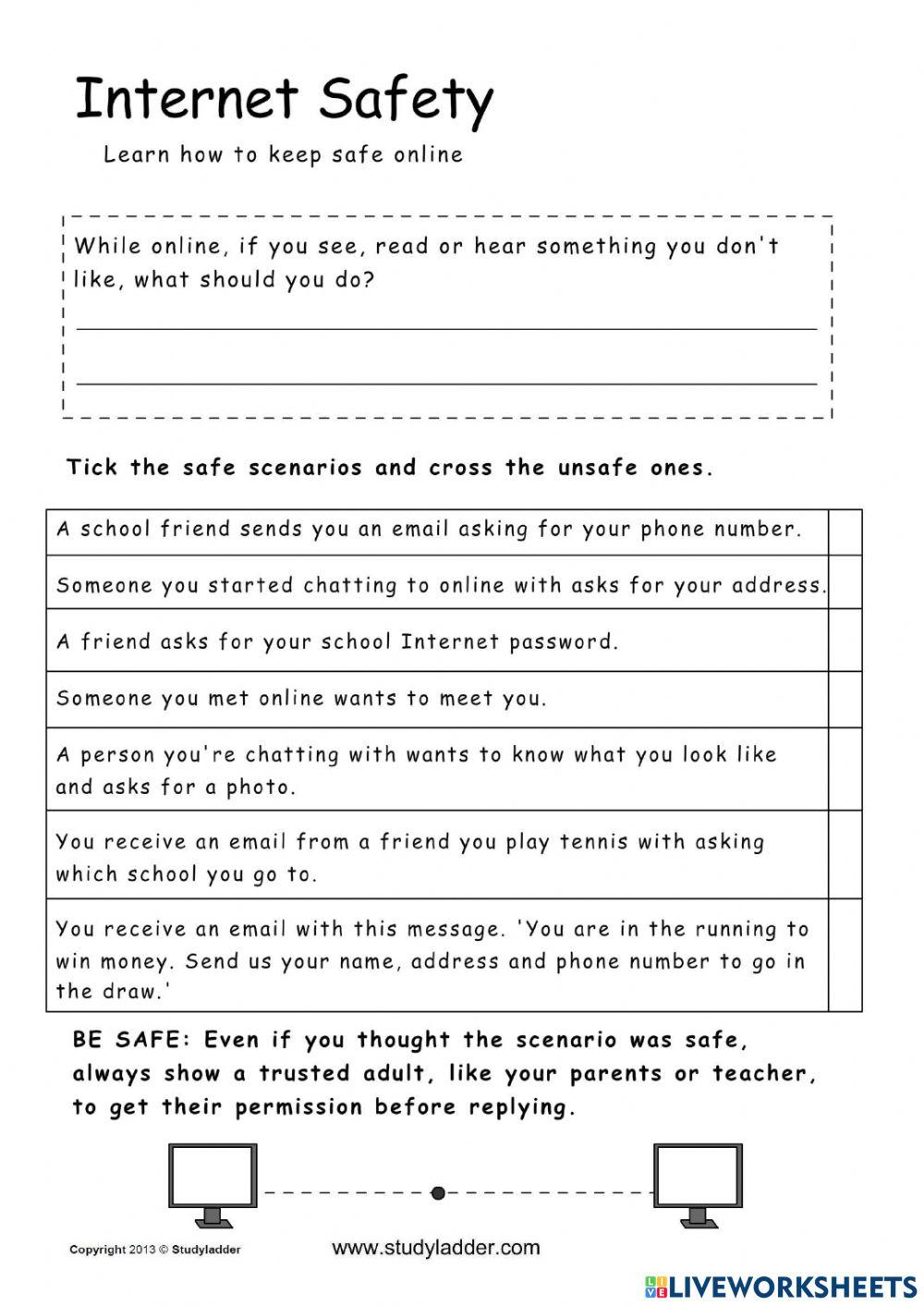
The “internet safety quiz for grade 3” represents a vital educational tool specifically designed for elementary learners. This resource targets students in the third grade, typically aged 8 to 9 years old, within the broader Elementary (grades 15) educational level. Its purpose involves reinforcing fundamental internet safety concepts through an engaging, hands-on, and printable format. Printable learning materials, such as this quiz, consistently serve as trusted instruments for educators and parents. They effectively build digital awareness and cultivate responsible online behaviors in young individuals. The tangible nature of a printed quiz allows for focused engagement, minimizing distractions often associated with screen-based activities. Such resources empower children to internalize critical safety rules, fostering a secure and knowledgeable approach to the digital world from an early age. This approach is fundamental for developing resilient digital citizens. Explore more in our Worksheets category.
💡 Educational Key Takeaways:
- Core Skill: Structured Internet Safety Quiz For Grade 3 focused on developing pencil grip, stroke control, and early literacy/math confidence.
- Target Scope: Suited for homeschoolers, preschool, kindergarten, and elementary learners.
- Best Recommendation: Practice 10–15 minutes daily with ergonomic writing tools to reinforce muscle memory without hand fatigue.
What This Worksheet Covers
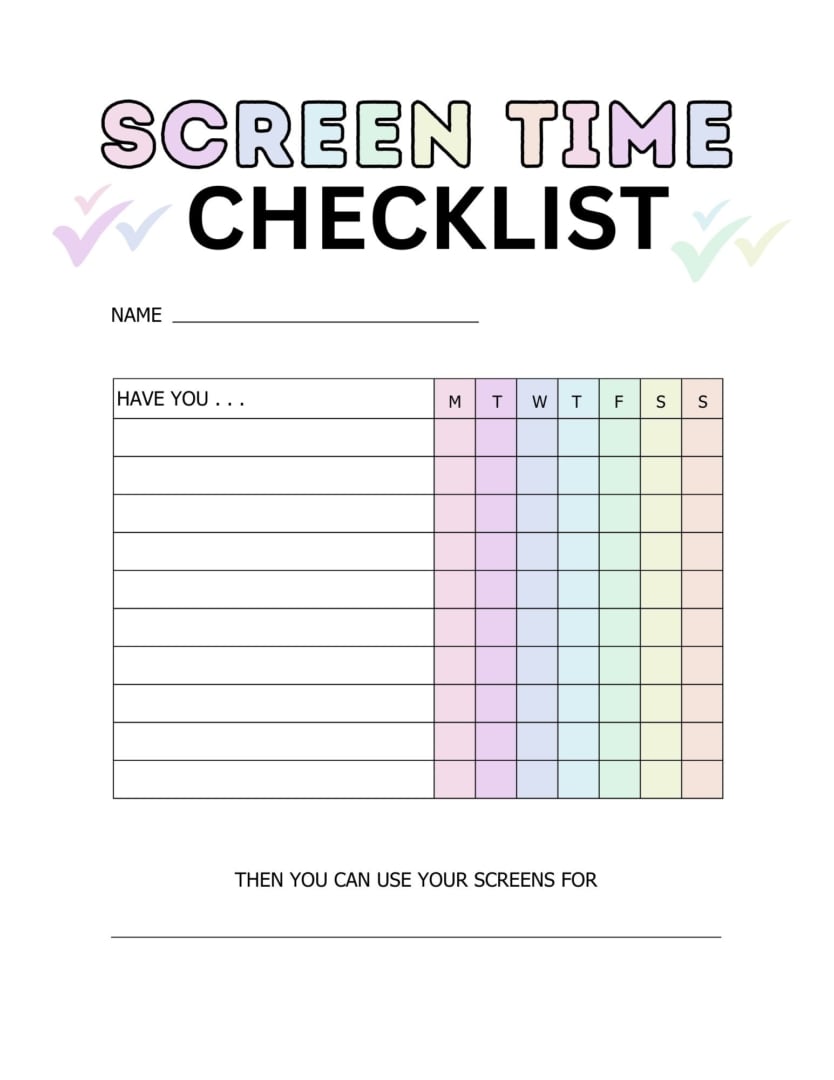
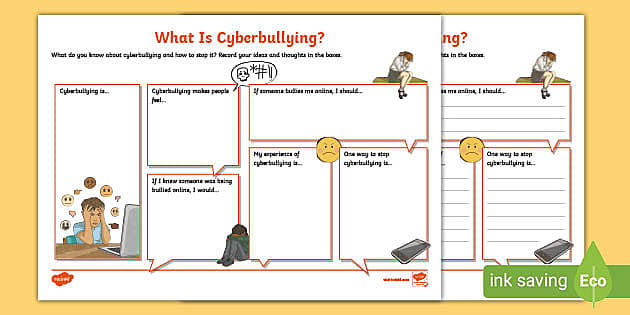
The “internet safety quiz for grade 3” addresses several core internet safety topics pertinent to young elementary students. Content encompasses the crucial understanding of personal informationwhat it is and why it must be kept private. It delves into the concept of online strangers, teaching children how to identify potentially unsafe interactions and the importance of never meeting someone encountered online without adult supervision. Basic principles of cyberbullying are introduced, focusing on kind online communication and how to respond if unkind messages are received. Furthermore, the quiz promotes awareness of healthy screen time habits and the identification of trusted adults who can provide help with online concerns. This worksheet‘s content directly aligns with foundational digital citizenship and child online safety education standards, emphasizing safety, respect, and responsibility in digital environments. Clear scenarios and straightforward questions make complex topics accessible for third graders.
Key Learning Outcomes
By completing the “internet safety quiz for grade 3,” students develop several important skills and knowledge areas:
- Identification of personal information that should never be shared online, such as full names, addresses, or phone numbers.
- Understanding the difference between safe and potentially unsafe online interactions, including recognizing red flags from online strangers.
- Ability to identify trusted adults (parents, teachers, guardians) as primary sources of help for online issues or concerns.
- Development of basic awareness regarding responsible and respectful online communication practices.
- Grasping the importance of asking for permission before downloading files or visiting new websites.
How to Use This Worksheet
The “internet safety quiz for grade 3” offers versatile application for both classroom educators and home-based parents. Its format typically includes a mix of activity types, such as multiple-choice questions, true/false statements, and simple matching exercises. Some versions may feature short scenario-based questions requiring a simple “yes” or “no” answer, or even a drawing prompt to illustrate a safety rule. The difficulty level is carefully calibrated for 8-9 year olds, utilizing clear, age-appropriate language and direct instructions. Learning is scaffolded progressively, moving from simple recall to basic application of safety principles. This worksheet functions effectively as a standalone activity to assess prior knowledge or reinforce recently taught lessons. It also integrates seamlessly into a broader digital safety lesson plan, serving as an engaging review or an introductory discussion starter. Assigning it as homework encourages family discussion about online safety, extending learning beyond the classroom. Browse more guides on Safe Wired Schools.
Practical Tips for Parents and Teachers
- Review instructions collaboratively before students begin the quiz. This ensures understanding and addresses any initial questions.
- Facilitate a group discussion or individual conversation after the quiz’s completion. Explore why certain answers are correct, deepening comprehension.
- Connect quiz concepts to real-life online experiences. Discuss examples of safe online behavior encountered by the child or observed in daily life.
- Create a positive and non-judgmental learning environment. Encourage open dialogue about mistakes as opportunities for learning, rather than focusing on perfect scores.
- Extend the learning beyond the worksheet through role-playing scenarios or creating a family internet safety pledge, solidifying the importance of the concepts.
Age-Appropriate Recommendations
For Grade 3 learners (typically ages 8-9), the “internet safety quiz for grade 3” is ideally suited for direct engagement. Vocabulary support should be minimal but available for specific terms like “personal information” or “cyberbullying,” which might be new. The activity pacing can be moderately fast, allowing students to complete the quiz within 15-20 minutes, followed by a discussion. Parental or teacher involvement primarily involves introducing the quiz, offering clarification, and facilitating post-quiz discussion. For slightly younger students, such as Grade 2 (ages 7-8), the quiz can be used with increased adult guidance, perhaps reading questions aloud and explaining concepts more thoroughly. For Grade 4 students (ages 9-10), the quiz serves as an excellent quick review or a springboard for more in-depth discussions on digital footprints or critical thinking about online content. The foundational knowledge reinforced by this quiz remains relevant across elementary grades.
Frequently Asked Questions
Q: What internet safety topics does this quiz cover?
A: The “internet safety quiz for grade 3” covers essential topics including personal information privacy, identifying online strangers, basic cyberbullying awareness, and recognizing trusted adults for help with online concerns. It focuses on foundational concepts for young learners.
Q: How can this quiz be downloaded or accessed?
A: This quiz is available as a free printable resource on the SafeWiredSchools.org website. Navigate to the “Worksheets” section, locate the “internet safety quiz for grade 3,” and click the download button for an instant PDF file ready for printing.
Q: Is this quiz suitable for homeschooling environments?
A: Yes, the “internet safety quiz for grade 3” is highly suitable for homeschooling. Its clear instructions and focused content make it an excellent tool for parents to introduce and reinforce vital online safety lessons in a structured home learning setting.
Explore More Free Printable Worksheets
A single worksheet functions best as part of a consistent and comprehensive digital safety learning routine. While the “internet safety quiz for grade 3” provides an excellent resource, true mastery of online safety requires ongoing reinforcement and exposure to diverse learning materials. Educators and parents are encouraged to explore a full collection of free printable internet safety worksheets, activity sheets, checklists, quizzes, and more at SafeWiredSchools.org Worksheets. These resources cover every internet safety topic imaginable and are specifically designed for every grade level and learning environment, ensuring a robust and continuous learning journey for all children.
Developmental Milestone & Activity Table
| Development Stage | Recommended Daily Duration | Primary Learning Objective |
|---|---|---|
| Preschool & Pre-K | 10 – 15 Minutes | Pencil grip development & basic pre-stroke lines |
| Kindergarten | 15 – 20 Minutes | Letter/number formation & spatial line awareness |
| Early Elementary (Grade 1–2) | 20 – 30 Minutes | Fluency, sentence construction & neatness |
Images References