Introduction
The “healthy screen time checklist for students” serves as a foundational educational tool, primarily designed for Elementary grades 15 and Middle School grades 68, though adaptable for older learners. This printable resource addresses the critical need for balanced digital engagement, reinforcing essential internet safety concepts through a practical, hands-on learning experience. Educators and parents consistently trust printable worksheets for their tangible nature and proven efficacy in building digital awareness and fostering responsible online behavior. These resources offer a structured approach to complex topics, allowing for repeated engagement and direct application of learned principles. A physical checklist empowers students to actively participate in understanding and managing their digital habits, translating abstract concepts into actionable steps within their daily routines.
💡 Educational Key Takeaways:
- Core Skill: Structured Healthy Screen Time Checklist For Students focused on developing pencil grip, stroke control, and early literacy/math confidence.
- Target Scope: Suited for homeschoolers, preschool, kindergarten, and elementary learners.
- Best Recommendation: Practice 10–15 minutes daily with ergonomic writing tools to reinforce muscle memory without hand fatigue.
What This Worksheet Covers
This “healthy screen time checklist for students” specifically targets the development of balanced digital habits and the promotion of overall digital wellness. The worksheet covers fundamental concepts such as identifying appropriate screen usage, recognizing the importance of regular breaks, and exploring alternative non-screen activities. It guides students through scenarios that encourage self-reflection on their current screen habits and prompts them to consider the impact of excessive screen time on their physical and mental well-being. The content directly connects to established digital citizenship and child safety education standards, which emphasize responsible media consumption, self-regulation, and the cultivation of a healthy relationship with technology. The language employed is authoritative yet accessible, ensuring comprehension across the intended age groups while maintaining educational rigor.
Key Learning Outcomes
Completing this checklist facilitates several crucial developmental and educational milestones for students:
- Students will identify and differentiate between healthy and unhealthy screen time habits.
- Students will understand the significance of balancing digital activities with physical play, social interaction, and academic responsibilities.
- Students will develop personal strategies for establishing and adhering to reasonable screen time boundaries.
- Students will recognize potential impacts of prolonged screen use on their sleep, mood, and concentration.
- Students will learn to communicate effectively with family members or teachers about their screen time needs and rules.
How to Use This Worksheet
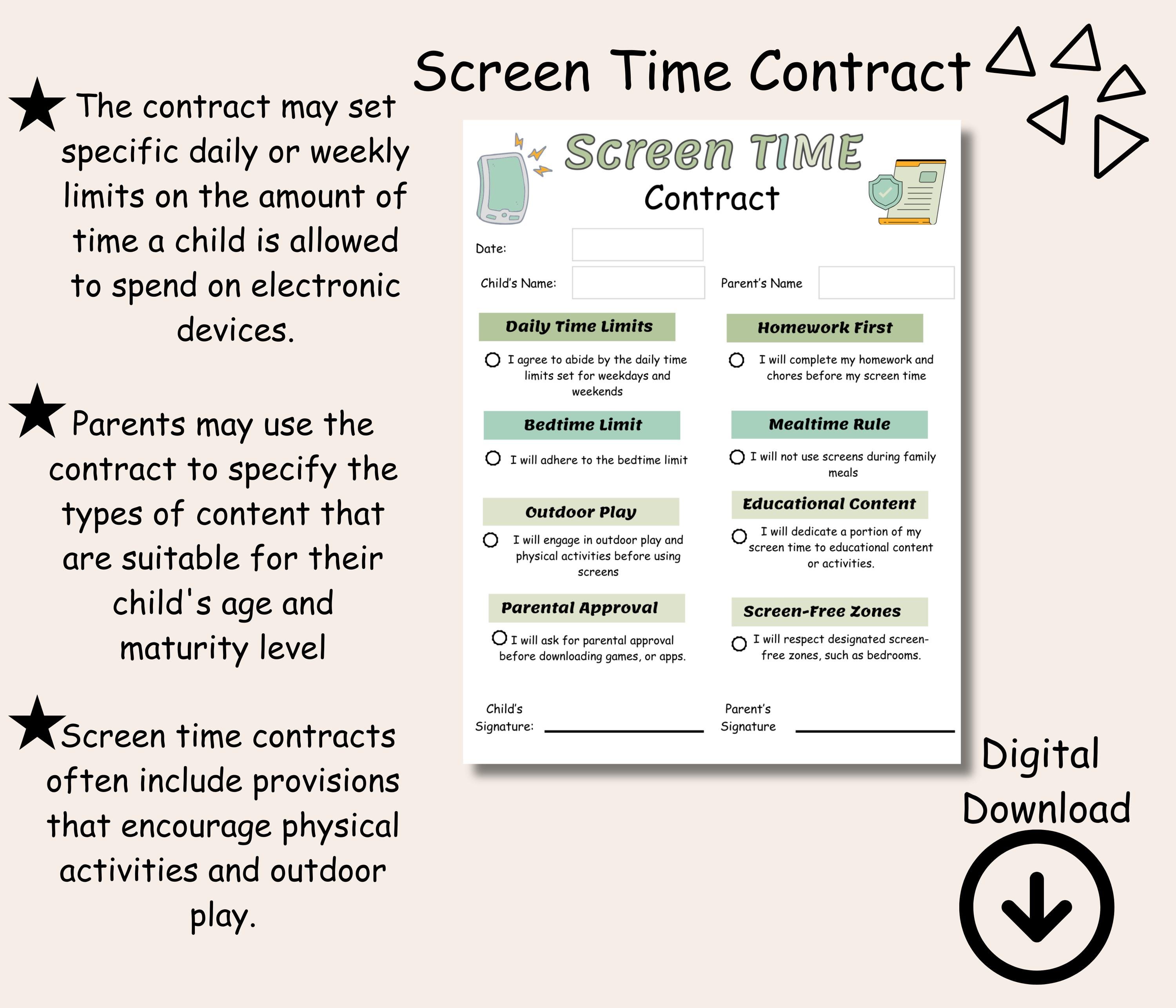
Educators can seamlessly integrate the “healthy screen time checklist for students” into classroom lessons on digital citizenship, health education, or media literacy. Parents will find it invaluable as a discussion starter and a practical tool for guiding home-based screen time rules. The worksheet typically features a straightforward checklist format, presenting clear statements or questions for students to review and mark. Some sections may include simple reflection prompts or opportunities to list preferred non-screen activities, encouraging deeper engagement. Instructions scaffold learning progressively, beginning with basic recognition and moving towards personal application. This resource functions effectively as a standalone activity, a supplementary component within a broader lesson plan, or as a thoughtful homework assignment designed to foster family discussions around digital wellness. Browse more guides on Safe Wired Schools.
Practical Tips for Parents and Teachers
- Review and Discuss Beforehand: Take time to review the checklist with students or children prior to completion, discussing each point to ensure understanding and set expectations for thoughtful engagement.
- Encourage Honest Self-Assessment: Create a supportive environment where students feel comfortable honestly evaluating their screen habits without judgment, emphasizing the goal of self-improvement rather than perfection.
- Facilitate Post-Completion Dialogue: After the checklist is completed, initiate a guided discussion using prompts such as, “Which items on the checklist are easiest for you to follow?” or “What challenges do you anticipate when trying to implement these healthy habits?”
- Extend Learning with Action Plans: Encourage the creation of a personalized or family screen time action plan based on the checklist. This could involve setting specific goals, identifying reward systems for achieving balanced use, or scheduling dedicated “unplugged” times.
- Connect to Real-World Scenarios: Discuss how the principles learned from the checklist apply to various real-world situations, such as managing screen time during holidays, balancing gaming with homework, or choosing appropriate content.
Age-Appropriate Recommendations
Effective implementation of the “healthy screen time checklist for students” requires tailoring the approach to different developmental stages, ensuring maximum impact and comprehension.
For Ages 5-8 (Early Elementary), the focus should remain on foundational concepts and visual reinforcement. Teachers and parents should guide children through each item on the checklist, simplifying vocabulary and providing concrete examples. Emphasis should be placed on basic rules like “take breaks every 20 minutes” or “play outside before screen time.” High levels of direct involvement are crucial, with adults often reading questions aloud and helping children interpret the meaning. The activity pacing should be slow, allowing ample time for discussion and clarification.
For Ages 9-12 (Late Elementary/Early Middle School), students possess a greater capacity for self-reflection and understanding consequences. The checklist can be used with moderate guidance, encouraging independent thought. Discussions can delve into the “why” behind healthy screen habits, exploring topics such as the impact on friendships, sleep patterns, and academic performance. Vocabulary support may still be beneficial for certain terms, but students should be encouraged to articulate their own understanding and propose solutions for common screen time challenges. This age group benefits from setting personal goals and discussing peer influences.
For Ages 13-18 (Middle/High School), the checklist serves as a springboard for discussions on self-regulation, digital well-being, and personal responsibility. The approach shifts from direct instruction to facilitated dialogue, allowing students to critically analyze their own digital lives. Topics can include the effects of screen time on mental health, academic focus, social media use, and future aspirations. Less direct adult involvement is needed, with the primary role being to provide resources, encourage critical thinking, and support students in advocating for their own healthy digital habits. This age group can also explore strategies for managing digital distractions and maintaining a healthy online-offline balance.
Frequently Asked Questions
Q: What age group is this healthy screen time checklist best suited for? A: This checklist is primarily designed for students in Elementary (grades 1-5) and Middle School (grades 6-8), with adaptable sections making it suitable for older students up to age 18. Its versatility allows for various levels of guidance depending on the learner’s age and digital literacy.
Q: How can this checklist be integrated into an existing curriculum? A: The checklist effectively supports lessons in digital citizenship, health education, media literacy, and even general well-being classes. It can serve as a pre-assessment tool, a core activity during a lesson on balanced technology use, or a reflective homework assignment that encourages family discussion.
Q: Where can this free printable healthy screen time checklist be downloaded? A: This valuable resource is available for immediate download directly from the SafeWiredSchools.org website. Navigate to the “Worksheets” section, locate the “healthy screen time checklist for students,” and print it for use in your classroom or home.
Explore More Free Printable Worksheets
A single resource, no matter how impactful, functions best as part of a comprehensive and consistent learning routine. The “healthy screen time checklist for students” is a powerful tool, yet its value multiplies when integrated into a broader collection of digital safety resources. Educators and parents are invited to explore a full collection of free printable internet safety worksheets, activity sheets, checklists, quizzes, and more at SafeWiredSchools.org Worksheets. This extensive library covers every critical internet safety topic and is meticulously designed for every grade level and learning environment, ensuring continuous engagement and robust digital literacy development for all students.
Developmental Milestone & Activity Table
| Development Stage | Recommended Daily Duration | Primary Learning Objective |
|---|---|---|
| Preschool & Pre-K | 10 – 15 Minutes | Pencil grip development & basic pre-stroke lines |
| Kindergarten | 15 – 20 Minutes | Letter/number formation & spatial line awareness |
| Early Elementary (Grade 1–2) | 20 – 30 Minutes | Fluency, sentence construction & neatness |