Introduction
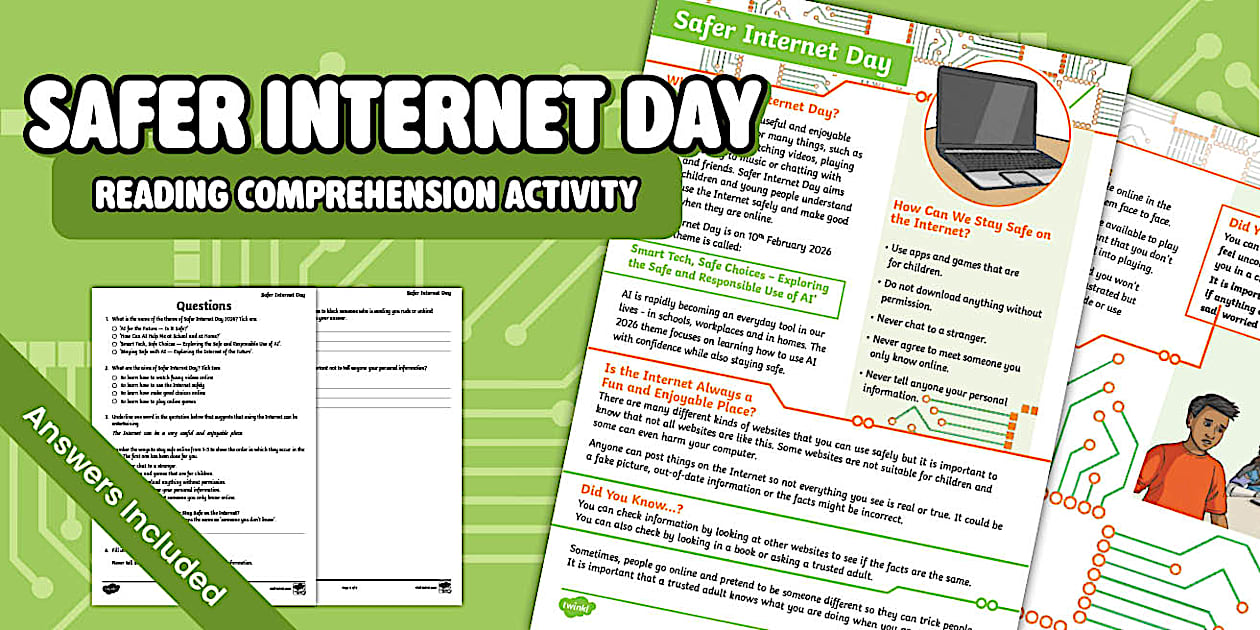
The “free printable online safety worksheet for kids” serves as an invaluable educational resource primarily designed for Elementary grades (1-5), though its foundational concepts are adaptable for both younger and slightly older learners. This tangible tool reinforces critical internet safety principles through engaging, hands-on learning activities. In an increasingly digital world, equipping young individuals with the knowledge and skills for responsible online behavior is paramount. Printable worksheets remain trusted pedagogical instruments, offering a unique blend of direct instruction and interactive application. They provide a structured yet flexible framework for parents and educators to introduce complex digital concepts in an accessible format, fostering early awareness and encouraging thoughtful engagement with technology. The physical act of writing, drawing, and problem-solving on a worksheet aids in deeper retention and understanding, laying a solid groundwork for lifelong digital citizenship.
💡 Educational Key Takeaways:
- Core Skill: Structured Free Printable Online Safety Worksheet For Kids focused on developing pencil grip, stroke control, and early literacy/math confidence.
- Target Scope: Suited for homeschoolers, preschool, kindergarten, and elementary learners.
- Best Recommendation: Practice 10–15 minutes daily with ergonomic writing tools to reinforce muscle memory without hand fatigue.
What This Worksheet Covers
The “free printable online safety worksheet for kids” comprehensively addresses fundamental internet safety topics crucial for young users. It covers concepts such as the importance of keeping personal information private, understanding who to trust online, recognizing potential dangers like suspicious links or messages, and the significance of asking a trusted adult for help. Scenarios are presented to help children differentiate between safe and unsafe online interactions, emphasizing the “Stop, Think, Act” approach to digital dilemmas. The content directly aligns with recognized digital citizenship education standards, focusing on core areas like personal privacy, online communication etiquette, identifying cyberbullying, and responsible content consumption. The worksheet promotes critical thinking about online content and interactions, moving beyond simple rules to instill a deeper understanding of digital well-being.
Key Learning Outcomes
Upon completing the “free printable online safety worksheet for kids,” children will develop several essential skills and knowledge areas:. Browse more guides on Safe Wired Schools.
- Recognizing Personal Information: Children learn to identify what constitutes personal information and understand why it should not be shared with strangers online.
- Identifying Trusted Adults: The worksheet reinforces the importance of seeking help from parents, teachers, or other designated trusted adults when encountering uncomfortable or confusing online situations.
- Practicing Safe Online Sharing: Learners grasp the concept of obtaining permission before sharing photos or information about others, fostering respect for digital privacy.
- Distinguishing Safe from Unsafe Content: Students develop an elementary ability to question suspicious links, messages, or requests, promoting cautious online exploration.
- Understanding Online Boundaries: The resource helps establish basic boundaries for online interactions, preparing children to navigate digital spaces more responsibly.
How to Use This Worksheet
The “free printable online safety worksheet for kids” is designed for versatile use in various learning environments. Its format typically includes a mix of engaging activity types, such as fill-in-the-blank questions, matching exercises, true or false statements, simple drawing prompts related to online safety rules, and scenario-based problem-solving. The difficulty level is appropriate for elementary school-aged children, with instructions that progressively scaffold learning. Each section builds upon previous concepts, ensuring a gentle introduction to potentially complex topics. This worksheet functions effectively as a standalone activity to introduce or review specific safety rules, as an integrated component within a broader digital citizenship lesson plan, or as a thoughtful homework assignment to extend learning beyond the classroom. Its adaptability allows for seamless integration into existing educational routines.
Practical Tips for Parents and Teachers
- Prepare the Environment: Ensure a calm, focused setting free from distractions. Print the worksheet clearly and have appropriate writing tools available for the child.
- Facilitate Discussion: Do not simply hand over the worksheet. Introduce the topic with a brief, age-appropriate conversation about why online safety is important before the child begins working.
- Engage During Completion: Remain available to answer questions and provide clarification. Encourage the child to verbalize their thoughts and reasoning behind their answers.
- Debrief and Reflect: After completion, review the answers together. Use this as an opportunity for a deeper discussion, asking open-ended questions like, “Why is this rule important?” or “What would you do if this happened to you?”
- Extend the Learning: Connect the worksheet concepts to real-world scenarios. Discuss family rules for screen time, explore safe websites together, or role-play situations depicted in the worksheet to reinforce positive behaviors.
Age-Appropriate Recommendations
Implementing the “free printable online safety worksheet for kids” effectively requires consideration of the child’s developmental stage. While primarily aimed at elementary learners, its core principles can be adapted for different age groups.
For Ages 5-7 (Early Elementary), a highly interactive approach is recommended. Provide extensive vocabulary support, explaining terms like “personal information” or “stranger” in simple, concrete language. Activities should be paced slowly, allowing ample time for discussion and clarification. Parental or teacher involvement should be significant, guiding the child through each question, reading prompts aloud, and helping interpret scenarios. Drawing activities can be particularly engaging for this age band, allowing creative expression alongside learning.
For Ages 8-11 (Upper Elementary), children can work more independently but still benefit from guidance. Vocabulary support can be more targeted towards specific digital terms. The worksheet can be used as a springboard for group discussions in a classroom setting or for more independent reflection at home. Activity pacing can be quicker, with a focus on understanding the “why” behind safety rules. Parental or teacher involvement transitions from direct instruction to facilitation and deeper questioning, encouraging critical thinking about consequences and choices.
For Ages 12-14 (Early Middle School), the worksheet can serve as a foundational review or a starting point for more complex discussions. While the content might seem basic, it reinforces essential principles before tackling more advanced topics like digital footprints, online reputation, and nuanced cyberbullying situations. The approach should focus on applying these foundational rules to their increasingly complex online interactions. Vocabulary is generally understood, but discussions can delve into the practical implications of safety rules within their social media use or gaming environments. Teacher or parent involvement would focus on connecting these foundational concepts to their evolving digital lives, prompting them to consider how these rules scale up to their experiences.
Frequently Asked Questions
Q: How can one access the “free printable online safety worksheet for kids”?
A: The worksheet is available for instant download directly from the SafeWiredSchools.org website. Navigate to the “Worksheets” section, locate the resource, and click the download button to save it as a PDF file.
Q: Is this worksheet suitable for group activities in a classroom?
A: Yes, the “free printable online safety worksheet for kids” is ideal for classroom use. It can facilitate group discussions, serve as an individual activity, or be used for partner work, promoting collaborative learning about digital safety.
Q: What if a child struggles with some of the concepts on the worksheet?
A: If a child struggles, break down the concepts into smaller, more manageable parts. Use real-life analogies, provide additional examples, and offer verbal support to help clarify understanding before attempting to complete the activity on the worksheet.
Explore More Free Printable Worksheets
A single resource, however valuable, works best when integrated into a consistent digital safety learning routine. The “free printable online safety worksheet for kids” represents just one component of a comprehensive approach to digital literacy. Educators and parents are encouraged to explore a full collection of free printable internet safety worksheets, activity sheets, checklists, quizzes, and more at SafeWiredSchools.org Worksheets. This extensive library covers every essential internet safety topic and is meticulously designed for every grade level and learning environment, ensuring continuous and age-appropriate education in the critical domain of online safety.
Developmental Milestone & Activity Table
| Development Stage | Recommended Daily Duration | Primary Learning Objective |
|---|---|---|
| Preschool & Pre-K | 10 – 15 Minutes | Pencil grip development & basic pre-stroke lines |
| Kindergarten | 15 – 20 Minutes | Letter/number formation & spatial line awareness |
| Early Elementary (Grade 1–2) | 20 – 30 Minutes | Fluency, sentence construction & neatness |