Introduction
Five-year-olds navigate digital environments long before they master reading. They tap icons on shared family tablets, join video calls with relatives, and explore interactive learning apps. Modern children meet online risks through shared household devices, in-game chat features on casual entertainment platforms, and autoplay video recommendations. Introducing digital citizenship early transforms technology from an abstract mystery into a manageable everyday space. Free printable online safety kindergarten worksheets available through educational resources offer a tangible entry point. These materials do not replace parental supervision or filtering tools, but they lay the cognitive groundwork for critical thinking. Education functions best when it feels approachable rather than alarming, focusing on skill development instead of fear.
💡 Educational Key Takeaways:
- Core Skill: Structured Online Safety Kindergarten Worksheets focused on developing pencil grip, stroke control, and early literacy/math confidence.
- Target Scope: Suited for homeschoolers, preschool, kindergarten, and elementary learners.
- Best Recommendation: Practice 10–15 minutes daily with ergonomic writing tools to reinforce muscle memory without hand fatigue.
What This Printable Covers
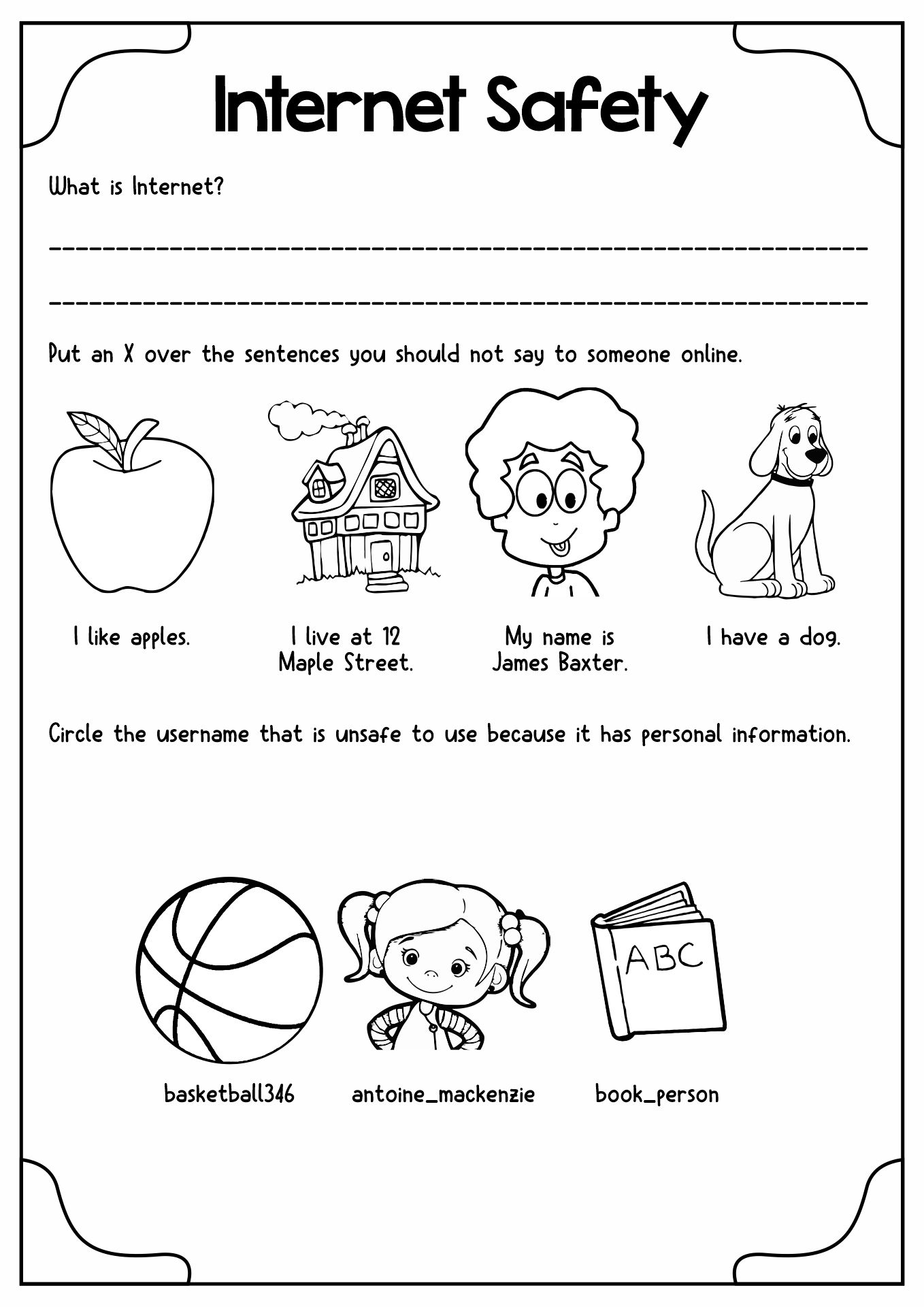
Early childhood education relies on concrete visuals to anchor abstract ideas. This specific worksheet focuses on foundational protective habits, such as recognizing private information, understanding screen boundaries, and identifying trusted adults. Young learners practice identifying data that stays private, like home addresses, full names, and passwords. It sounds simple, and that’s the point. Children at this stage need straightforward rules rather than complex technical explanations. By drawing lines between safe choices and uncomfortable digital moments, learners build confidence in handling unfamiliar prompts on screens.
Key Learning Outcomes
Each exercise targets a distinct behavioral goal aligned with introductory media literacy. Learners practice distinguishing between the physical world and digital spaces, learning that online actions carry real-world consequences. Another core outcome involves reinforcing the absolute rule that children are never in trouble for reporting something uncomfortable. According to the Federal Trade Commission, equipping young children with basic privacy awareness helps prevent accidental data sharing on household devices. Educators use these printables to prompt classroom discussions where students voice their experiences with games and apps safely.
How to Use This Printable
Implementation requires a supportive, conversational environment rather than a formal testing atmosphere. Adults can print multiple copies for small group rotations in classrooms or quiet kitchen table discussions at home. As children color or draw connections on the page, facilitators ask open-ended questions about favorite apps and online games. This dialogue bridges the gap between passive consumption and active awareness. Exploring broader Internet and Digital Safety concepts becomes natural when paired with hands-on activities that keep young minds engaged.
Practical Tips for Parents and Teachers
Patience remains the primary tool when discussing digital boundaries with kindergarteners. Keep sessions short, matching the natural attention span of a five-year-old. Praise honest answers when a child admits to clicking an unexpected pop-up or button. Frame the activity around teamwork, emphasizing that the whole family or classroom works together to stay safe online. Consistency matters more than perfection, so revisit these concepts regularly through playful reminders rather than lengthy lectures.
Age-Appropriate Recommendations
Kindergarten pedagogy centers on sensory experiences and emotional safety. According to Common Sense Media, children under six benefit most from media literacy lessons integrated directly into daily routines and play. This resource supports the Common Sense Education Digital Citizenship Curriculum framework by encouraging respectful communication and responsible media use at a foundational level. Educators should tailor the language, replacing technical jargon with familiar terms like “private treasure” for personal information and “grown-up helpers” for trusted adults.
Integrating media literacy into early childhood routines helps children recognize digital boundaries safely and confidently — Common Sense Media
Frequently Asked Questions
Answers to common inquiries regarding kindergarten safety printables help educators and families maximize learning outcomes.
Explore More Free Kids Online Safety Printables
Expanding a digital citizenship library ensures continuous learning as children grow and encounter new technologies. Educators and parents can discover additional tools by browsing Online and Digital Safety guides or utilizing creative Coloring Pages that reinforce these vital lessons through art.
Developmental Milestone & Activity Table
| Development Stage | Recommended Daily Duration | Primary Learning Objective |
|---|---|---|
| Preschool & Pre-K | 10 – 15 Minutes | Pencil grip development & basic pre-stroke lines |
| Kindergarten | 15 – 20 Minutes | Letter/number formation & spatial line awareness |
| Early Elementary (Grade 1–2) | 20 – 30 Minutes | Fluency, sentence construction & neatness |
Images References